Classroom Management Strategies: 15 Practical Ways to Create a Better Learning Environment
Every teacher knows the difference between a lesson that runs and a lesson that has to be pushed. In the first, students know where to sit, what to do when they arrive, and how to ask for help. In the second, five minutes go on settling the room, another five on finding pencils, and the explanation is interrupted three times before it ends.
The difference is rarely about how strict the teacher is. It comes from classroom management: the routines, expectations, and relationships that let teaching happen. This guide explains what classroom management means, why it matters, and 15 practical classroom management strategies that work in ordinary schools, including classes of 40 or more students. It also covers examples by grade level, common mistakes, difficult situations, and where technology can help.
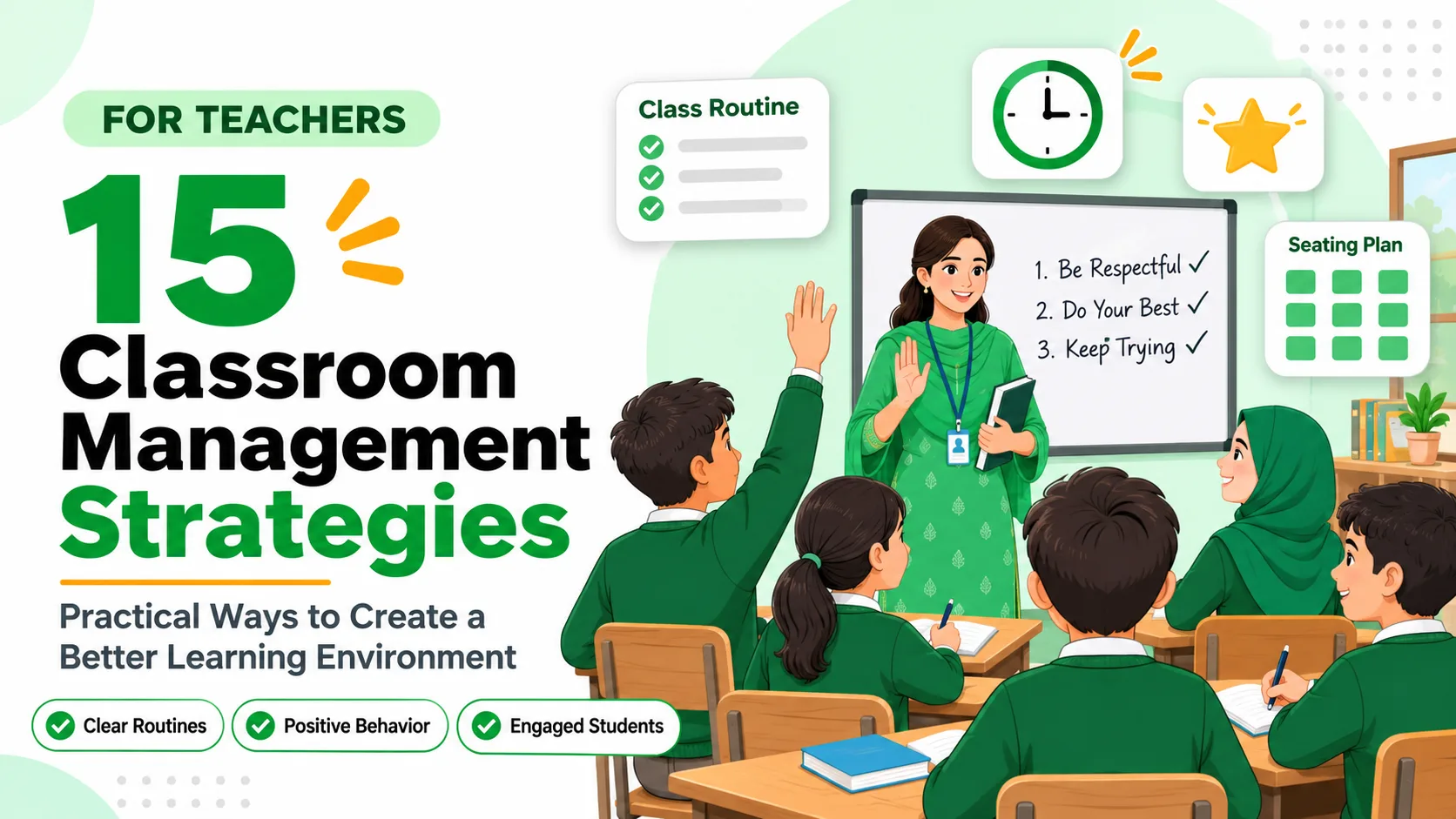
What Is Classroom Management?
Classroom management is everything a teacher does to organize students, space, time, and materials so that learning can take place. It includes the rules and routines of the room, how the teacher gives instructions and moves between activities, how they respond to behavior, and the relationships they build with students.
Two points are often misunderstood.
First, classroom management is mostly preventive. The most effective teachers spend far more time setting up conditions that make good behavior likely than responding to misbehavior after it happens. A clear routine for starting the lesson prevents more disruption than any consequence.
Second, classroom management is not the same as discipline. Discipline is one part of it: what happens when expectations are not met. Effective classroom management also covers how lessons are planned, how students are kept engaged, and how the teacher earns students' trust.
The Education Endowment Foundation's guidance report Improving Behaviour in Schools reflects this broad view. Its recommendations include knowing and understanding students, teaching learning behaviors as well as managing misbehavior, using classroom management strategies and simple routines, using targeted approaches for individual students, and keeping the approach consistent.
Why Is Classroom Management Important?
Classroom management matters because every minute lost to settling, waiting, or interruptions is a minute of learning lost for the whole class. In a school year, a few minutes per lesson adds up to weeks.
Good classroom management helps teachers and students to:
- Protect learning time: lessons start promptly, transitions are quick, and explanations are not repeatedly interrupted.
- Create a safe environment: students are more willing to answer, ask questions, and make mistakes when the room is calm and predictable.
- Reduce stress: clear routines lower the number of decisions a teacher has to make in the moment, and students know what is expected of them.
- Treat students fairly: when rules and consequences are consistent, students see that the same standards apply to everyone.
- Support every learner: a well-managed room gives the teacher time to help the students who need it most, instead of spending it on control.
- Build independence: students who know the routines can get started, find resources, and check their work without waiting for the teacher.
Classroom management is not about producing a silent room. A lively discussion or group task can be well managed. What matters is whether the noise and movement serve the learning.
15 Effective Classroom Management Strategies for Teachers
The strategies below move from setting up the classroom to responding when things go wrong. Most teachers will already use some of them. The aim is to use them deliberately and consistently. Start with the first three, which shape everything else.
1. Establish Clear Classroom Rules
Rules tell students what the classroom stands for. Keep them few, positive, and observable: three to five rules that describe what to do, not a long list of what not to do. "Listen when someone else is speaking" is clearer than "No talking," and "Bring your book and notebook to every lesson" is clearer than "Be prepared."
Agree on the rules in the first week, explain the reason for each, and display them where everyone can see. With older students, involve them in wording the rules so that they feel some ownership.
Example: a Grade 6 class agrees on four rules: arrive ready to learn, listen to the person speaking, raise your hand to speak in whole-class discussion, and respect people and property. The teacher refers to them by number, so a quiet "Rule 2, please" is enough.
2. Create Consistent Classroom Routines
Routines are the procedures students follow for everyday tasks: entering the room, starting work, handing out materials, submitting homework, asking for help, and leaving. A routine that students follow automatically saves time every lesson and removes many of the moments when behavior slips.
Teach each routine explicitly in the first weeks of the year. Explain it, model it, have students practice it, and practice it again when it is not followed. A do-now task on the board as students arrive is one of the most useful routines, because the lesson starts before the teacher has said a word.
Example: in a class of 42, the teacher appoints one monitor per row to collect notebooks. Homework collection that once took six minutes now takes one.
3. Set Clear Expectations
Rules apply all the time. Expectations describe what good behavior looks like in a specific activity. Before each task, tell students how much talking is allowed, whether they can move, how long they have, and what they should do when they finish.
Check that students have understood by asking one or two of them to repeat the instructions before they start. Unclear instructions are one of the most common causes of off-task behavior, because students who do not know what to do will find something else to do.
Example: "For the next ten minutes you will work in pairs on questions 1 to 5. Use partner voices, so only your partner can hear you. If you finish, try the challenge question on the board."
4. Build Positive Teacher-Student Relationships
Students work harder and behave better for teachers they believe care about them and treat them fairly. Relationships are built in small, regular moments: greeting students at the door, learning and using their names, noticing a change in mood, and asking about something they mentioned last week.
A good relationship does not mean being a friend or lowering expectations. Students respond best to a teacher who is warm and firm at the same time: someone who holds high standards because they believe the students can meet them.
Example: a secondary teacher with five classes keeps a short note of one interest for each student and uses it in examples. A student who loves cricket is asked to calculate a batting average in the ratios lesson.
5. Use Positive Reinforcement
Notice and name the behavior you want to see more of. Specific praise ("Thank you, Row 3, for having your books open before the bell") teaches the whole class what is expected. General praise ("Good job") tells students little.
Aim to give more positive comments than corrections. Praise effort and improvement as well as results, so that students who struggle academically also hear what they are doing well. Rewards such as points, stickers, or a positive note home can help, especially with younger students, but they work best when they are linked to specific behavior and do not replace genuine recognition.
Example: instead of "Ali, stop talking," the teacher says, "I can see most of you have started question 1. Thank you, Sana, for showing your working." Ali looks around and starts too.
6. Keep Students Engaged in Learning
Many behavior problems are engagement problems. Students who are bored, lost, or waiting with nothing to do are much more likely to drift off task. Well-paced lessons with clear tasks, regular questions to the whole class, and work at the right level prevent much of the disruption teachers spend time managing.
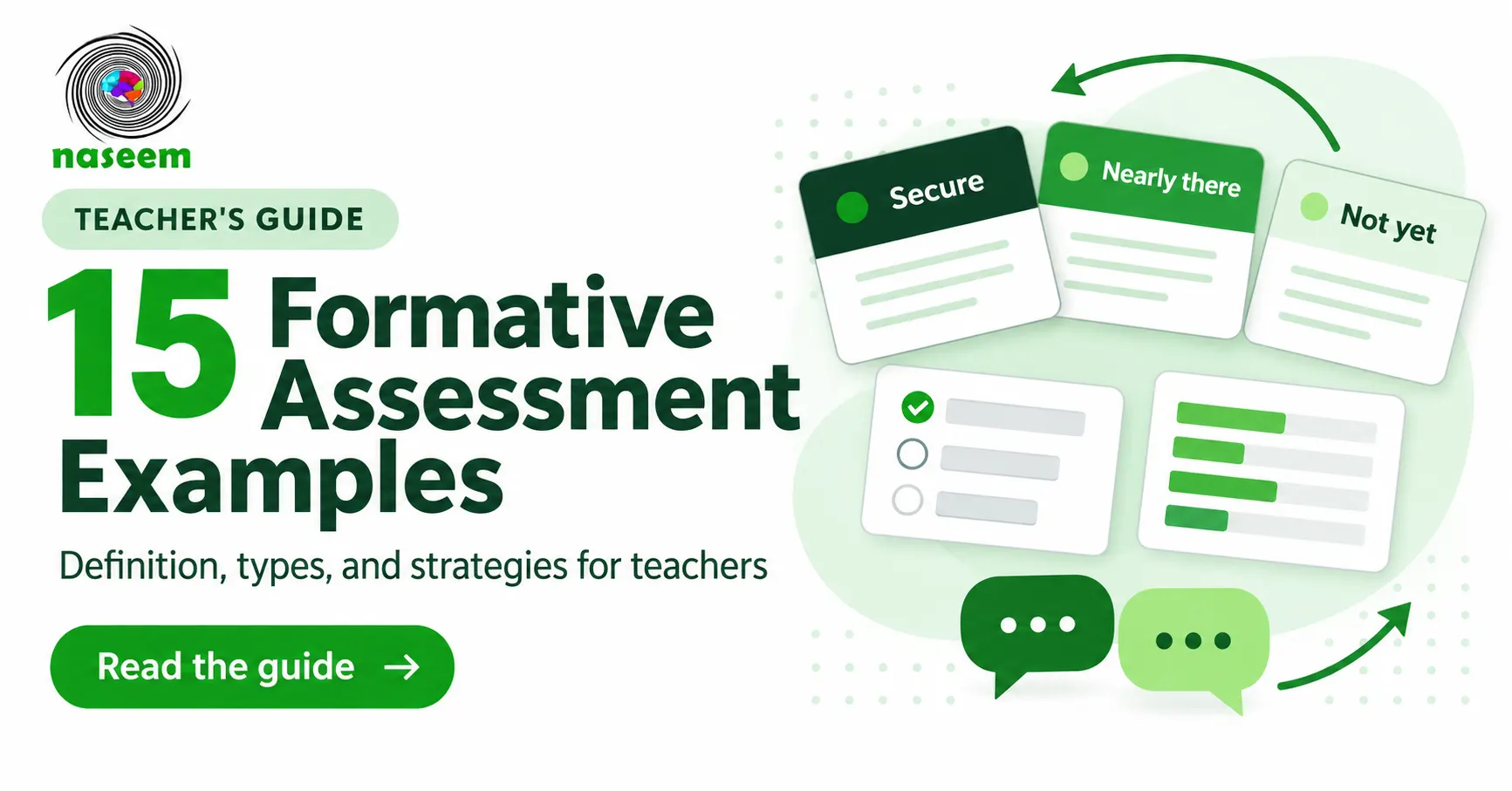
Ask every student to respond, not only volunteers, through mini whiteboards, hand signals, or a quick written answer. Break long explanations into short segments followed by a task. Our guide to student engagement strategies covers 15 approaches in detail, and quick checks for understanding from our guide to formative assessment keep students thinking throughout the lesson.
Example: a Grade 8 science teacher stops every ten minutes to ask the whole class one question on whiteboards. Students know they will be asked, so they stay with the explanation.
7. Manage Classroom Transitions
Transitions are the moments between activities: from explanation to group work, from one subject to the next, from the classroom to the playground. They are where behavior most often slips, because the structure of the previous task has ended and the next one has not started.
Plan transitions as carefully as the activities themselves. Give a warning ("Two minutes left"), give one clear instruction at a time, use a consistent signal for attention such as a raised hand or a countdown, and have the next task ready before the transition begins.
Example: a Grade 3 teacher uses a five-second countdown to move from carpet time to desks. Students who are seated by "one" are thanked by name, and the countdown is never extended.
8. Handle Disruptive Behavior Calmly
How a teacher responds to disruption often matters more than the disruption itself. A calm, brief response keeps the lesson moving and gives the student a way back. An angry or public confrontation can turn a small incident into a large one and pull the whole class into the audience.
Use the least intrusive response that works: a look, moving closer to the student, a quiet word, or a reminder of the rule. Deal with the behavior, not the student's character, and save longer conversations for after the lesson, in private.
Example: two students in the back row are talking during the explanation. The teacher continues teaching while walking toward them, pauses beside their desk, and carries on. The talking stops without a word.
9. Encourage Student Responsibility
Students behave more responsibly when they are given real responsibility. Classroom jobs such as monitors, timekeepers, and materials managers give students a stake in how the room runs, and take routine tasks off the teacher's hands.
Responsibility for learning matters as well. Teach students to check their work against criteria, track their own progress, and decide what to do when they are stuck before asking the teacher: "Brain, book, buddy, then teacher" is a simple routine that works at most ages.
Example: a Grade 9 class rotates monthly roles for attendance, board cleaning, and handing out materials. Students who misuse a role lose it for a month, which most treat as a real consequence.
10. Use Flexible Seating and Classroom Organization Where Appropriate
The layout of a room shapes behavior. Seating plans let teachers separate students who distract each other, place students who need support near the front, and learn names quickly. Rows suit explanation and independent work. Groups suit discussion and collaboration.
Flexible seating is not always possible, especially in crowded classrooms with fixed benches. Even then, teachers can organize materials so that they are easy to reach, keep walkways clear so that they can move around the room, and change who sits together when a pairing is not working.
Example: in a room with fixed benches for 48 students, a teacher creates groups of four by asking students in alternate rows to turn around for discussion tasks, then turn back for written work.
11. Address Conflicts Constructively
Conflicts between students are normal. Handled well, they teach students how to disagree respectfully. Handled badly, they can damage the climate of the whole class.
Separate the students first and let them calm down. Then listen to each side, without taking sides immediately, and help them describe what happened and how it affected the other person. Focus on repairing the relationship and agreeing on what happens next, not only on deciding who was wrong.
Example: after an argument over a borrowed geometry box, the teacher speaks to both Grade 7 students at break. Each explains what happened, they agree on how to share materials in future, and the teacher checks in with both the next day.
12. Use Clear and Consistent Consequences
Consequences work when students know them in advance, see them applied consistently, and experience them as fair. A short, predictable sequence, such as a reminder, then a warning, then a consequence such as a change of seat or a conversation after class, is more effective than severe consequences applied inconsistently.
Keep consequences proportionate and connected to the behavior where possible. Avoid punishing the whole class for the actions of a few, and avoid consequences that embarrass students in front of their peers. Once a consequence has been applied, start fresh. Students need to know that a mistake does not define how the teacher sees them.
Example: a student who repeatedly throws paper is asked to stay after class for two minutes to tidy the room and talk about the behavior. The next lesson, the teacher greets him as usual.
13. Encourage Respect Among Students
Students learn more in a class where they are not afraid of being laughed at. Teach and model respectful behavior: how to listen, how to disagree with an idea without attacking the person, and how to respond when a classmate gives a wrong answer.
Agree on how the class responds to mistakes, and act immediately on mocking or exclusion. Small signals matter. A teacher who thanks a student for a wrong answer that helps the class understand a misconception teaches everyone that mistakes are part of learning.
Example: a Grade 10 class uses sentence starters for discussion: "I agree with ___ because…", "I see it differently because…", "Can you explain what you meant by…?" Disagreements stay focused on ideas.
14. Adapt Strategies to Different Student Needs
No single approach works for every student. Some need more structure, some need movement breaks, and some need tasks broken into smaller steps. Students with special educational needs, students who are learning in their second or third language, and students facing difficulties at home may all need adjustments.
Get to know the reasons behind behavior before deciding how to respond. A student who never starts written work may not understand the task. A student who is always tired may be working after school. Adjusting tasks, support, and pace in this way is at the heart of personalized learning, and it often prevents behavior problems before they begin.
Example: a teacher notices that a Grade 4 student disrupts every reading lesson. After a short reading check, she finds that the text is far too difficult for him. With a leveled text and a reading partner, the disruption largely stops.
15. Reflect on and Improve Your Classroom Management
Classroom management improves with deliberate reflection. After a difficult lesson, ask what happened just before the problem began, which routine was missing or unclear, and what you would do differently next time. Patterns are more useful than single incidents.
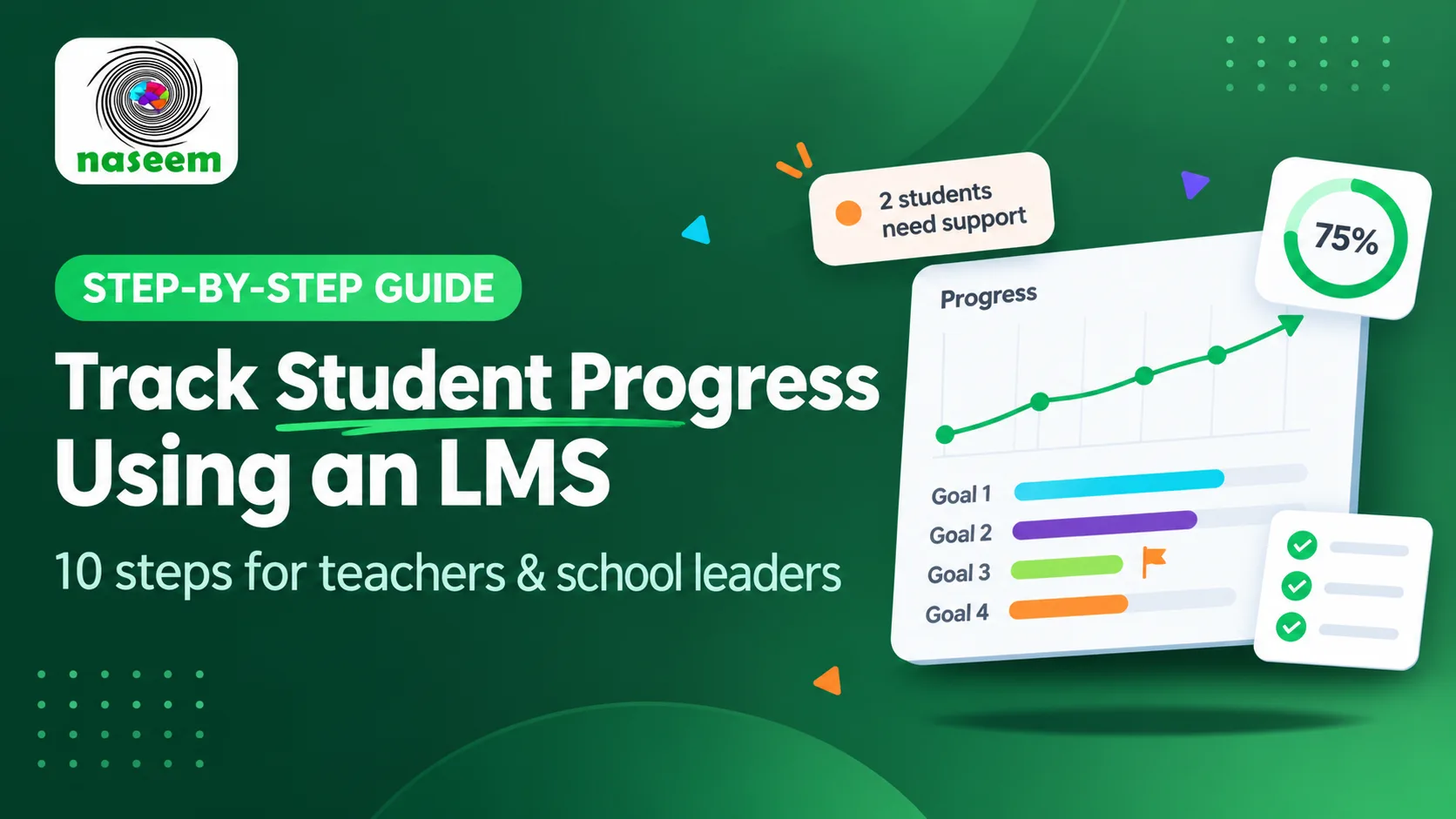
Ask a colleague to observe one lesson with a specific focus, such as transitions or how instructions are given. Look at your own records of behavior, attendance, and work completion. Information about how students are progressing, such as missing work or falling results, can also reveal students who are struggling before their behavior shows it. Our guide to tracking student progress explains how to read that information.
Example: a teacher notices that most problems happen in the last ten minutes of double lessons. She adds a short, active task at the 60-minute mark, and the end of lessons becomes calmer.
Classroom Management Examples for Different Grade Levels
The principles of classroom management are the same at every age, but what they look like changes as students grow.
Classroom Management in Primary School
Younger children need routines taught explicitly and practiced often, short activities with frequent changes, and plenty of positive reinforcement. Visual signals work well: pictures of the routines, a traffic-light chart for noise level, or a hand signal for silence. Praise should be immediate and specific, and rewards can be simple, such as a sticker, a class point, or a turn as the line leader.
Example: a Grade 2 class has a picture chart showing the morning routine: hang your bag, put your homework in the tray, sit down, and start the morning task. By the second week, most children follow it without reminders.
Classroom Management in Secondary School
Older students respond to fairness, respect, and responsibility. They notice inconsistency quickly and resent being treated like younger children. Explain the reasons behind rules, involve students in setting expectations, give them real responsibilities, and deal with problems privately whenever possible. Relevance matters too: students engage more when they can see how the work connects to examinations and their plans.
Example: a Grade 10 teacher agrees on classroom norms with each class in the first lesson, writes them inside the front cover of every notebook, and refers back to them when needed. Disagreements become about the agreed norms rather than the teacher's authority.
| Grade Level | Useful Strategies | Main Focus |
|---|---|---|
| Primary (Grades 1 to 5) | Picture routines, hand signals, countdowns, class points, short varied tasks | Teaching routines and building good habits |
| Middle (Grades 6 to 8) | Seating plans, classroom roles, clear task expectations, private conversations | Consistency and making it safe to participate |
| Secondary (Grades 9 to 12) | Agreed norms, explained rules, responsibility, links to exams and future plans | Respect, fairness, and independence |
Common Classroom Management Mistakes Teachers Should Avoid
Most classroom management mistakes are understandable. They happen under pressure, with a large class and a lot to cover. Recognizing them is the first step to avoiding them.
| Mistake | Why It Causes Problems | What to Do Instead |
|---|---|---|
| Too many rules | Students cannot remember them, and teachers cannot enforce them all | Keep three to five clear, positive rules |
| Inconsistency | Students test boundaries when consequences depend on the teacher's mood | Apply the same response to the same behavior every time |
| Reacting with anger | Raises tension and turns a small incident into a confrontation | Pause, stay calm, and use the least intrusive response |
| Public confrontation | Students defend their status in front of peers instead of backing down | Deal with problems privately whenever possible |
| Punishing the whole class | Students who behaved well feel it is unfair, and trust drops | Address the individuals involved |
| Unclear instructions | Students who do not know what to do find something else to do | Give one instruction at a time and check understanding |
| Ignoring good behavior | Students learn that attention comes from misbehaving | Notice and name the behavior you want to see |
| Dead time | Waiting with nothing to do invites distraction | Plan do-now tasks, quick transitions, and extension work |
How Teachers Can Manage Difficult Classroom Situations
Even well-managed classrooms have difficult moments. The general approach is the same in each case: stay calm, keep the lesson going where possible, deal with the student privately, and look for the cause before deciding on the response.
When a Student Refuses to Work
Avoid a public standoff. Check quietly whether the student understands the task and can start it. Offer a small first step ("Write the date and the first question") and a choice where possible. Refusal often hides confusion or embarrassment about not being able to do the work.
When a Student Challenges the Teacher in Front of the Class
Do not get drawn into an argument. Acknowledge briefly, restate the expectation calmly, and say that you will discuss it after class. Then return to the lesson. The audience is part of the problem, so removing it is part of the solution.
When the Whole Class Is Unsettled
After a break, an exciting event, or bad news, a whole class can be hard to settle. Lower your voice rather than raising it, use the attention signal, and give a short, simple written task that everyone can start immediately. Teach the main content once the room has settled.
When Behavior Keeps Repeating
When the same student repeatedly disrupts lessons, look for a pattern: which lessons, what time of day, which activities. Talk with the student privately about what is happening and agree on one specific goal. Involve parents early, as partners rather than as a last resort, and bring in senior staff or the school counselor if needed. Our guide to parent engagement in schools explains how to raise concerns with families in a way that leads to joint action.
When Safety Is at Risk
If a student is at risk of hurting themselves or others, follow the school's safety procedures immediately and call for help. Classroom management strategies are for everyday behavior. Serious incidents need the school's agreed response.
How Technology Can Support Classroom Management
Technology cannot manage a classroom, but it can reduce the administrative work around it and give teachers better information. Used with a clear purpose, it can help with:
- Organized learning materials: lesson resources, assignments, and instructions in one place, so students who miss a lesson can catch up without interrupting the next one.
- Clear instructions and deadlines: tasks posted with instructions and due dates reduce confusion about what to do and when.
- Quick checks for understanding: digital quizzes and polls collect every student's answer at once and show who needs help.
- Progress information: records of submissions, results, and completion help teachers spot students who are falling behind before frustration turns into behavior problems.
- Communication with families: sharing progress and concerns with parents early makes it easier to work together.
Technology also brings its own management challenges. Devices can distract, connections fail, and shared devices need routines for handing out and collecting. Set clear expectations for when screens are open and closed, plan an offline alternative, and introduce new tools one at a time. Teaching digital citizenship alongside these routines helps students use devices responsibly.
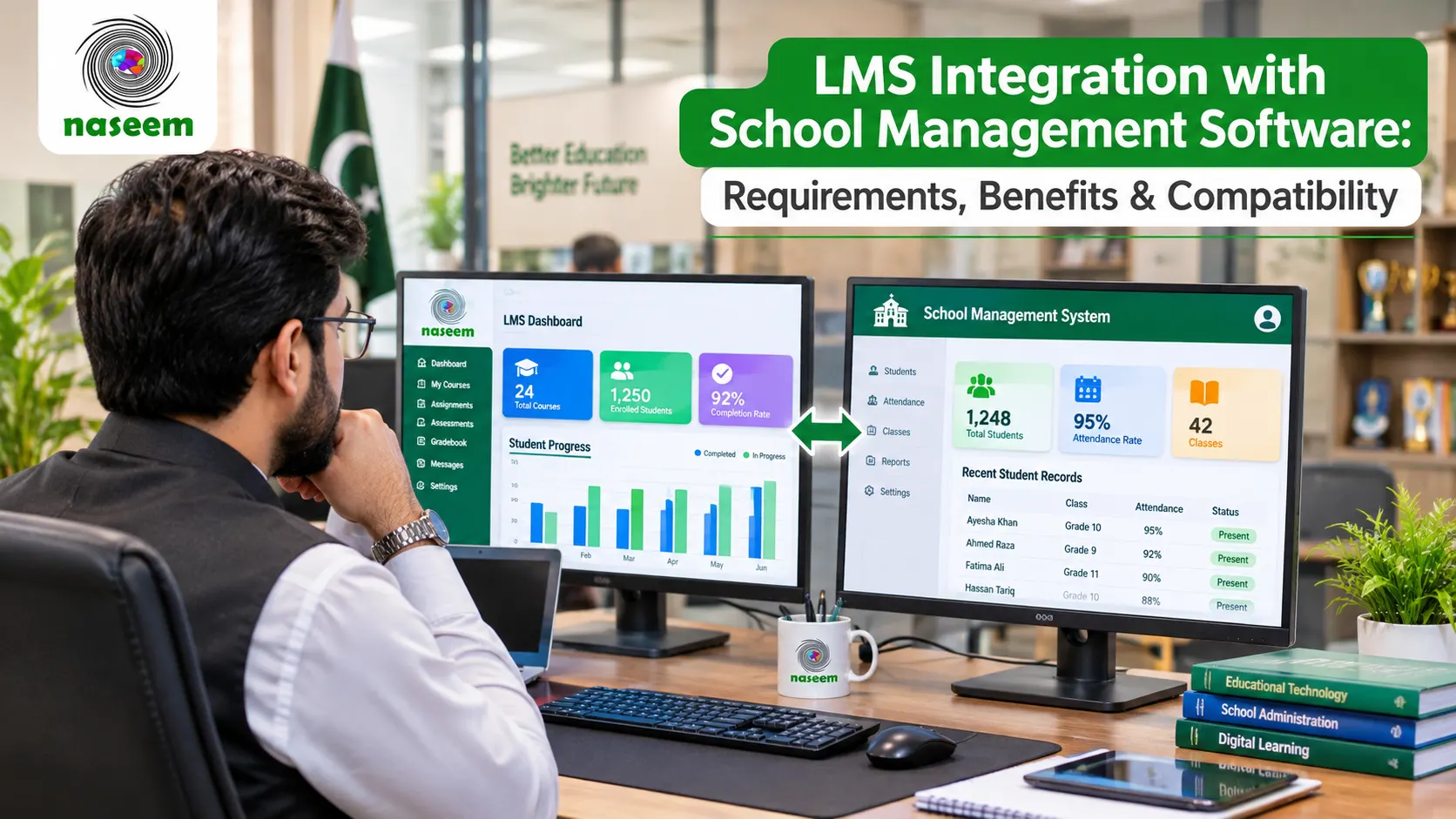
A learning management system brings many of these functions together. It keeps courses, assignments, assessments, and progress information in one place, so teachers spend less time on administration and more on teaching. For an overview of what to look for, see our guide to choosing a learning management system for schools.
Naseem Education is a school-focused LMS that connects students, teachers, parents, and school leaders in one platform. Teachers can organize learning materials and assignments, run assessments with auto-grading where it applies, see student progress, and share information with parents through their authorized accounts. Available features depend on how the platform is set up for each school, so ask to see them in a demonstration.
Frequently Asked Questions
Ready to Bring Your School’s Learning Together?
Give your school a connected learning management system designed to support students, teachers, parents, and school leaders.