Personalized Learning: Definition, Benefits, Examples, and Strategies for Teachers
Any teacher who has graded a set of quizzes knows the pattern. A few students got everything right, most made the same one or two errors, and a handful were lost from the first question. Teaching the next lesson the same way to all three groups wastes time for the first and leaves the last further behind.
Personalized learning is the name for planning teaching around that reality. This guide explains what it means, how it works in an ordinary classroom, 12 strategies you can start with, and where the approach has limits. None of the strategies needs special software. Where technology helps, we say how.
What Is Personalized Learning?
Personalized learning is an approach to teaching in which the pace, method, support, and sometimes the content of learning are adjusted to each student's current understanding, needs, and interests, while every student works toward clear learning goals.
There is no single official definition. The U.S. Department of Education's National Education Technology Plan describes it as instruction in which both the pace of learning and the teaching approach are optimized for each learner's needs. RAND researchers summarize the basic idea as instruction focused on individual learning needs that also draws on students' interests and preferences.
The purpose is simple: to stop treating the class as one average student. In a typical class of 30, some students are ready for harder work, some need another explanation, and some are missing a skill from an earlier grade. A lesson pitched at the middle fits only part of the room.
Personalization depends on information. Teachers use what students say, write, and do (quiz answers, classwork, questions, conversations) to decide who needs what next. The better that information, the better the decision.
Personalized learning does not mean writing 30 lesson plans. Most personalization happens inside a shared curriculum, through a few adjustments:
| What can be personalized | What it looks like in class |
|---|---|
| Pace | A student who has mastered a skill moves on; another gets two more days of practice |
| Support | Worked examples, sentence starters, or a short small-group session for students who need them |
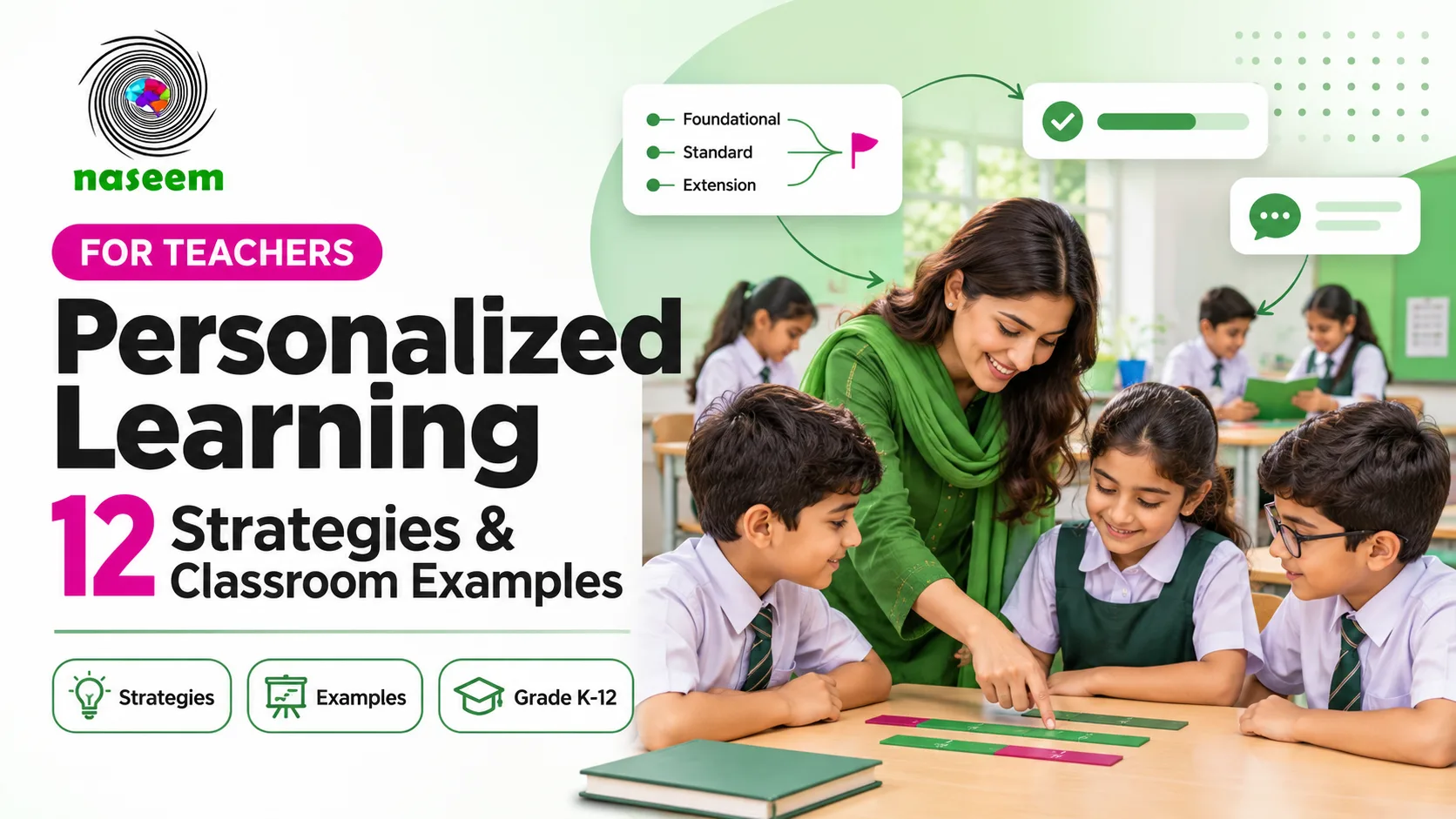
| Task | Foundational, standard, and extension versions of the same activity |
| Path | Different resources (a video, a reading, a hands-on demonstration) toward the same objective |
| Choice | Students pick a topic, text, or format for showing what they learned |
How Does Personalized Learning Work?
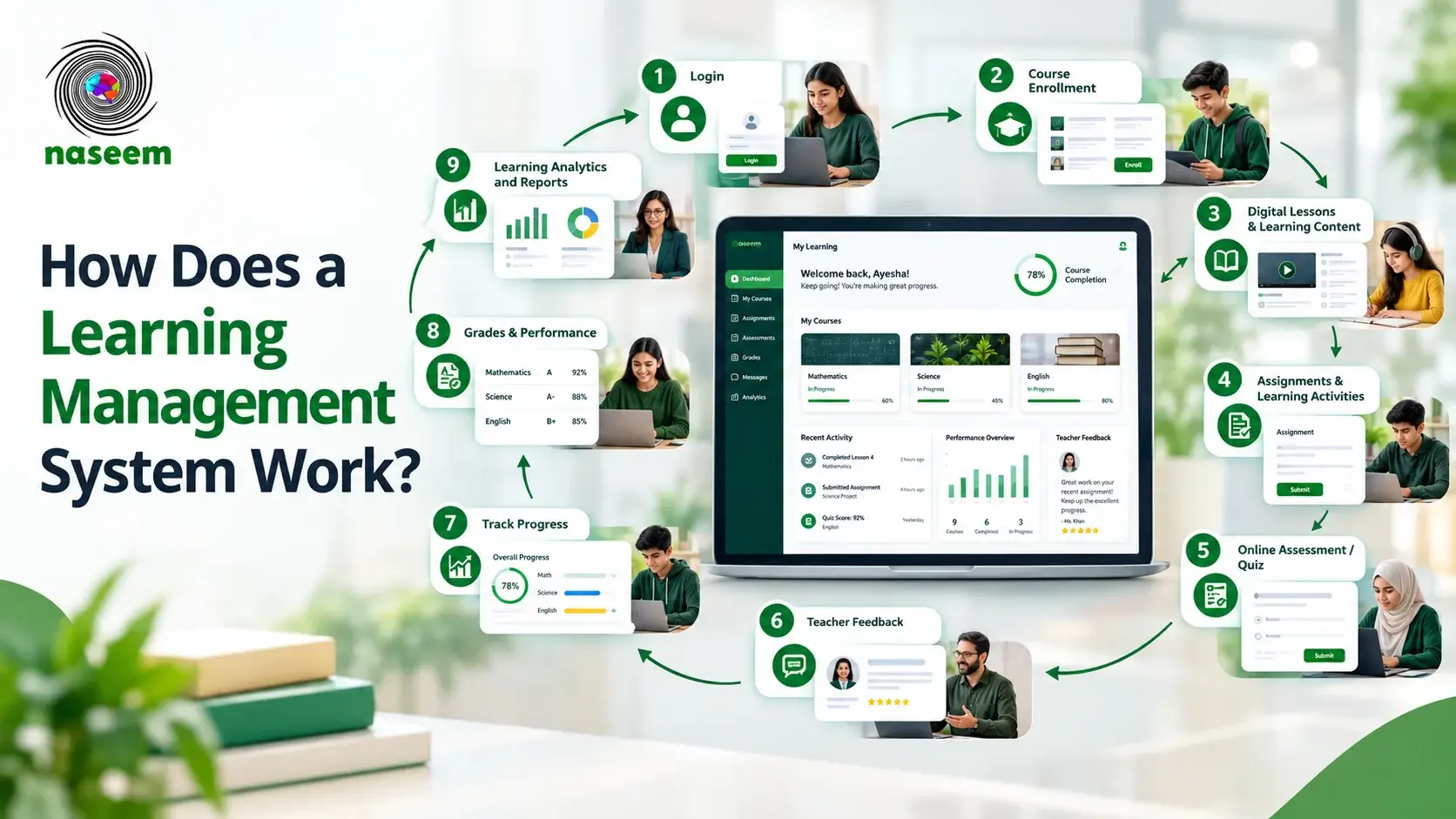
Personalized learning works as a repeating cycle. The teacher finds out where students are, adjusts teaching, checks what happened, and adjusts again.
- Understand individual needs: use a short diagnostic, prior work, or a conversation to find each student's starting point.
- Set the learning goal: state what every student should know or be able to do by the end of the lesson or unit.
- Identify strengths and gaps: sort the evidence into who is secure, who is partly there, and who is missing a prerequisite.
- Adjust teaching and activities: change the explanation, the task, the grouping, or the time allowed.
- Provide resources and support: give each group or student what they need to reach the goal.
- Monitor progress: check understanding during and at the end of the lesson.
- Review and adjust: use what you saw to plan the next lesson, then repeat the cycle.
A Classroom Example: One Objective, Three Routes
Mr. Imran teaches Grade 5 math. Today's objective is comparing fractions with unlike denominators. He opens with a four-question check and finds three groups among his 30 students:
- 9 students compare unlike fractions correctly.
- 15 compare fractions only when the denominators match.
- 6 believe a bigger denominator means a bigger fraction.
He teaches a 10-minute whole-class explanation of equivalent fractions. Then the routes split. The 6 students work with him at a table using fraction strips, so they can see that 1/8 is smaller than 1/4. The 15 students follow a worked example on the board, then practice on their own. The 9 students order five fractions and explain which recipe uses more flour, writing their reasoning.
Everyone finishes with the same two-question exit ticket. The next day, Mr. Imran regroups based on those answers, not on yesterday's groups. All 30 students worked toward one objective, and no one waited for the rest of the class or got left behind. (This example, like the others in this guide, is illustrative.)
What Are the Main Approaches to Personalized Learning?
Schools personalize learning in five main ways. Most classrooms combine two or three of them rather than adopting one model wholesale. A guidebook for city school leaders names four common elements: learner profiles, personal learning paths, competency-based progression, and flexible learning environments. The approaches below translate those ideas into classroom terms.
Individual Learning Paths
Students work toward the same objective through different activities, resources, or levels of support. One student reads a text and answers questions, another watches a short demonstration and then practices, a third starts with a worked example. The destination is shared; the route varies.
Adaptive Instruction
Adaptive instruction means the teacher changes the teaching in response to evidence. If half the class misreads a graph during a lesson, the teacher stops and reteaches it with a different example. This happens in real time and does not require adaptive software, although some digital tools adjust question difficulty automatically.
Student Choice and Interest-Based Learning
Students choose a topic, text, or format within limits the teacher sets. A Grade 8 student who loves cricket might study averages through batting statistics, while a classmate uses weather data. A 2026 classroom study in Teaching and Teacher Education followed one Grade 5 teacher in Spain and concluded that what made interest-based work count was the teacher's intentionality: deliberately sparking, narrowing, and deepening students' interests and tying them to curriculum content. It was a single-classroom study, so treat it as a useful model rather than proof.
Competency-Based Progression
Students move to the next objective once they show they understand the current one, rather than when the calendar says so. A student who demonstrates mastery of linear equations early can start inequalities; a student who has not yet mastered them gets more instruction and tries again. How far a school can go with this depends on its curriculum, timetable, and exam system. The Education Endowment Foundation (EEF) notes that mastery approaches work best with a high bar (around 80 to 90 percent) and extra support for students who need more time.
Flexible Pacing and Targeted Support
The teacher varies time and help according to progress: extra practice or a revision session for students who need it, enrichment for students who are ready. This is often the most practical starting point because it fits inside existing schedules.
What Are the Benefits of Personalized Learning?
The main benefit of personalized learning is a closer fit between what is taught and what each student needs next. When it is implemented well, it can offer:
- Better alignment with individual needs: students spend less time on material they already know or cannot yet access.
- Greater student ownership: setting goals and tracking progress helps students see learning as something they direct.
- An appropriate pace: fast learners are not held back, and slower learners are not rushed past gaps.
- More targeted support: help goes to the students and skills that need it, instead of being spread evenly.
- A clearer picture of each student: teachers learn individual strengths and difficulties, not just class averages.
- Deeper learning: students who are ready can extend and apply ideas instead of repeating practice.
- More meaningful feedback: feedback refers to each student's own goal and next step.
- Flexible teaching: teachers can use grouping, choice, and different resources instead of one fixed method.
- More participation: students who were lost or bored in whole-class teaching often have a task they can actually engage with.
- Better-informed decisions: lesson plans rest on evidence about the class rather than assumptions.
These are potential benefits, not guarantees. The research on achievement is promising but modest. RAND's study of personalized learning schools found that students gained about 3 percentile points in math compared with similar students; a gain in reading was not statistically significant. The EEF estimates that individualized instruction adds about four months of progress on average, but rates the evidence as limited and notes that results vary widely. Outcomes depend on implementation quality, teacher preparation, resources, and student circumstances.
12 Personalized Learning Strategies for Teachers
These 12 strategies work in an ordinary classroom with a shared curriculum. Start with one or two that fit your subject, then add others as routines settle. Strategies 1, 3, and 12 supply the evidence the rest depend on.
1. Understand Students' Existing Knowledge
Before a new unit, find out what students already know. Ask three to five diagnostic questions that target prerequisite skills and likely misconceptions, or review results from the previous unit. Keep the check short and ungraded so students answer honestly.
Example: before teaching photosynthesis in Grade 7, Ms. Farah asks, "Where does most of a tree's mass come from?" Most students answer "the soil." She now knows the misconception the unit must address, and which few students already mention carbon dioxide.
This is most useful at the start of a unit and when new students join mid-year.
2. Set Clear and Individual Learning Goals
Keep the curriculum objective the same for everyone, then add a personal target that is each student's next step. Write the objective in student language. Agree on individual targets in brief one-to-one conversations or through written feedback.
Example: a Grade 6 writing objective is "Write a persuasive paragraph with a claim, two reasons, and evidence." One student's target is to use evidence rather than opinion for the second reason. Another's is to vary how sentences begin.
Individual goals help most in skills that develop over months, such as writing, reading, or problem solving.
3. Use Formative Assessment to Identify Learning Needs
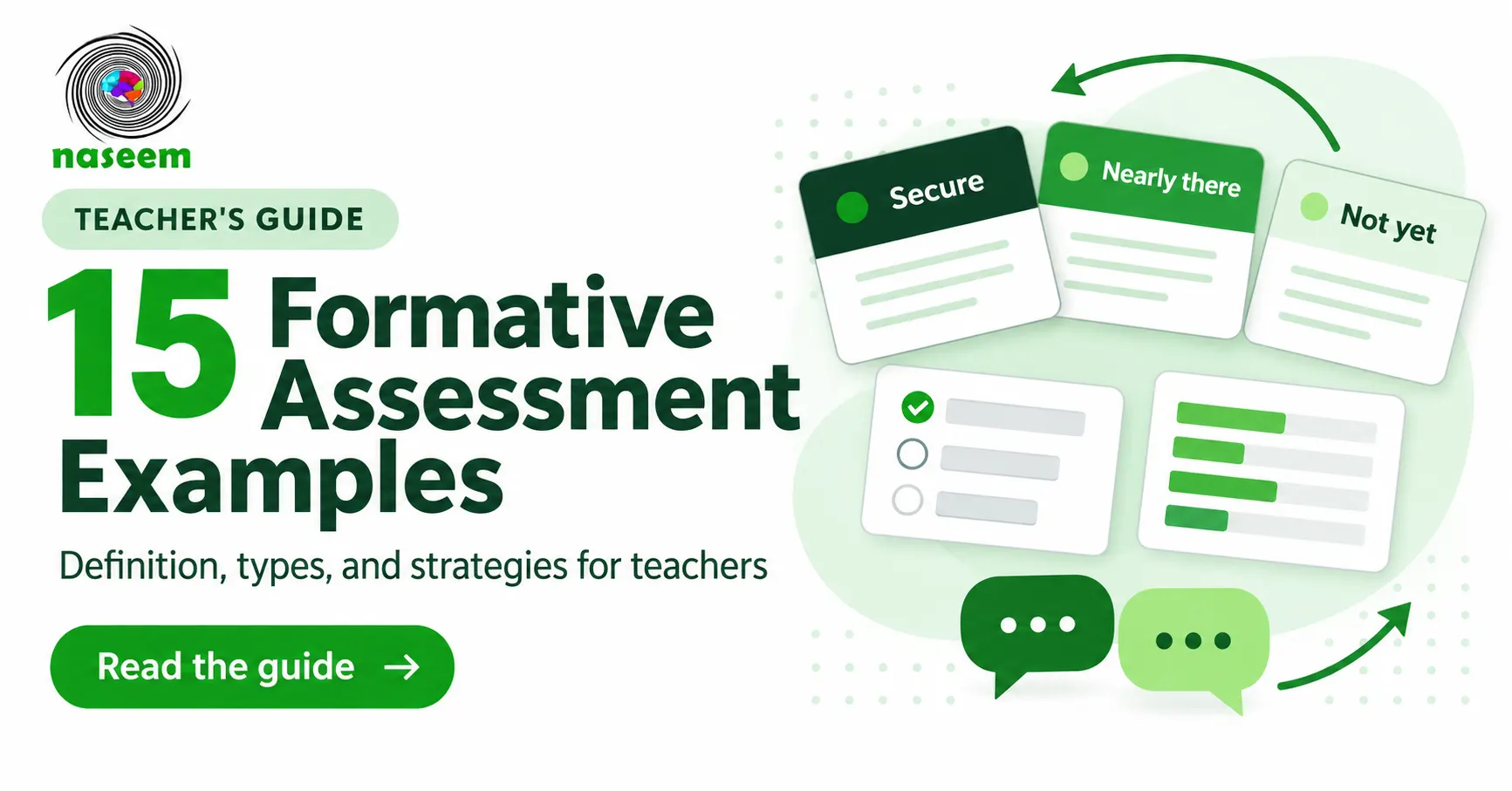
Formative assessment means checking understanding during learning and using the result to decide what happens next. Short quizzes, exit tickets, whole-class questions, discussions, observation, and student work all count. Decide in advance what you will do if most, some, or few students are secure. Our guide to formative assessment covers 15 techniques in detail.
Example: midway through a Grade 9 lesson on balancing chemical equations, Mr. Adeel asks every student to write the answer to one equation on a mini whiteboard. Twenty-two of 32 are correct. He sends them on to practice and reteaches the other 10 at the front for five minutes.
Use it daily: without this evidence, personalization becomes guesswork.
4. Provide Different Levels of Practice
Offer the same concept at three levels: foundational (more structure, fewer steps), standard, and extension (apply, explain, or transfer the idea). Let students start at the standard level and move up or down after the first few questions, so no one is locked into a level.
Example: for Grade 4 multiplication word problems, the foundational set includes a drawn array for each problem. The standard set has two-step problems. The extension task asks students to write their own two-step problem and swap it with a partner.
This works best during independent practice, after the initial teaching.
5. Offer Different Ways to Learn a Concept
Give students more than one way into a concept: a diagram, a demonstration, a reading, a physical model, or a discussion. Choose the representation that suits the content, and offer a second when the first does not land. Do not sort students into fixed visual, auditory, or kinesthetic types: a major review found virtually no evidence that matching teaching to a supposed learning style improves learning.
Example: to teach the water cycle in Grade 3, a teacher shows a labeled diagram, demonstrates condensation with steam on a cold plate, and gives a short reading. Every student sees all three. Students who are still unsure revisit the demonstration.
This matters most for abstract ideas and when a first explanation has not worked.
6. Give Students Meaningful Learning Choices
Offer choice within structure: two to four options that all meet the same objective and success criteria. Students can choose a topic, a text, or the format of their final product. A meta-analysis of 41 studies linked choice to higher intrinsic motivation, effort, and task performance, and found that the motivational benefit leveled off when people had to make five or more choices.
Example: Grade 10 students explaining the causes of World War I choose between an essay, an annotated timeline, or a three-minute recorded talk. All three are graded against the same rubric for accuracy, causation, and use of evidence.
Choice works best once students know the basic content and you want them to apply it.
7. Adjust Instruction Based on Student Progress
Plan decision points before the lesson: if most students get the check right, move on; if not, reteach. When you reteach, use a new example or representation rather than repeating the same explanation. When evidence shows students are ready, introduce harder material sooner.
Example: exit tickets in a Grade 8 English unit show that most students can name a story's theme but cannot support it with quotations. Ms. Zainab changes the next lesson from a new text to modeling how to choose and explain evidence.
Use this at the end of every lesson, when you plan the next one.
8. Provide Timely and Specific Feedback
General praise ("Great work!") tells students they did well but not what to do next. Useful feedback names what the student understood, what needs improvement, and one specific next step, then gives class time to act on it. The EEF rates feedback as one of the highest-impact approaches, at about six months of additional progress on average.
Example: instead of "Nice lab report," Mr. Hamza writes: "Your method is clear enough to repeat. Your conclusion restates the results but does not explain them. Add one sentence linking the temperature change to the reaction rate." Students revise during the next 10 minutes.
Give feedback whenever students produce work they can still improve.
9. Use Flexible Grouping
Group students temporarily by their current need for one specific skill, and regroup often. Mix these needs-based groups with mixed-attainment and interest-based groups across the week. The EEF finds a small positive effect for grouping within the class, with weak evidence, and warns that fixed groups can lower students' confidence and teachers' expectations.
Example: in Grade 2 phonics, Monday's groups are based on which letter blends students missed in a quick check. By Wednesday, five students have mastered their blend and join a different group.
Flexible grouping suits skills that students develop at different rates.
10. Encourage Independent Learning
Teach students to set goals, monitor their progress, assess their work against criteria, and reflect. Use checklists, learning logs, "I can" statements, and simple progress trackers. Hand over responsibility gradually, starting with structured routines.
Example: Grade 11 chemistry students keep a one-page tracker that lists each unit objective. After each quiz, they rate every objective as "not yet," "getting there," or "secure." Before the unit test, each student chooses revision tasks for their "not yet" objectives.
Independence can be built from upper primary onward, with more responsibility as students get older.
11. Provide Enrichment and Additional Support
Plan for both ends of the class. Enrichment should add depth, such as applying, connecting, or creating, rather than more of the same exercise. Support can include pre-teaching key vocabulary, short small-group sessions, extra practice, or peer tutoring.
Example: while most of a Grade 6 science class tests which materials conduct electricity, three students who finish early design a circuit that includes a switch. Two students who missed the previous lesson first get a 10-minute catch-up on circuits with the teacher.
This matters most when the gap between the most and least advanced students is wide.
12. Monitor Progress and Refine Teaching
Review evidence regularly by objective, not just by overall grade. Ask which students are secure, which still have gaps, and whether last week's support worked. Recheck the same objective a few days or weeks later, since a gap is closed only when students still get it right later. Our guide to tracking individual student progress explains how to do this systematically.
Example: every Friday, a Grade 7 math team reviews quiz results objective by objective. A student who has missed the same objective twice gets a targeted session the following week, then a short recheck.
Build this into the end of each week or unit.
Personalized Learning Examples in the Classroom
Each example below shows one teaching decision and why it fits the students' needs. The subjects and grades vary, but the pattern is the same: find the specific need, then change one thing about the lesson.
Personalized Learning in Elementary School
A Grade 3 teacher is building reading comprehension, specifically finding the main idea and supporting details. A short reading check shows that eight students struggle to decode the grade-level text, which leaves them no attention for meaning.
The teacher's decision: every student reads about the same topic, how animals survive in their habitats, but at three text levels. The eight students read an easier text with her in a guided group. Most of the class reads the grade-level text with a partner. Six strong readers compare two texts and decide which explains survival better.
Why it works: everyone practices the same comprehension skill, and no one is blocked from it by decoding difficulty or held back by a text that is too easy.
Personalized Learning in Middle School
A Grade 7 math teacher is starting two-step equations such as 3x + 5 = -10. A five-question warm-up shows the real problem: nine students are not secure with negative numbers, so they will get stuck on the arithmetic, not the algebra.
The teacher's decision: those nine students get a 15-minute pre-teaching session on integer operations while the rest begin the lesson with a worked example. Everyone then practices two-step equations. Students who finish accurately move on to equations with the variable on both sides.
Why it works: the teacher fixes the missing prerequisite instead of reteaching algebra that was never the problem.
Personalized Learning in High School
A Grade 10 chemistry class takes a practice quiz on mole calculations before a test. The teacher sorts errors into three types: setting up the ratio, converting units, and reading the question.
The teacher's decision: the next lesson is a revision menu with a station for each error type, plus an extension station of multi-step exam questions. Each student starts at the station that matches their own quiz errors, then moves on once they get two problems right.
Why it works: revision time goes to each student's actual misunderstanding, not to rereading the whole chapter.
Personalized Learning Through Student Projects
A Grade 8 science project asks every student to explain how human activity affects a water source, use data as evidence, and propose one realistic solution. Within that, students choose their focus (river pollution, falling groundwater, or rainwater harvesting at school) and their format (a report, a poster, or a short presentation).
The teacher's decision: one rubric and three checkpoints (question approved, data collected, draft reviewed). The checkpoints let the teacher spot students who are stuck early and give targeted help.
Why it works: choice builds ownership, while the shared objective and rubric keep the learning rigorous and comparable.
Personalized Learning vs. Individualized Learning vs. Differentiated Instruction
The three terms overlap, and educators do not always use them the same way. A common distinction, used for example by ISTE, is about what varies and who drives the decisions. An earlier U.S. national technology plan treated personalization as the broadest term, one that encompasses differentiation and individualization.
| Approach | Main focus | How it works | Example |
|---|---|---|---|
| Personalized learning | The individual learner's needs, interests, and goals | Pace, method, content, and goals can all vary; students help shape their learning with the teacher | A student sets a goal, chooses a project topic, and moves on when they show mastery |
| Individualized learning | Pace | Students work toward the same goals but move through them at their own speed | Students work through a sequence of math units, each starting the next unit when ready |
| Differentiated instruction | How the teacher teaches groups | Goals stay the same; the teacher varies methods, resources, and tasks by readiness or interest | A teacher sets three versions of the same practice task for three groups |
In practice, most classrooms use all three. Differentiation is often the first step, individualized pacing is added where the timetable allows, and personalization grows as students take more responsibility. One note on terms: in special education, an Individualized Education Program (IEP) is a formal plan for a student with a disability, which is a different use of "individualized."
What Are the Challenges of Implementing Personalized Learning?
The biggest challenge is teacher time. In RAND's study, teachers in personalized learning schools reported not having enough time to prepare customized lessons, and the harder practices, such as student choice of topics and materials, were the least implemented. The spread of needs can also be very wide: in a baseline survey for a targeted instruction study in Khyber Pakhtunkhwa, 86% of primary teachers said their students were far behind the curriculum.
| Challenge | A practical response |
|---|---|
| Limited classroom time | Personalize one part of the lesson, usually practice, rather than the whole lesson |
| Large class sizes | Plan for three groups, not 40 individuals; use peer explanation and self-checking answer keys |
| Teacher workload | Reuse tiered tasks across years and share them within subject teams |
| Limited learning resources | Adapt existing textbook exercises into foundational, standard, and extension sets |
| Difficulty identifying needs | Use short, frequent checks focused on one objective instead of long tests |
| Unequal access to technology | Design every strategy to work on paper; use devices where they save time |
| Student independence | Teach routines for self-checking and asking for help before giving more freedom |
| Assessment and progress monitoring | Record results by objective, and recheck after support |
| Teacher training and planning | Start with a small pilot group, give planning time, and review together each month |
The EEF adds a warning: when every student works on a separate task, teachers can end up organizing and monitoring instead of teaching. Personalized approaches work best alongside strong whole-class instruction, not as a replacement for it.
How Can Technology Support Personalized Learning?
Technology helps mainly by making student information faster to collect and easier to act on. It can support personalized learning through:
- Digital learning resources that students can revisit at their own pace
- Online assessments that score objective questions instantly
- Student progress information organized by objective or skill
- Timely feedback that reaches students while the work is still fresh
- Learning analytics that show patterns across a class or grade
- Interactive activities and practice that give immediate responses
- Access to materials from school and home
- Communication between teachers, students, and parents
The limits matter as much. Technology cannot decide why a student is struggling or what explanation will help, and data is only as good as the tasks that produce it. A guidebook for school systems adopting personalized learning warns that technology should follow the instructional vision, not lead it, and that log-in and device problems can eat into teaching time. The EEF also finds that technology-based individualized approaches perform about as well as non-technology ones. Devices are a tool, not a strategy.
How Does an LMS Support Personalized Learning?
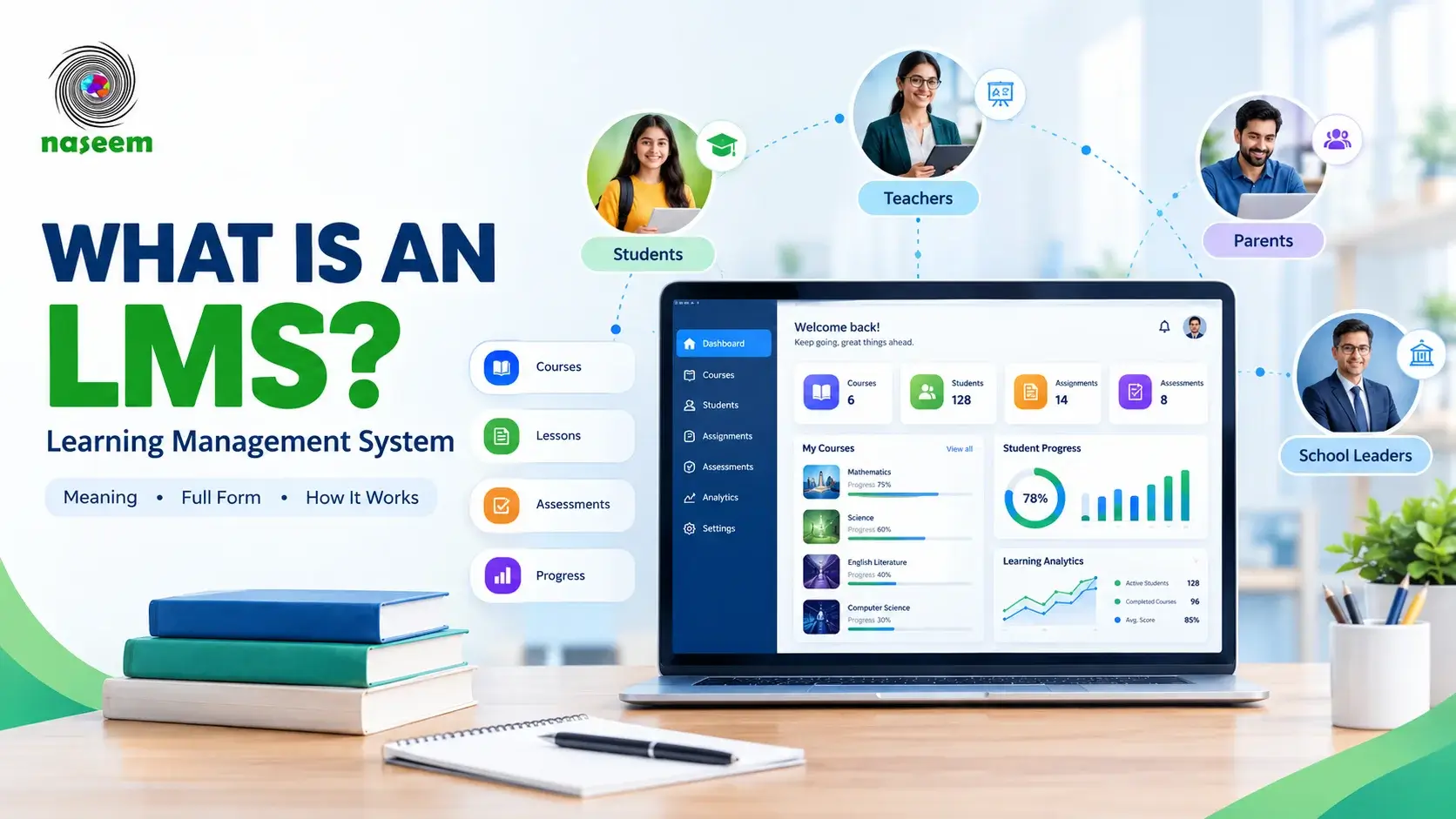
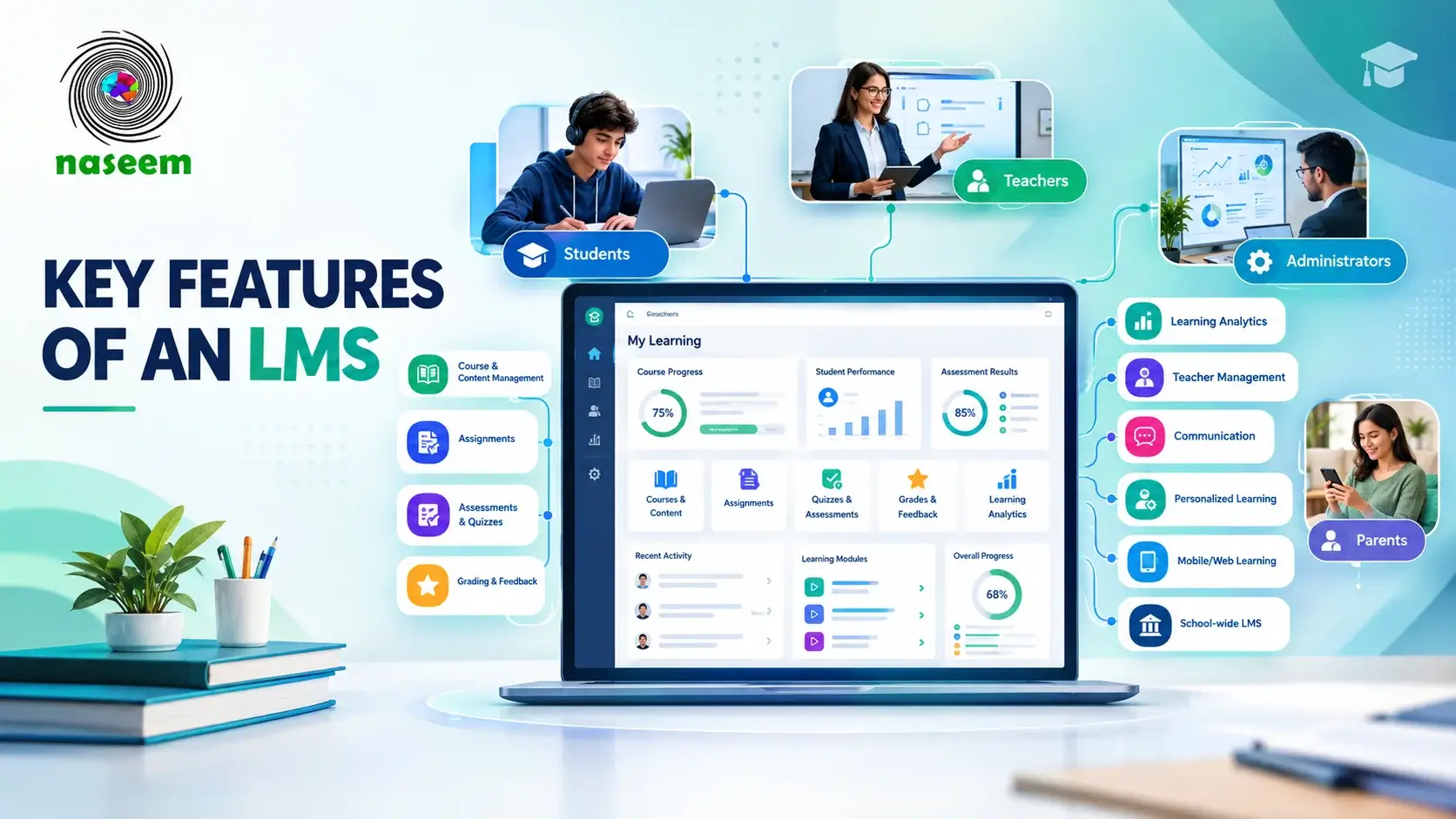
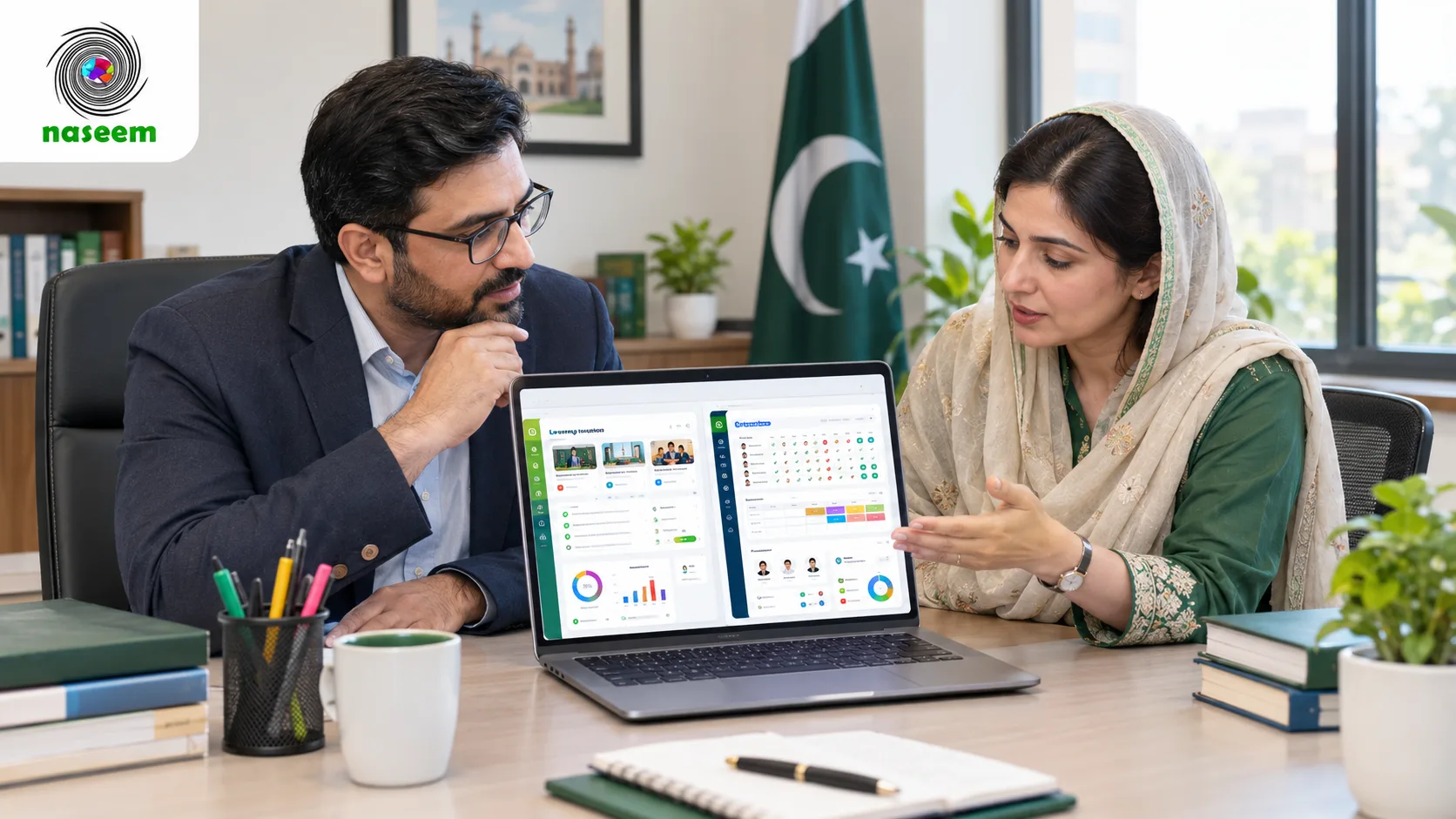
A learning management system (LMS) can make personalized learning more manageable by keeping courses, assessments, results, and feedback in one place. The essential LMS features that matter most here are the ones that organize learning evidence. A school-focused LMS can help teachers and schools:
- Organize learning materials and activities, including different versions of a task
- Manage assessments and see results soon after students submit
- Review student performance by assignment, class, or objective
- Monitor each student's progress over time
- Identify students or topics that may need additional support
- Provide written feedback attached to the student's work
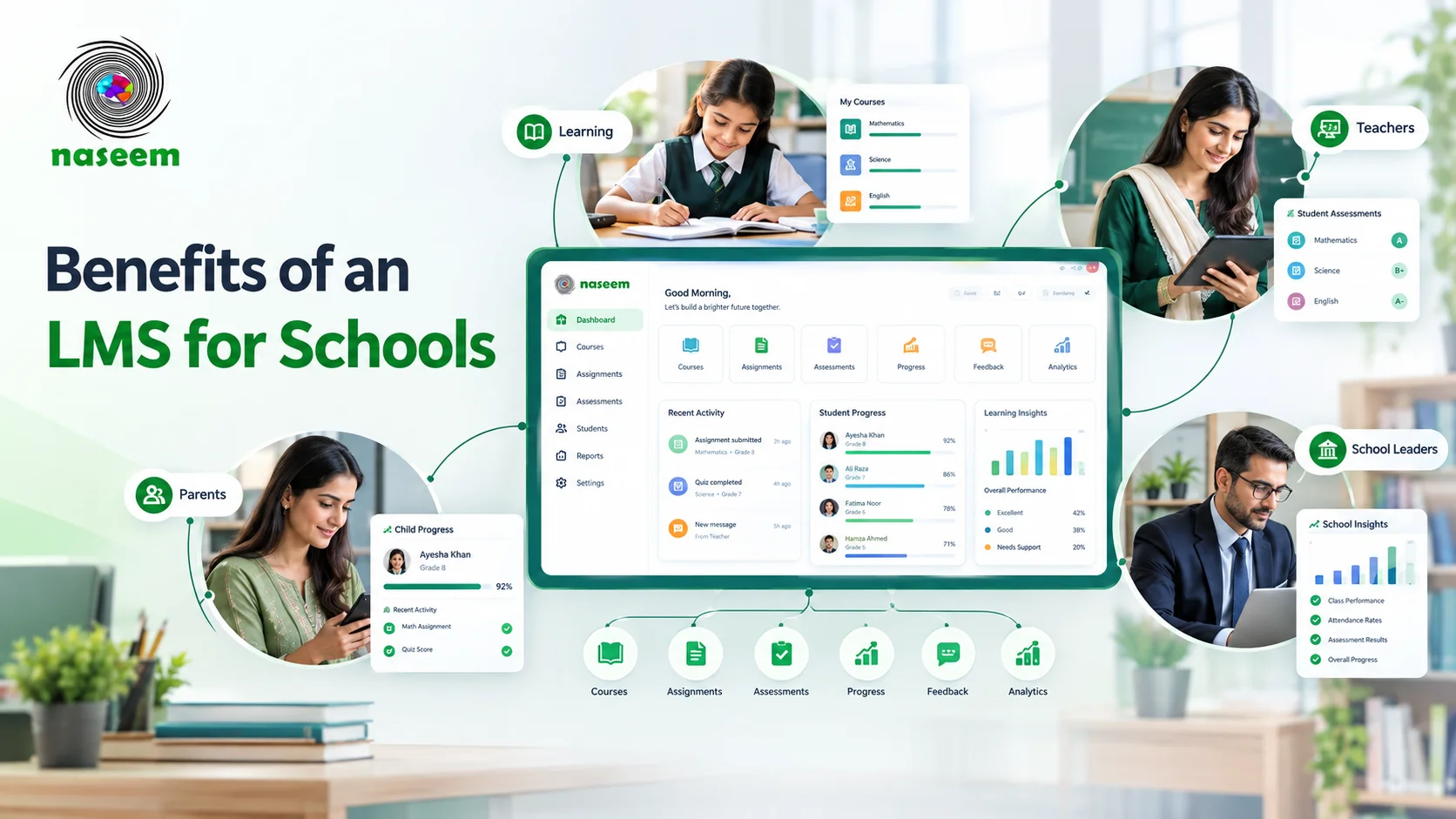
- Keep learning information available to authorized students, teachers, parents, and leaders
The LMS provides information. The teacher decides what to do with it: who to regroup, what to reteach, which student needs a conversation. For a wider view of how a platform supports teaching and administration, see our overview of the benefits of an LMS for schools, and our guide to choosing a learning management system for schools.
How Schools Can Implement Personalized Learning
Schools get further by starting small and building routines than by redesigning every classroom at once. RAND's recommendations for implementers start with giving teachers time and resources to pilot approaches, collaborate on curriculum, and review student work together. A practical sequence:
- Establish clear learning objectives. Personalization needs a fixed target; agree on the objectives for each unit first.
- Understand the student population. Look at existing results to see where the widest gaps are, by grade and subject.
- Prepare teachers and academic coordinators. Train a small group in two or three strategies, such as diagnostic checks, tiered practice, and flexible grouping.
- Choose teaching and assessment methods. Decide which checks teachers will use and how often, so evidence is comparable.
- Provide suitable resources. Build banks of tiered tasks and extension activities that teachers can share.
- Set up a manageable progress review. A short weekly or fortnightly meeting per subject team is enough to start.
- Use technology where it adds value. Use it to collect results, share resources, and record progress, not to replace teaching.
- Evaluate and improve. After a term, compare results and teacher feedback, then decide what to expand.
A realistic first step is one grade, one subject, and one term. For example, a school might pilot diagnostic checks and tiered practice in Grade 6 math with three teachers, meet every two weeks to review results, and extend the approach to other grades only once the routines work.
How Naseem Education Supports Personalized Learning
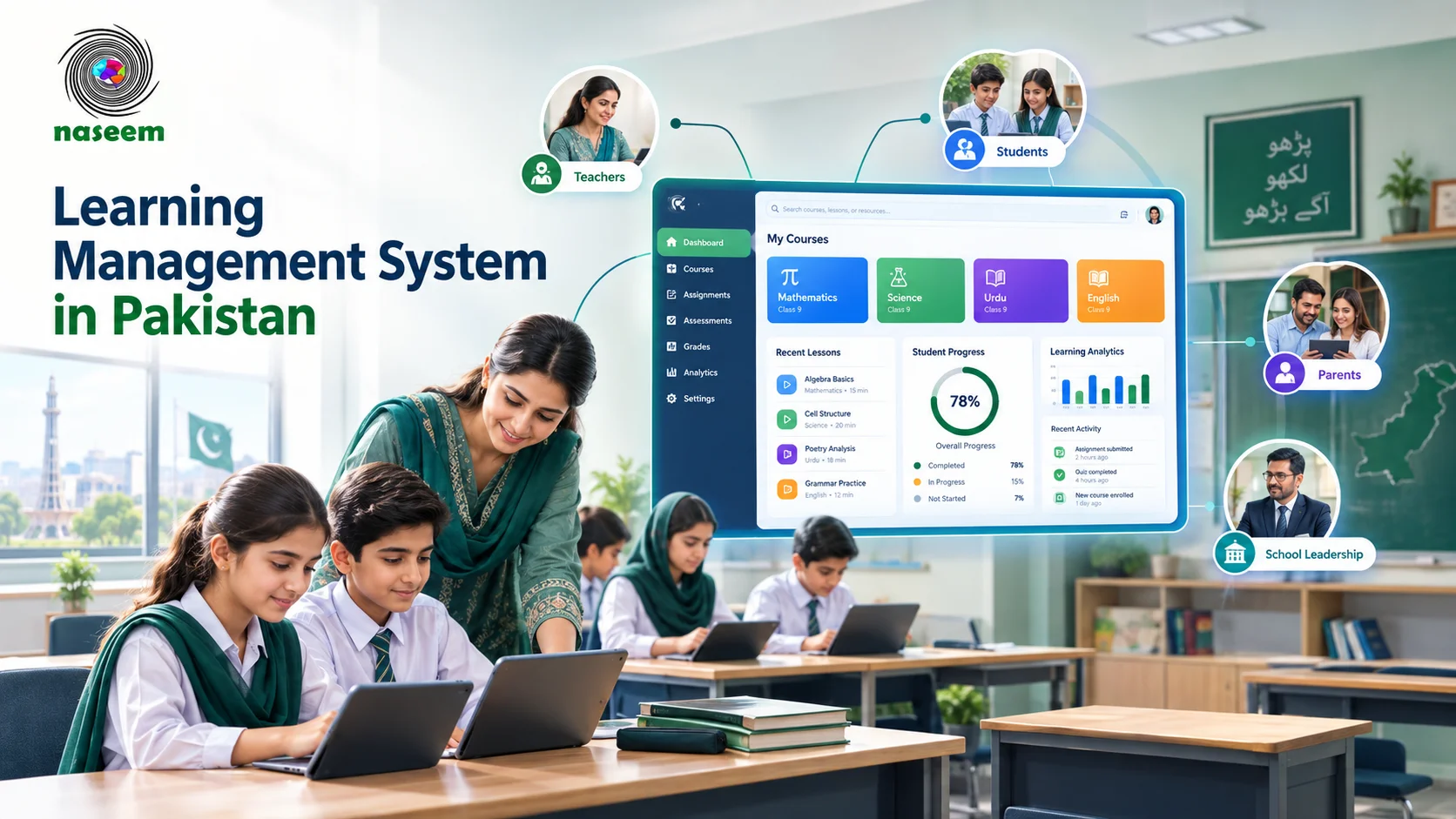
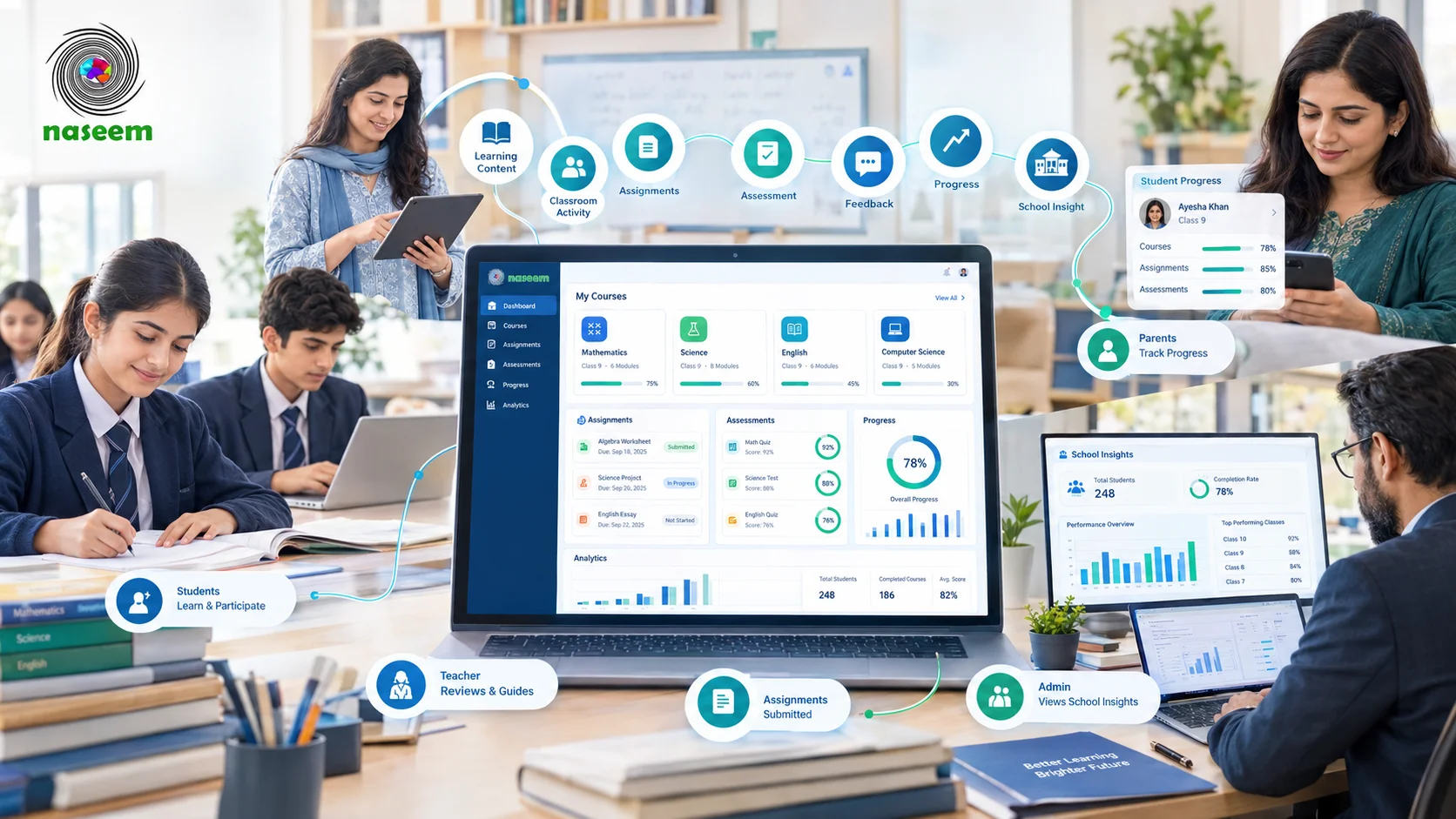
Naseem Education is a school learning management platform that connects students, teachers, parents, and school leaders. The company describes it as supporting learning experiences that adapt to individual needs, pace, strengths, and progress. Its tools map onto the personalized learning cycle described above:
- Course and assignment management: teachers organize lessons, materials, and activities in one place, including different versions of a task.
- Smart assessments: assessment tools with auto-grading where it applies return results quickly, so teachers can see who is secure and who needs support.
- Feedback: students can see feedback while the learning is still fresh.
- Progress tracking and learning analytics: centralized progress information helps teachers spot students who need extra help or more challenging work, and dashboards give school leaders a wider view.
- Gamified, progress-driven experiences: milestones, achievements, progress indicators, and challenges help students see their own progress.
- Parent access: parents can view the progress information made available to them through their authorized accounts.
Naseem also offers two versions to explore: a Standard Student LMS and a Special Education LMS designed for students with special needs.
Here is how that looks in practice. A teacher reviews quiz results in the platform and sees that seven students missed the same type of question. She assigns them a short practice set and a worked example, gives the rest of the class an extension task, and checks the seven students' next results. The platform makes the pattern visible and the follow-up easier to organize; the teacher decides what the students need.
To see how these tools fit your school's teaching approach, explore Naseem Education's learning management system or request a demo. Available features depend on how the platform is set up for your school, so confirm the details for your curriculum during the demo.
Final Thoughts
Personalized learning is not a product or a separate curriculum. It is a habit of making instructional decisions based on what each student needs next, while keeping meaningful learning objectives for everyone.
It works when teachers have good evidence from regular assessment, give feedback students can act on, and have the time and school support to adjust their teaching. Technology can make the evidence easier to collect and the follow-up easier to organize, but the decisions remain the teacher's.
If your school is ready to connect lessons, assessments, feedback, and progress information in one place, see how a school-focused LMS like Naseem Education can support that work.
Frequently Asked Questions
Ready to Bring Your School’s Learning Together?
Give your school a connected learning management system designed to support students, teachers, parents, and school leaders.