Formative Assessment: Definition, Types, Examples, and Strategies for Teachers
Formative assessment is the process of checking what students understand while they are still learning, then using that evidence to decide what to teach, explain again, or practice next. It can take the form of an exit ticket, a question, a quiz, or a conversation. What makes it formative is what the teacher and students do with the results.
Most teachers already check understanding. The hard part is doing it for 30 or more students in a 40-minute lesson, reading the results quickly, and finding time to respond. This guide explains what formative assessment is and how it differs from diagnostic and summative assessment. It then gives 15 formative assessment examples with ways to act on the results, and strategies that keep the practice manageable.
What Is Formative Assessment?
Formative assessment is a planned, ongoing process in which teachers and students gather evidence of learning during instruction and use it to adjust what happens next. A U.S. Department of Education review of formative assessment research describes it as gathering, interpreting, and using evidence about what students are learning to support further learning.
The process has three steps:
- Elicit evidence by asking a question, setting a task, or observing students at work.
- Interpret it by deciding what the responses show, including which errors are slips and which are misconceptions.
- Act on it by giving feedback, reteaching, or moving on, and by giving students a chance to use the feedback.
The third step defines the practice. The NSW Education Standards Authority notes that any assessment can be formative when its information is used to adapt teaching and students receive timely feedback and opportunities to improve. A quiz that is graded, recorded, and never discussed has done no formative work. A graded test can serve a formative purpose if the teacher reteaches the weak topic and students correct their errors.
Consider a Grade 7 math teacher introducing one-step equations. Near the end of the lesson, students solve three equations on mini whiteboards. Most handle x + 7 = 12, but nearly half get x/4 = 3 wrong because they divide instead of multiplying. The next day she reteaches inverse operations for division before moving to two-step equations, then checks again with two new questions.
Why Is Formative Assessment Important?
A teacher can explain photosynthesis clearly and still have a third of the class believe that plants take their food from the soil. Formative assessment makes that visible while there is still time to respond. Used consistently, it helps teachers and students to:
- Identify learning gaps early, as specific misconceptions rather than a vague sense that a student is "weak in fractions."
- Understand individual needs, such as who needs another worked example.
- Decide with evidence whether to reteach, regroup, or move on.
- Give timely feedback while the work can still be improved.
- Involve every student, including those who rarely volunteer.
- Build students' self-awareness as they compare their work with clear criteria.
- Monitor progress toward learning objectives lesson by lesson.
- Improve teaching over time, as response patterns show which explanations work.
The research is encouraging, with limits. Paul Black and Dylan Wiliam's 1998 review of classroom assessment concluded that strengthening the feedback students receive during learning produces substantial gains. The U.S. Department of Education review cited above examined 23 rigorous studies in elementary schools and found a positive average effect on achievement, larger in math than in reading or writing. In England, an evaluation of the Embedding Formative Assessment program covered 140 secondary schools. It found about two months of additional progress in overall exam results at age 16, but no separate gain in English or math. None of this guarantees higher grades. The effect depends on what teachers do with the evidence.
What Are the Different Types of Assessment?
Assessment is usually described by its purpose: diagnostic, formative, or summative.
| Assessment Type | Main Purpose | When It Is Used | Example |
|---|---|---|---|
| Diagnostic | Find out what students already know, including misconceptions, before teaching | Before a unit, course, or new topic | A short pre-test on place value before a Grade 4 unit on decimals |
| Formative | Check understanding during learning, then adjust teaching and give feedback | During lessons and units, often daily | An exit ticket asking students to add two decimals and explain their steps |
| Summative | Judge and report what students have learned against a standard | At the end of a unit, term, or course | An end-of-unit test, a term exam, or a final project |
These labels describe how evidence is used, so one activity can serve more than one purpose. A pre-test is diagnostic when it shapes the unit plan and formative when the teacher returns to its errors during teaching. An end-of-unit test is summative when it produces a grade. It also works formatively if the teacher analyzes the errors and reteaches them in the next unit.
Pakistan's National Curriculum Framework 2026 treats all three as parts of one balanced system. It also uses the related terms assessment for learning, assessment as learning (self and peer assessment), and assessment of learning.
15 Examples of Formative Assessment in the Classroom
Each of these formative assessment examples covers how to run the activity, what evidence it gives, and how to use the results.
1. Exit Tickets
In the last three minutes of a lesson, students answer one or two questions on paper or a digital form. Aim the question at the day's objective and ask for a reason as well as an answer. The responses show who can apply the idea alone. Sort them into three piles (secure, nearly there, not yet) and open the next lesson with the largest pile's problem. Example: after a Grade 5 lesson on equivalent fractions, ask for two fractions equal to 3/4 and why.
2. Classroom Quizzes
A quiz of five to eight questions checks recall and application of recent content. Keep the stakes low. Review results question by question, because an item most of the class misses shows what to reteach. Have students correct that item the next day. Example: question 4 of a Grade 8 science quiz shows that many students confuse mass with weight.
3. Think-Pair-Share
Pose a question, give 30 seconds of silent thinking, let pairs discuss, then ask pairs to report. Listen in during the pair stage. You hear reasoning that raised hands never reveal, and hesitant students get to rehearse. Take two or three typical responses, including a wrong one, to the whole class. Example: Grade 9 history students decide whether the Industrial Revolution improved life for factory workers and give one reason.
4. One-Minute Papers
At the end of a lesson, students write for one minute on two prompts: the most important thing they learned and the point that is still unclear. A class set takes about five minutes to read. The unclear points cluster quickly, and the largest cluster opens the next lesson. Example: after a Grade 10 chemistry lesson on balancing equations, many papers ask why subscripts cannot be changed.
5. Student Self-Assessment
Students judge their own work against success criteria before handing it in. Give them a short checklist and a model answer, and ask for evidence, such as underlining the sentence that meets each criterion. A bare "I understand" rating tells you little. Comparing their judgment with yours shows who overestimates their progress. Example: Grade 6 students check a persuasive paragraph for a claim, two reasons, and a counterargument, then rewrite the weakest part.
6. Peer Assessment
Students give each other feedback using shared criteria. Model the process with an anonymous sample, limit comments to one strength and one specific suggestion, and allow time to revise. What partners notice and miss shows how well the class understands the criteria. Peer comments add to teacher feedback and do not replace it. Example: Grade 8 students swap lab reports and check whether each conclusion refers to the data.
7. Classroom Discussions
A discussion built around one open question shows depth of understanding and the vocabulary students can use. Ask each speaker to respond to the previous one, and tally on a seating chart who contributes. Missing terms and repeated misconceptions become teaching points for the next lesson. Example: Grade 7 students debate whether a square is a rectangle, which reveals who defines shapes by their properties.
8. Concept Maps
Students write the key ideas of a topic as nodes and label the links between them. Provide eight to ten terms for younger students or a blank page for older ones. The link labels are the evidence: "evaporation leads to condensation" shows more than two words joined by a line. Wrong or missing links show which relationships to reteach. Example: Grade 6 students map the water cycle before and after the unit.
9. Practice Assignments
Classwork and homework become formative when the teacher looks for patterns and returns the work with something to do. Set fewer, well-chosen problems, check one key question closely, and record common errors as well as scores. Then set a short task on the most common error. Example: Grade 9 algebra homework shows that many students drop the negative sign when distributing over parentheses, so the next lesson opens with four questions on signs.
10. Questioning Techniques
Questions that every student answers give better evidence than questions answered by volunteers. Write two or three key questions into the lesson plan, wait at least three seconds, and use cold calling or mini whiteboards. A hinge question, usually multiple choice with each wrong option tied to a known misconception, shows mid-lesson whether to continue. Example: Grade 5 students who say 0.35 is larger than 0.4 are reading decimals as whole numbers.
11. Learning Journals
Students write short, regular entries on what they learned, how they solved a problem, and what they still find difficult. Give a prompt and five minutes, and read a different group's journals each week. Journals show thinking and confidence over time, which a single task cannot. Reply with one question to answer in the next entry. Example: a Grade 11 physics student writes that she can calculate acceleration but cannot explain a velocity-time graph.
12. Online Polls
A poll collects an anonymous answer from every student in under a minute, on devices or with colored cards where devices are scarce. Ask one clear question with plausible wrong options and look at the spread of answers. If most are correct, move on. If the class is split, have pairs defend their choices and poll again. Example: Grade 10 biology students vote on where most of a tree's mass comes from: soil, water, air, or sunlight.
13. Short Presentations
Students explain a concept or a solution to the class or a small group in two to three minutes. Share the criteria in advance and ask each presenter one follow-up question. Explaining aloud shows whether a student can organize and justify an idea, and listeners' questions show what they followed. Note any gaps to revisit. Example: Grade 8 pairs present two different methods for solving the same ratio problem.
14. Observation Checklists
While students work, the teacher records what they can do against a short list of skills. Choose three or four observable behaviors and watch five or six students per lesson, so the whole class is covered in a week. This suits skills that written tasks miss, such as practical work, reading aloud, and collaboration. Use the record to form small support groups. Example: during Grade 3 reading, the teacher notes decoding, fluency, and self-correction for each child.
15. Digital Learning Activities
Interactive tasks on a learning platform, such as auto-graded practice sets and questions embedded in videos, record each student's responses as they work. Read the report before the next lesson. Look for questions with low success rates and students who needed several attempts, then discuss those questions in class, because a score does not explain an error. Example: a Grade 7 grammar set shows that subject-verb agreement with collective nouns is the weakest item.
Formative Assessment Strategies for Teachers
These formative assessment activities work best inside a routine. The nine strategies below build on the Australian Education Research Organisation's formative assessment practice guide, which recommends clear objectives, frequent checks for understanding, and prompt, specific feedback.
- Define a clear learning objective. State in one sentence what students should be able to do by the end of the lesson. "Solve two-step equations" can be checked. "Understand algebra" cannot.
- Share success criteria. Show a model answer or a three-point checklist before students start.
- Ask effective questions. Plan two or three key questions in advance, including one that exposes a likely misconception.
- Check understanding throughout the lesson. Check after each new idea, using a method in which every student responds.
- Give actionable feedback. Name one thing done well and one specific next step, then give class time to act on it. The Education Endowment Foundation's evidence summary on feedback rates it as high impact on average, while noting that results vary widely between studies.
- Encourage peer learning. Have pairs compare answers and explain any differences before you confirm the correct one.
- Use student self-assessment. Ask students to check their work against the criteria and choose one thing to improve.
- Adapt instruction based on the evidence. Decide in advance what you will do if most, some, or few students are secure: move on, regroup, or reteach.
- Follow up after identifying gaps. Recheck the same idea a few days later with a new question. A gap is closed when students answer correctly later, not when the topic has been retaught.
Formative Assessment vs. Summative Assessment
They differ in purpose and in how results are used.
| Aspect | Formative Assessment | Summative Assessment |
|---|---|---|
| Purpose | Improve learning while it is happening | Judge and report what has been learned |
| Timing | During a lesson or unit | At the end of a unit, term, or course |
| Frequency | Frequent, often several times in a lesson | Occasional |
| Feedback | Specific and prompt, with time to act on it | Usually a grade or score, sometimes with comments |
| Grading | Usually ungraded or low stakes, although graded work can be used formatively | Graded and recorded |
| Student involvement | Students respond, assess themselves, and act on feedback | Students demonstrate what they have learned |
| Instructional decisions | What to teach, reteach, or practice next | Reporting, promotion, certification, and program review |
| Examples | Exit tickets, questioning, drafts, practice quizzes | Final exams, end-of-unit tests, board examinations |
The two approaches complement each other, and neither replaces the other. Summative assessment tells students, parents, and schools what has been achieved. Formative assessment improves the chances that students are ready for it. Summative results can also be used formatively, as when a teacher reviews last term's exam errors with a class.
How Technology Supports Formative Assessment
Digital formative assessment tools help with the two slowest parts of the process: collecting a response from every student and seeing the pattern in those responses.
- Digital quizzes and online polls collect responses from a whole class in minutes and score objective questions immediately.
- Automated feedback tells students at once whether an answer is correct, which suits practice on facts and procedures.
- Digital assignments keep drafts, submissions, and teacher comments in one place, so students can return to feedback.
- Assessment reports and learning analytics show results by question, by student, and over time. This makes recurring misconceptions and slow progress easier to spot.
There are limits. Automatic grading works for multiple-choice and short-answer questions, not for reasoning, extended writing, or practical skills. A report shows which question students got wrong but not why. Students without reliable devices or internet access can be left out, and it is easy to collect more data than anyone uses.
The Education Endowment Foundation's guidance on using digital technology to improve learning reaches a similar conclusion. Technology can improve assessment and feedback, but what counts is how teachers use the information and how students act on it. Interpreting the evidence remains the teacher's work.
How an LMS Can Help Teachers Conduct Formative Assessments
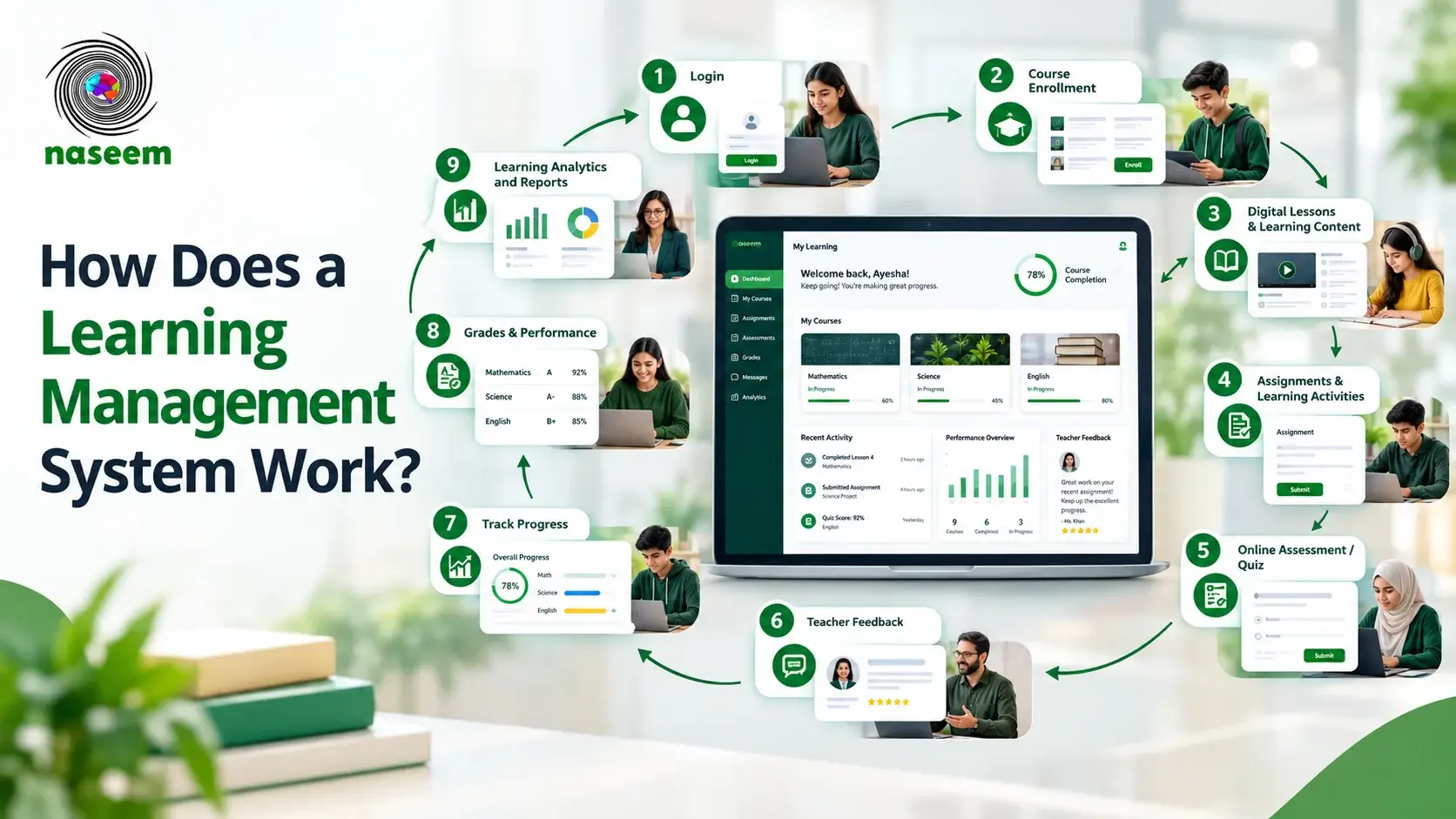
A learning management system (LMS) puts these digital steps in the same place as courses and student records. Teachers can:
- Create quizzes and assignments and organize them by course, unit, and topic.
- Collect responses from every student in one place.
- Have suitable question types, such as multiple choice, graded automatically, and review written answers themselves.
- Attach feedback to the specific piece of work.
- See which questions and topics caused difficulty across a class.
- Review each student's results over time, alongside other progress information.
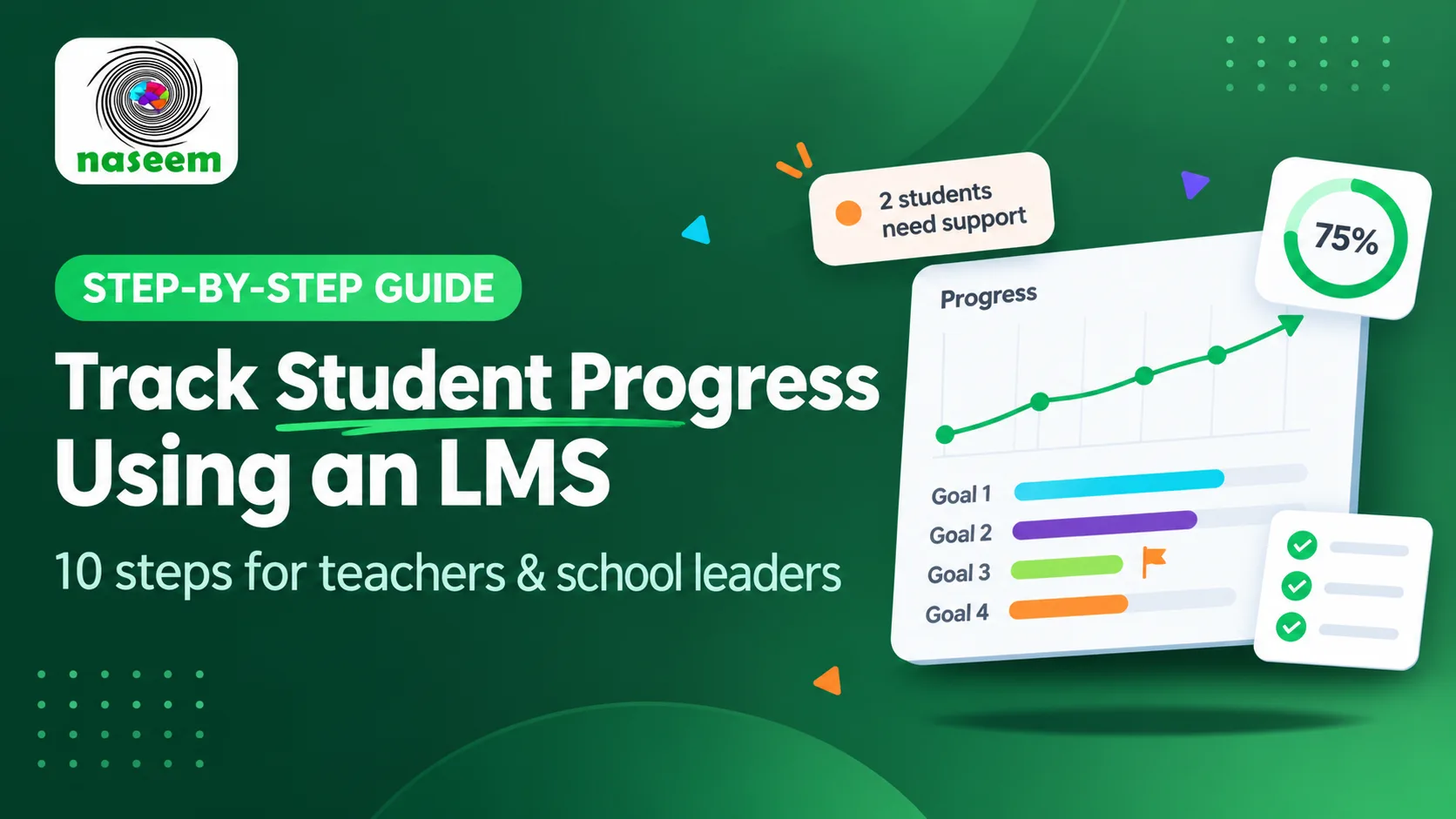
Our guide to how an LMS manages assessments and grading explains this workflow step by step. A companion article on how to track student progress using an LMS shows how assessment results fit into a wider view of learning. Schools comparing platforms can check assessment tools against our list of learning management system features.
An LMS does not make an assessment formative. It shortens the time between asking a question and seeing the answers, which leaves more of the lesson for responding to them.
Common Challenges in Formative Assessment
The OECD's study of formative assessment in secondary classrooms found that many teachers used elements of formative assessment, but few practiced it systematically. The usual obstacles are practical.
| Challenge | Realistic Solution |
|---|---|
| Limited classroom time | Plan one check per lesson that takes under three minutes, such as an exit ticket, and let it replace the usual recap. |
| Large class sizes | Use whole-class responses such as mini whiteboards, colored cards, or polls, and read a sample of written work. |
| Difficulty giving individual feedback | Give whole-class feedback on the three most common errors, then speak with the few students who need something different. |
| Low student participation | Keep checks low stakes and anonymous where possible, allow thinking time, and treat wrong answers as useful information. |
| Interpreting the results | Write questions so that each wrong answer points to a specific misconception, and review errors by question before totals. |
| Choosing the right activity | Start from the objective. Recall suits a quiz, reasoning suits discussion or explanation, and practical skills suit observation. |
| Using the information | Decide before the lesson what you will do for each likely result, and keep the first ten minutes of the next lesson for follow-up. |
Best Practices for Implementing Formative Assessment
For teachers:
- Link every check to a specific learning objective.
- Collect a response from every student.
- Keep most checks short and low stakes.
- Look for patterns by question and by misconception before looking at scores.
- Give feedback that students must act on, and schedule time for it.
- Recheck the same learning a few days later.
For school leaders:
- Agree on a small set of shared formative assessment techniques.
- Give teachers time to plan questions and review results together.
- Judge the practice by what teachers do with evidence, not by the number of assessments recorded.
- When choosing an LMS for your school, check that it shows results by question and reduces grading time for teachers.
How Naseem Education Supports Assessment and Feedback
Naseem Education provides a school-focused learning management system that connects students, teachers, parents, and school leaders. Several of its capabilities support the assessment process described above:
- Smart assessments, with auto-grading where it applies.
- Assessment results and performance visibility for teachers.
- Feedback that helps students understand their performance while the learning is still fresh.
- Student progress tracking and learning analytics, which bring performance information together and help teachers identify learning gaps.
These tools support the collection and review of evidence. Choosing the question, interpreting the answers, and deciding what to teach next remain the teacher's decisions.
To see how this fits your school's approach to assessment, explore the Naseem Education LMS or request a demonstration.
Frequently Asked Questions About Formative Assessment
Ready to Bring Your School’s Learning Together?
Give your school a connected learning management system designed to support students, teachers, parents, and school leaders.