Custom LMS for Schools: Should You Build Your Own or Buy a Ready-Made Platform?
Sooner or later, many school owners ask the same question: "Should we just build our own LMS?" It usually comes after a frustrating year with a generic platform, or after a developer friend offers to put something together. A custom LMS sounds attractive. It would match your timetable, your grading scheme, your branding and the way your teachers already work.
Sometimes building is the right call. Most of the time it isn't, and the reasons are mostly about money, time and who will look after the system five years from now. This guide covers what a custom LMS is, what custom LMS development costs in 2026 (in US dollars and Pakistani rupees), how long a build takes, and how to tell which path fits your school.
The short answer
Most K-12 schools do not need a fully custom LMS. A custom LMS for schools makes sense when your teaching model is unusual, when you need deep two-way links with systems no vendor supports, or when your student numbers are large enough that license fees would overtake the build cost within three to five years. For everyone else, a ready-made school LMS built for students, teachers, parents and principals gets you running in weeks instead of months, at a fraction of the long-term cost.
What is a custom LMS?
A custom LMS, or custom learning management system, is a learning management system designed and coded for one organization. You decide the features, you usually own the code, and you pay a development team to build it and keep it running.
People use "custom LMS" loosely, so it helps to separate four options that often get lumped together:
| Option | What it means | Upfront cost | Time to launch | Who maintains it |
|---|---|---|---|---|
| Fully custom build | A new platform written from scratch for your school | Highest | Months | Your developers or an agency you hire |
| Open-source, customized | A free platform such as Moodle or Open edX, modified by developers | Medium (no license fee, but paid setup and development) | Weeks to months | Your IT team or a hosting partner |
| Ready-made school LMS | A cloud platform built for schools that you set up with your classes, users and settings | Low | Weeks | The vendor |
| White-label LMS | A vendor's platform sold under your school or brand name | Low to medium | Weeks | The vendor |
The difference between a custom and a customizable LMS matters most. A custom LMS starts empty, and every feature is something you pay to have built. A customizable LMS already has years of work behind it, and you adjust it to fit: your subjects, grading periods, user roles, language and branding.
When a school really needs a custom LMS
A custom build earns its cost in a small number of situations. If two or more of these describe your school, it is worth getting quotes.
Your teaching model doesn't fit any existing platform. Think of a therapy-led special education center that tracks individual goals, sessions and caregiver notes in a way no product supports.
You run a large network with its own curriculum. A chain with dozens of campuses, proprietary course material and central academic control may want to own the platform outright. If that's you, read our guide on choosing an LMS for multi-campus schools first, because many networks find a ready-made option already covers them.
You need deep two-way integration with in-house systems. If your fee, admissions and report card software was built in-house and has no standard interfaces, a custom LMS can be designed around it.
A contract or regulator requires you to control where student data lives. Some institutions must keep records on specific servers. A self-hosted LMS or a custom build gives you that control, along with the job of securing it.
The platform is the product. If you plan to sell courses or tutoring to outside learners, the LMS becomes part of your business, and owning it can make sense.
Your scale makes license fees bigger than build costs. A June 2026 build-or-buy guide from Cleveroad notes that custom tends to win when per-seat fees outpace build cost within three to five years.
When a ready-made school LMS is the better buy
For most schools, the opposite list is the honest one. A ready-made platform is the better choice when:
- your classes, assignments, quizzes and report cards look broadly like other schools'
- you want the platform live for the coming academic year, not the one after
- you don't have developers on staff, and don't want a long-term dependency on one agency
- your budget is below the build ranges in the next section
- you want parents and principals to have their own views from the first day
Before you decide, check what the ready-made options already do. Our list of essential LMS features is a useful benchmark. Many schools that start out wanting a custom system discover that the features they needed already exist and simply weren't in the platform they were using.
Custom LMS development cost in 2026
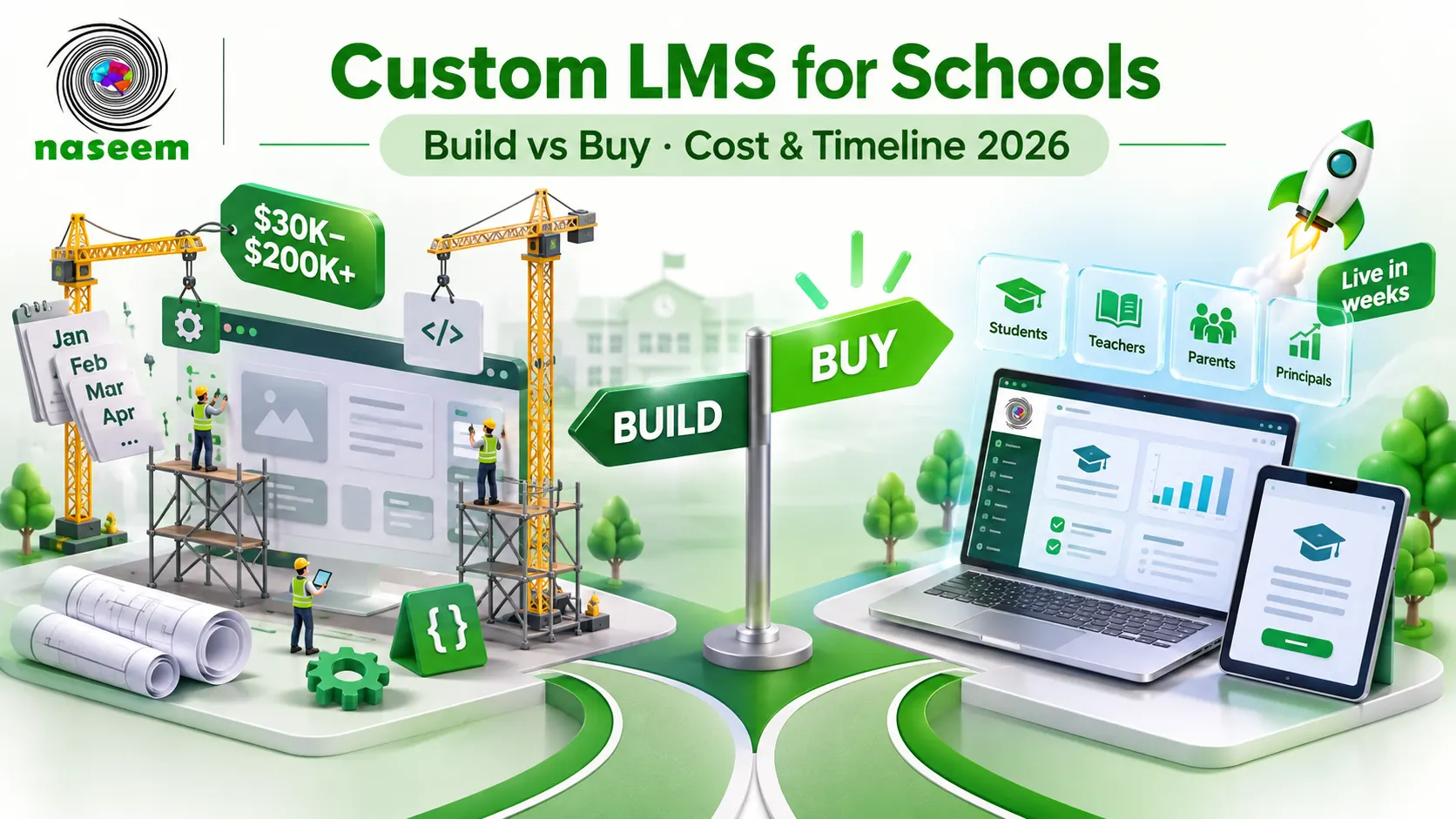
Custom LMS development is expensive because you are paying for design, engineering, testing, hosting and security before a single teacher logs in. The most detailed recent breakdown we found is the Cleveroad guide published in June 2026, which puts custom builds at $30,000 to $200,000 or more. Converted at roughly Rs 277 to the dollar (the interbank rate on November 10, 2026), that is about Rs 8.3 million to Rs 55.4 million.
| Build scope | Typical cost (USD) | Approx. cost (PKR) | Typical timeline |
|---|---|---|---|
| Minimum viable product: core courses, users, quizzes, basic reports | $30,000 to $70,000+ | Rs 8.3M to 19.4M+ | 3 to 5 months |
| Mid-scope: more roles, integrations, analytics, mobile | $70,000 to $120,000+ | Rs 19.4M to 33.2M+ | 6 to 9 months |
| Enterprise: large scale, complex integrations, advanced features | $120,000 to $200,000+ | Rs 33.2M to 55.4M+ | 9 to 12+ months |
These ranges reflect international agency rates. A local development firm in Pakistan may quote lower, but the scope of work is the same, and so are the costs that keep coming after launch.
The costs schools forget to budget
The build price is the visible part. The same Cleveroad guide estimates that annual maintenance usually adds 15% to 20% of the original development cost. On a $70,000 build, that's roughly $10,500 to $14,000 every year. Maintenance covers:
- hosting, backups and monitoring
- security patches and browser or operating system updates
- bug fixes, which never fully stop
- new features teachers ask for after the first term
- support when something breaks during exam week
Then there are costs that don't appear on a developer's invoice: teacher training, moving existing content and student records into the new system, and the time your academic team spends writing requirements and testing builds. Our guide on switching LMS platforms shows how much work the data move alone involves.
How long it takes: build vs. buy
A custom build normally moves through discovery, design, development, testing, a pilot with a few classes, and then a school-wide rollout. Even the smallest scope in the table above takes three to five months before the pilot, and few schools want to launch a new system halfway through a term. A project that starts in spring can easily miss the August session start and go live a term later than planned.
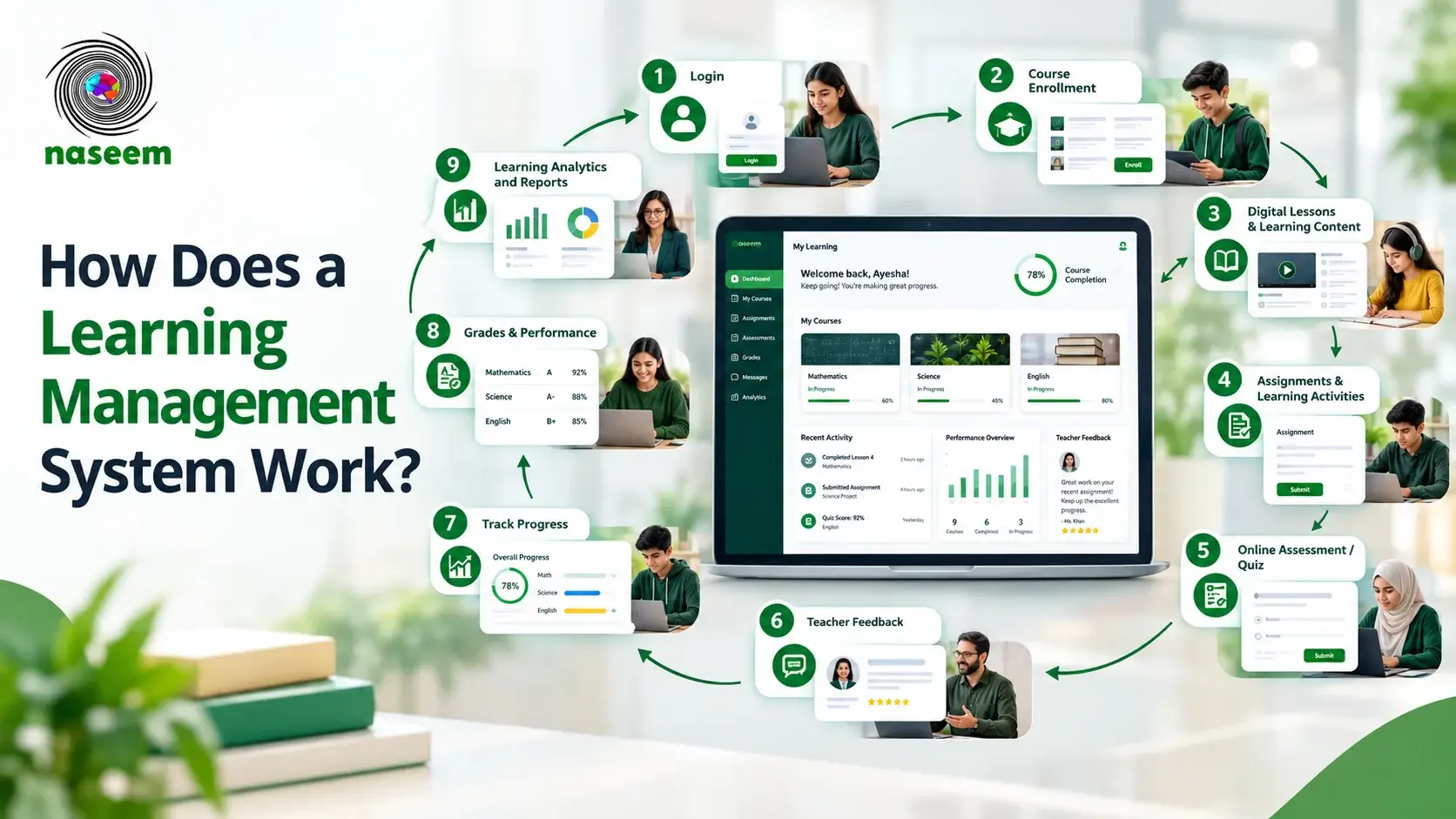
A ready-made platform skips the build entirely. The work becomes setting up classes and users, importing data, training teachers, and launching. That is usually a matter of weeks, which means you can make the decision in one term and use the system in the next.
A five-year cost example for a 1,000-student school
Here is a simple way to test whether building pays off. Take a minimum viable custom LMS at $50,000 (Rs 13.85 million), in the middle of the MVP range. Add maintenance of 15% to 20% a year for years two to five.
| Cost item | Low estimate | High estimate |
|---|---|---|
| Build (year 1) | $50,000 | $50,000 |
| Maintenance, years 2 to 5 | $30,000 | $40,000 |
| Five-year total | $80,000 (about Rs 22.2M) | $90,000 (about Rs 24.9M) |
| Per student, per year (1,000 students) | $16 (about Rs 4,430) | $18 (about Rs 4,990) |
So the test is straightforward. If a ready-made school LMS costs you less than about Rs 4,400 to Rs 5,000 per student per year, all-in, a basic custom build won't pay for itself within five years. That's before counting the months you wait for the build, the risk of delays, or the training and data migration both paths share.
Your numbers will differ, so run them with real quotes. Our guide to LMS pricing in Pakistan explains the pricing models vendors use and the one-off charges to ask about, so you can compare like with like.
The risks of building your own LMS
Cost overruns get most of the attention, but the risks that hurt schools most tend to show up later.
You depend on one team
If the agency closes, raises its rates or loses the developer who knew the code, every change becomes slow and expensive. Ask who owns the source code and the documentation before you sign anything.
The platform falls behind
Vendors spread the cost of new features, mobile apps and security work across many schools. A custom platform improves only when you pay for it, so after a few years it can feel dated next to products that kept moving.
You become responsible for children's data
A school LMS holds names, grades, attendance and sometimes medical or learning-support notes. As of August 2026, Pakistan still had not enacted a comprehensive personal data protection law, so protection depends largely on your contracts and your own security practices. With a custom build, that responsibility sits with you and your developer. Whichever path you choose, put data ownership, storage location, backups and deletion at the end of the contract in writing.
Integrations and accessibility take extra work
Connecting outside tools usually relies on standards such as LTI, and making pages usable for students with disabilities means designing to WCAG 2.2. Mature platforms have often done some of this work already. A new build has to do it from scratch, and it's easy to cut when budgets tighten.
The middle path: configure, connect and brand
Between a full build and an off-the-shelf product there's a sensible middle ground, and it's where most schools end up. You choose a ready-made school LMS, then:
- configure it with your subjects, classes, grading periods and user roles
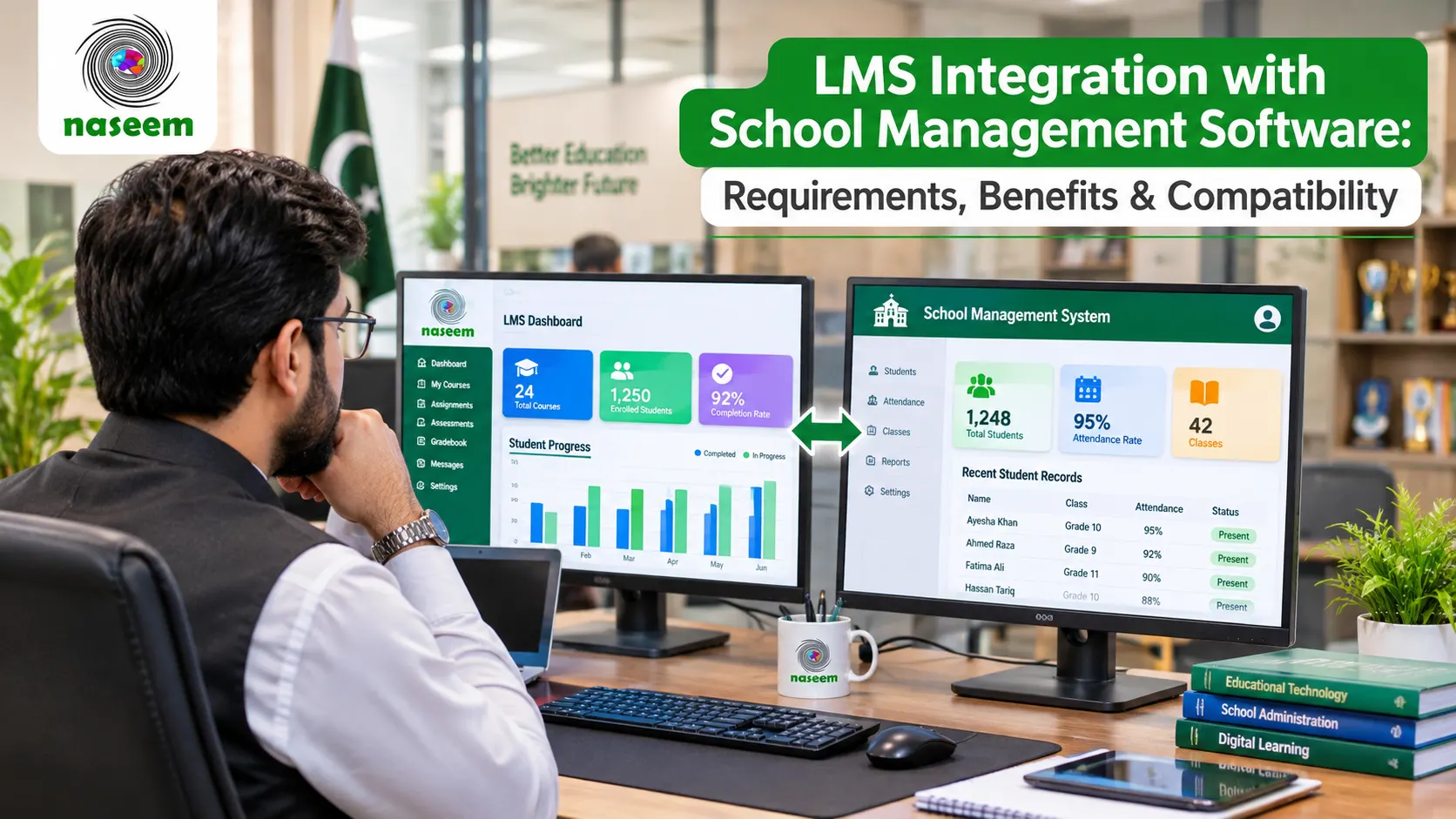
- connect it to the systems you already use, such as fee or admissions software (our guide on how to connect an LMS to school management software explains what to check)
- apply your school's name, logo and language settings where the vendor supports it
If you're unsure where the line falls between the two kinds of software, our comparison of LMS and school management software helps you decide what each system should handle. Schools moving off an open-source platform can also look at our roundup of Moodle alternatives before committing developer time to a heavily modified install.
Why Naseem Education is the best fit for most schools
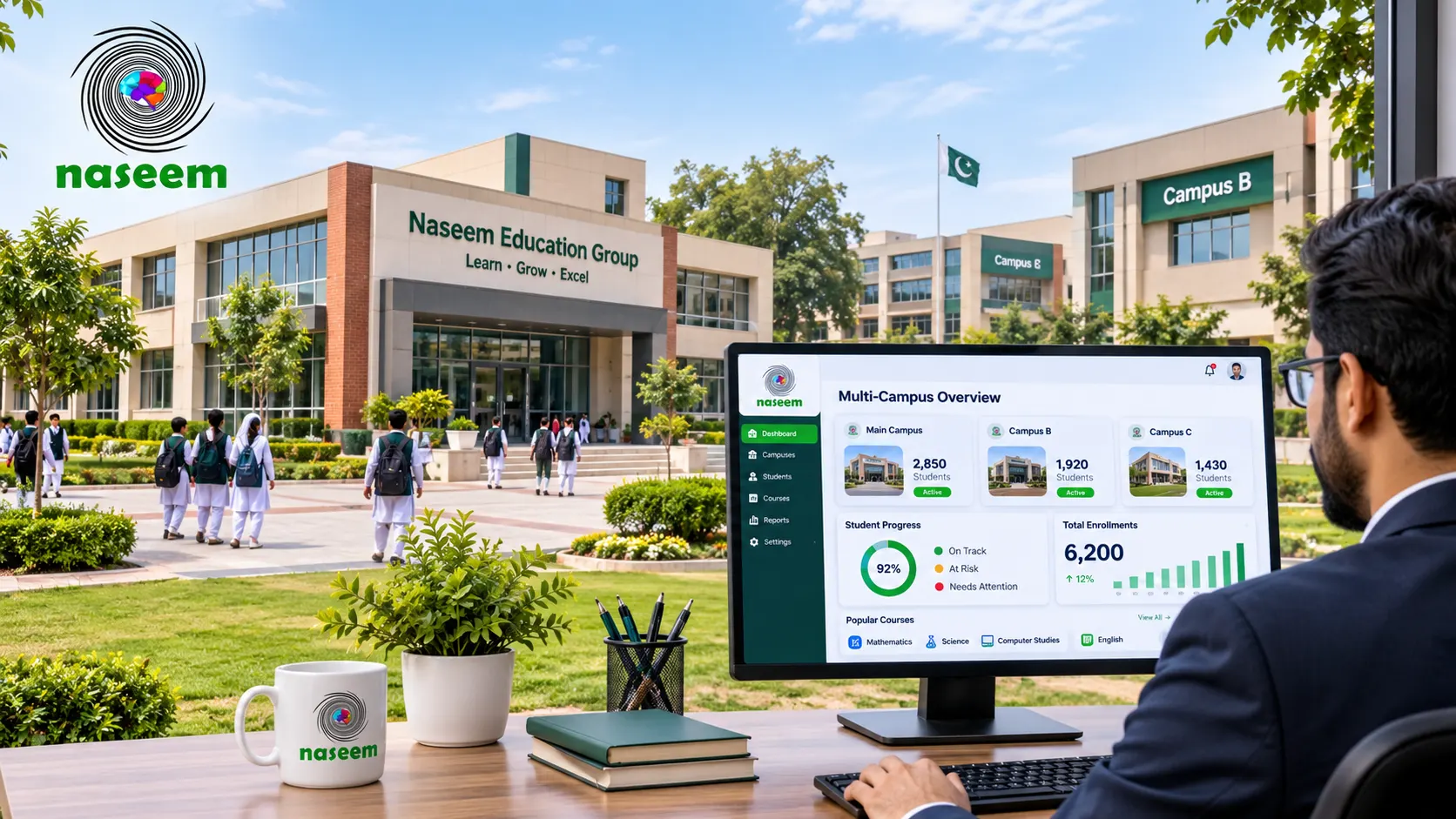
We built Naseem Education as a ready-made LMS for K-12 schools, so it covers the needs that usually push schools toward a custom build, without the build.
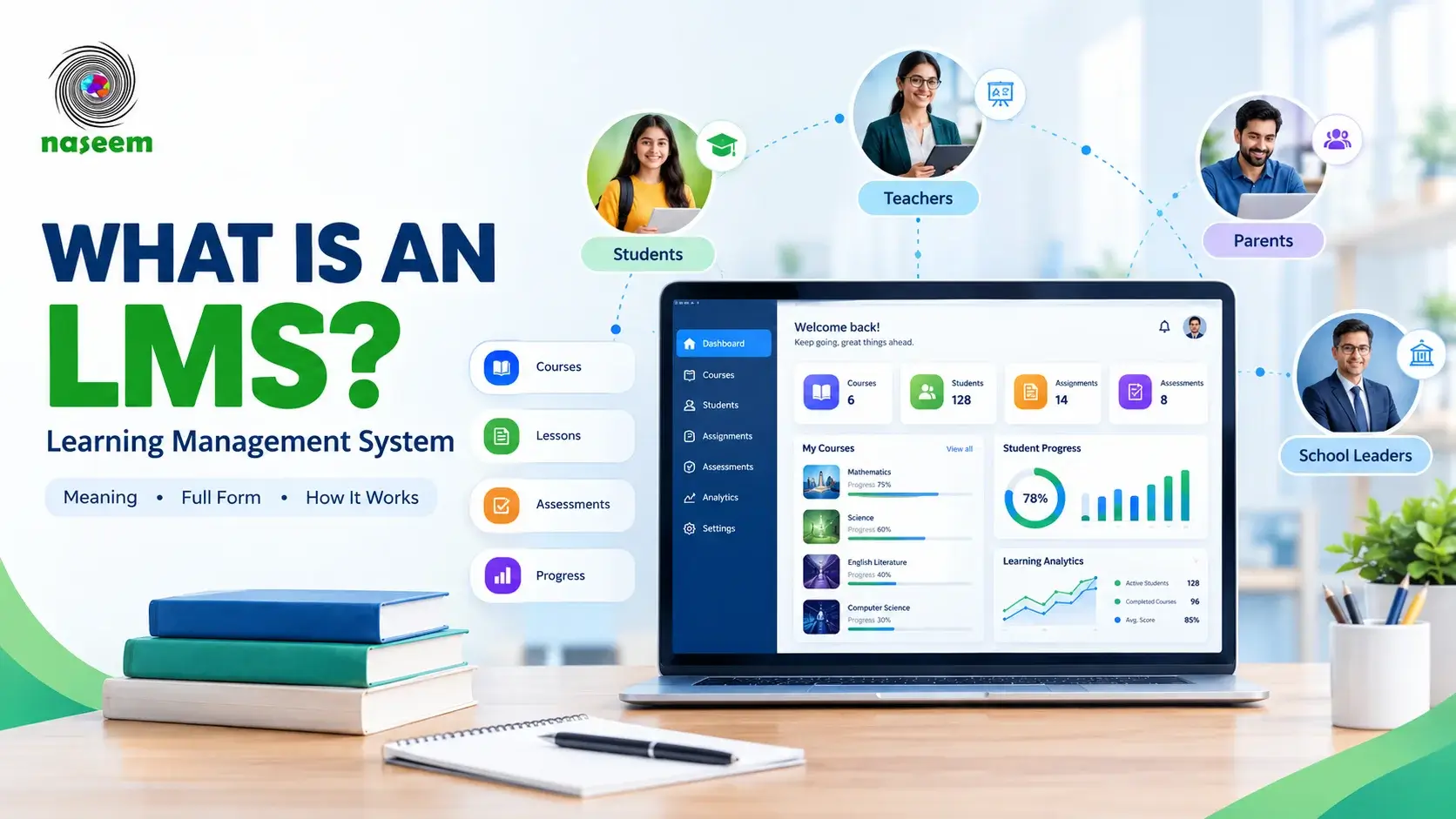
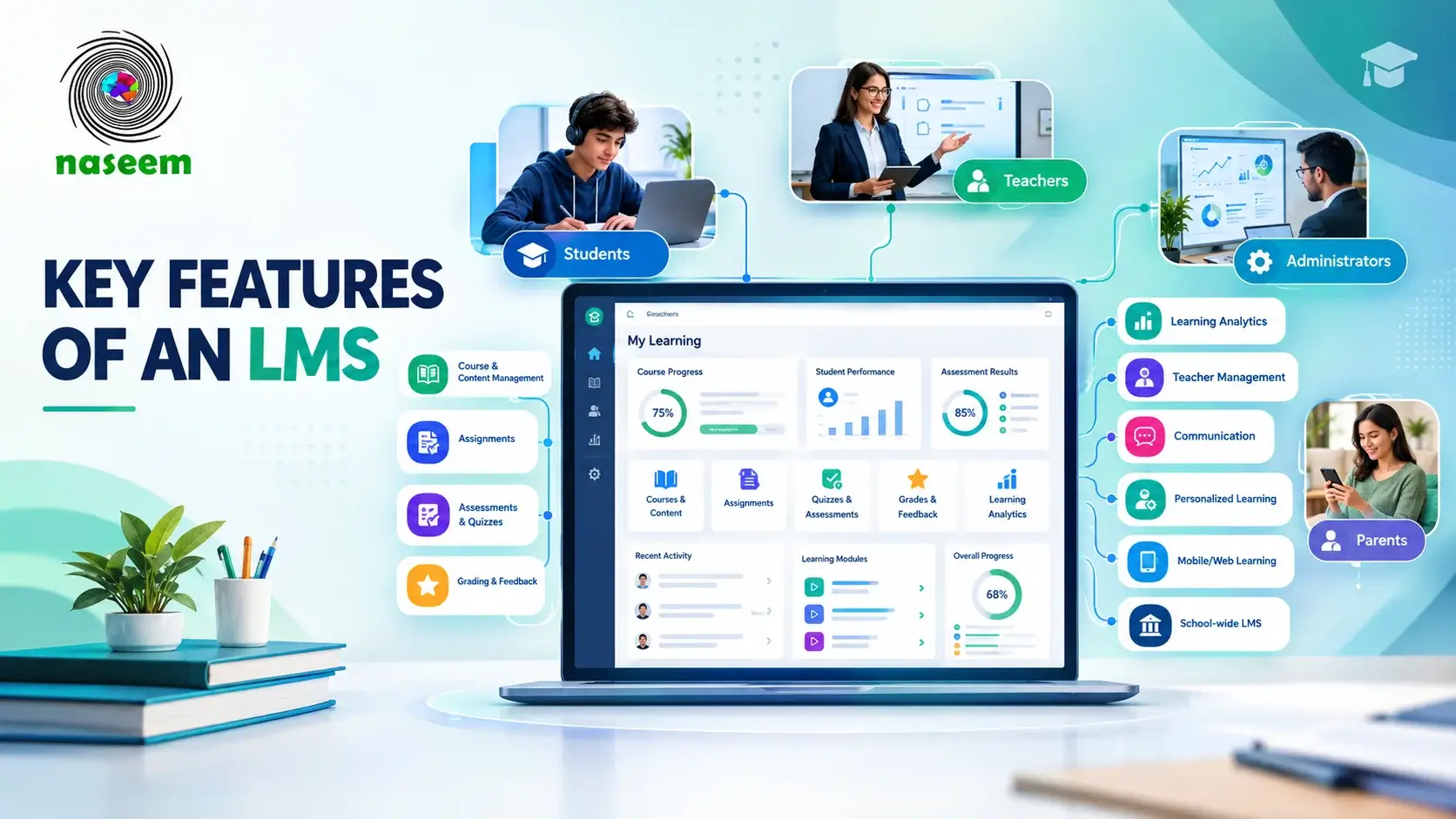
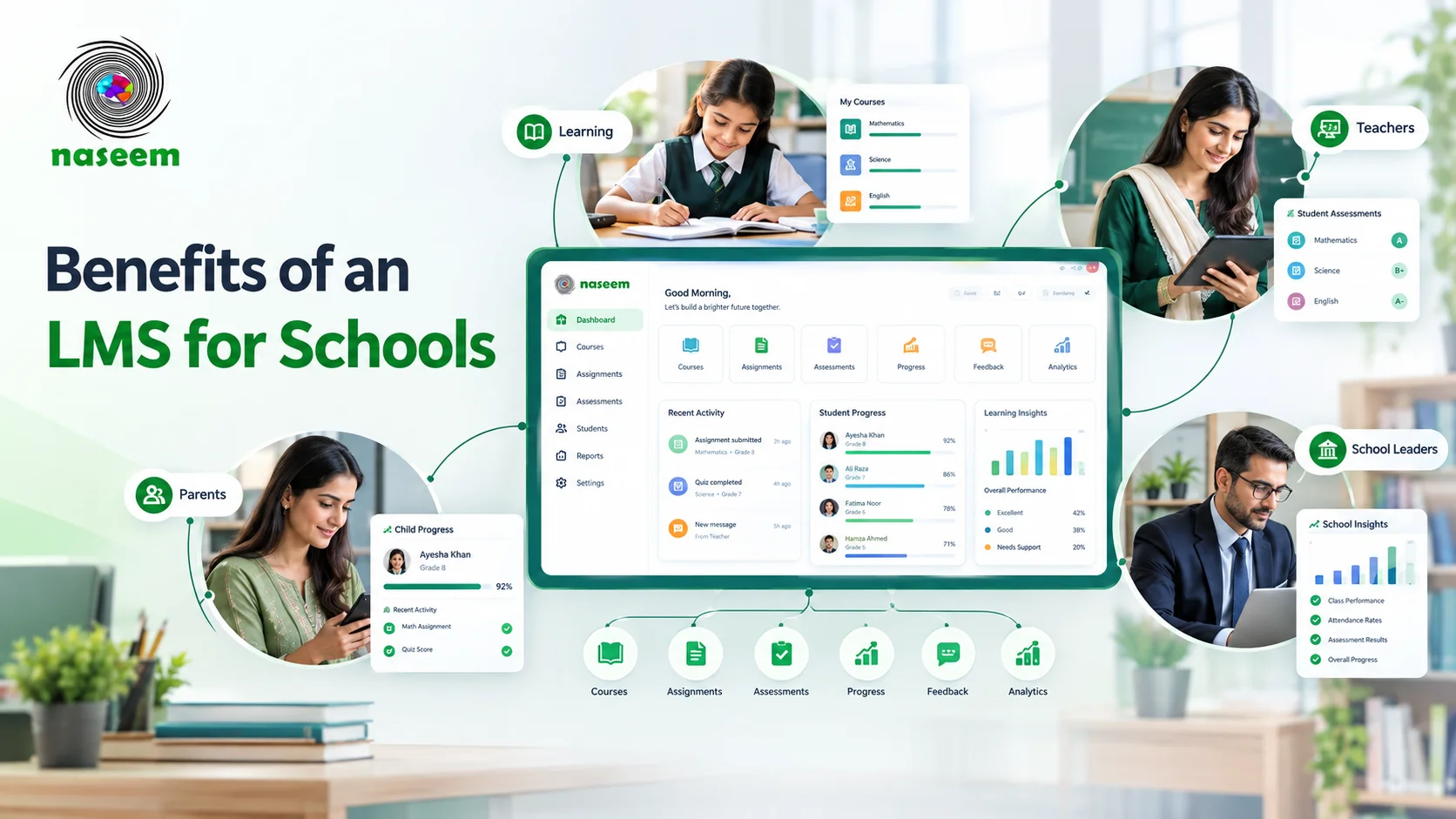
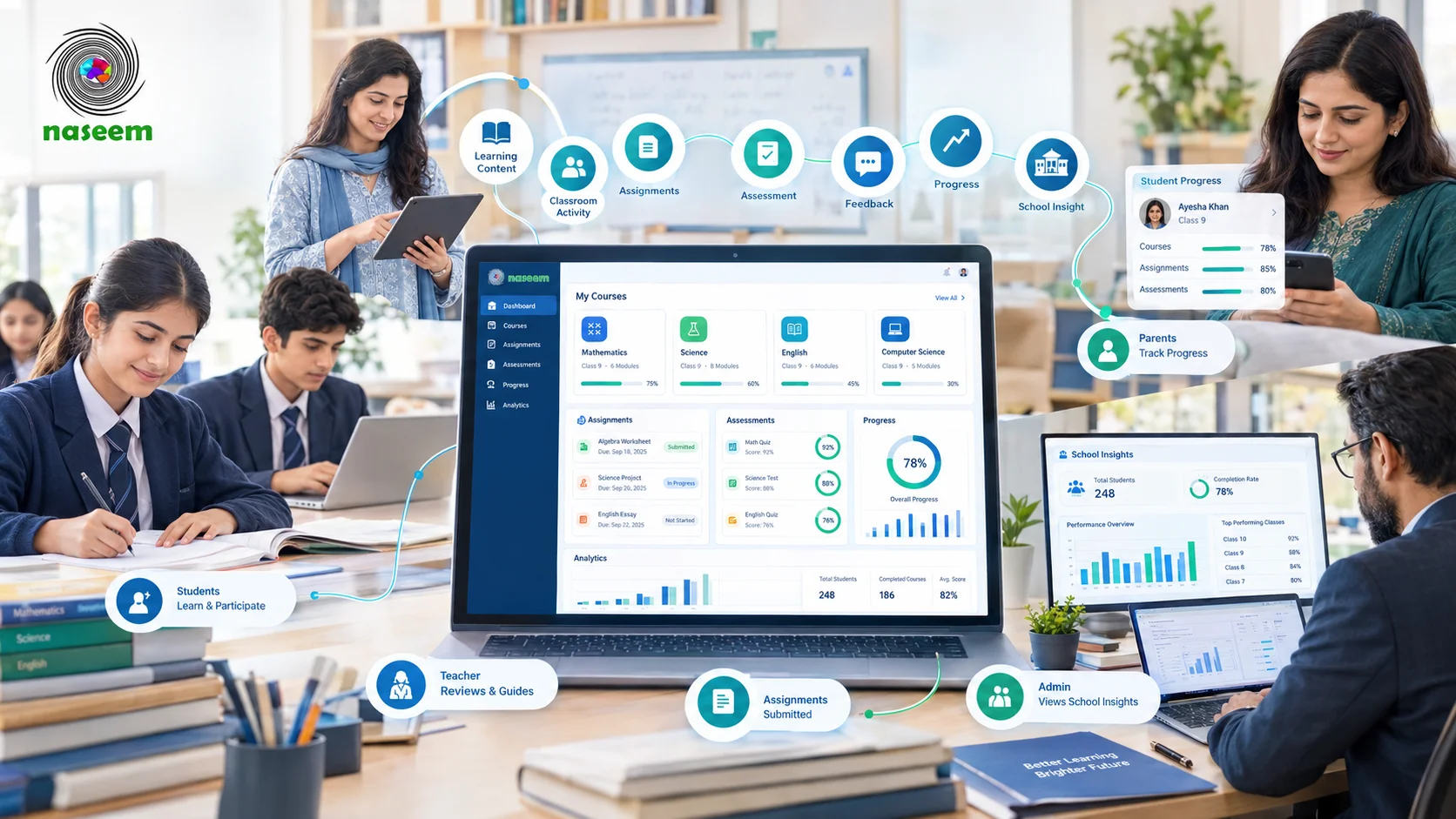
Students, teachers, parents and principals each get their own view of the same platform. The student learning portal is where children learn, practice and see their progress. Tools for teachers cover assignments, assessments and feedback. The parent portal shows families how their child is doing, and the principal dashboard gives school leaders a view across classes.
A few things set it apart from generic platforms:
- Learning is personalized, and gamified progress keeps younger students motivated.
- Smart assessments are graded automatically, so teachers spend less time marking and students get feedback right away instead of a week later.
- Real-time progress tracking and learning analytics show which students need help while there's still time to act.
- The platform supports more than 20 languages, which matters for schools where students and parents don't all read the same one.
- Alongside the standard student LMS, there is a separate Special Education LMS for students with special needs. Special education is exactly the area where schools tend to assume they must build their own, and often they don't need to.
Naseem Education runs in the browser, so there's no server to set up or maintain, and improvements reach your school without a development project of your own. You can try both the standard and special education versions through the live demos on our homepage, and review our security policy before you talk to us.
A quick checklist: build, customize or buy?
Answer yes or no to each question.
- Does a ready-made school LMS fail to support a core part of how we teach?
- Do we need two-way links with in-house systems that have no standard interfaces?
- Are we legally or contractually required to host student data ourselves?
- Will we sell courses or services through the platform?
- Do we have more than a few thousand students, enough that license fees would pass build cost within five years?
- Can we fund a build plus 15% to 20% of its cost every year after?
- Can we wait three to twelve months or more before launch?
- Do we have someone in-house who can manage developers and own the product?
Mostly yes: get custom development quotes, and ask each agency for school references.
A mix of yes and no: look at a ready-made LMS you can configure and connect, and build only the missing pieces.
Mostly no: buy a ready-made school LMS and put the savings into teacher training. Before any vendor meeting, take our list of questions to ask during an LMS demo with you.
Making the decision
A custom LMS is the right investment for a small group of schools with unusual needs and the budget to support a platform for years. Most schools get further, faster, with a ready-made LMS built for schools, set up around their own classes and connected to the systems they already use.
If you're weighing the options, we're happy to walk through your requirements with you and show you where Naseem Education fits and where it doesn't. Book a demo with our team and bring your list of must-haves.
Frequently asked questions
Ready to Bring Your School’s Learning Together?
Give your school a connected learning management system designed to support students, teachers, parents, and school leaders.