What Is an LMS? Learning Management System Meaning, Full Form & How It Works
If you have searched for LMS, LMS full form, or what is a learning management system, you may already know that the term is closely connected with online and digital education. But what exactly does an LMS do, how does it work, and why are schools increasingly using learning management systems?
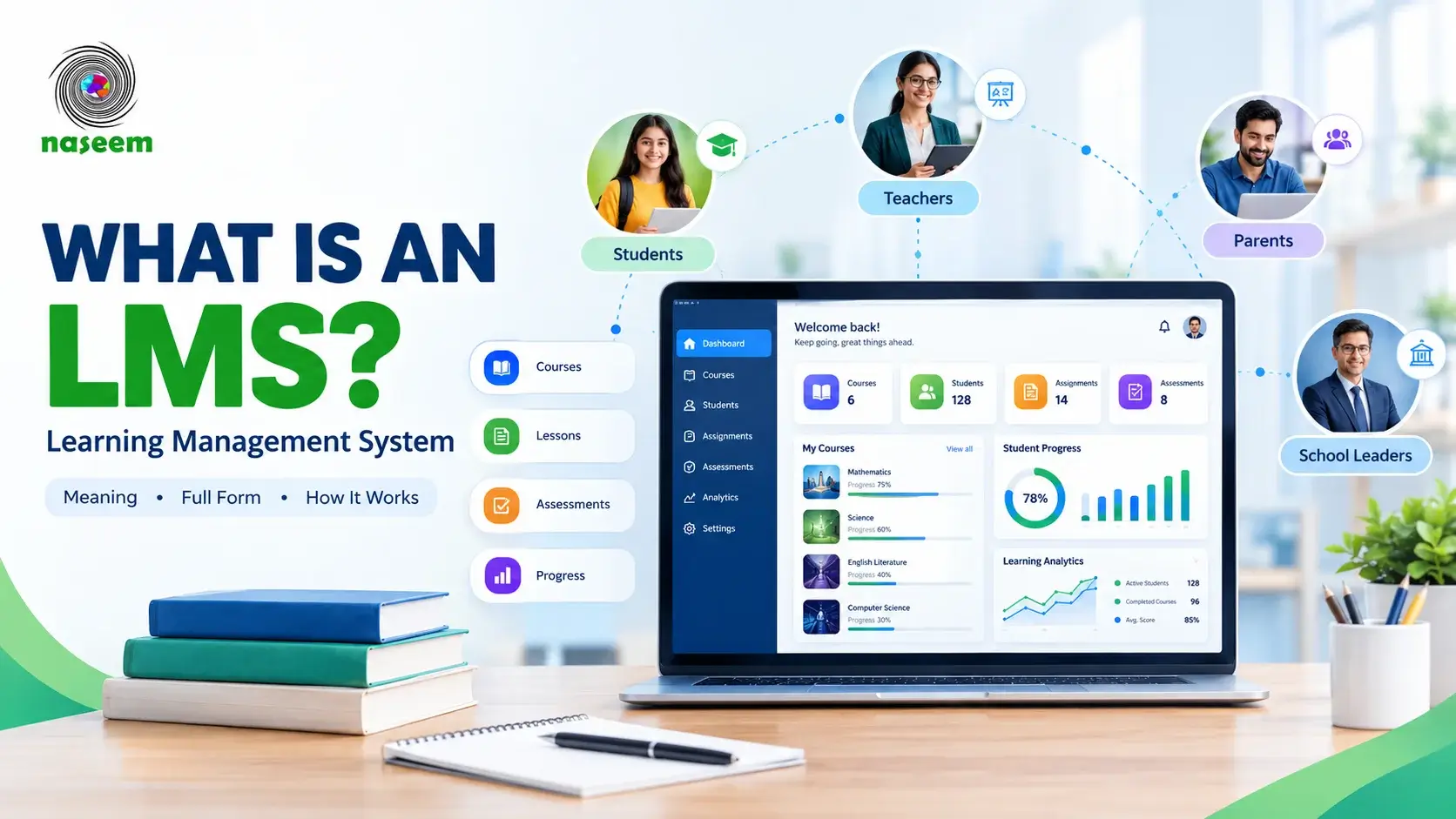
LMS stands for Learning Management System. An LMS is software that helps educational institutions organize, deliver, manage, assess, and track learning through a centralized digital environment. Depending on the platform, it can bring together courses, learning materials, assignments, assessments, feedback, progress tracking, communication, and reporting in one place.
In simple terms, an LMS provides a structured digital environment where teachers can manage learning and students can access learning, complete activities, receive feedback, and monitor their progress.
In this guide, we will explain the LMS meaning, LMS full form, what a learning management system does, how an LMS works, its key features and benefits, how LMS platforms support online learning, and what schools should consider when choosing one.
What Does LMS Stand For?
LMS stands for Learning Management System.
The three words describe the basic purpose of the technology:
- Learning — The system is designed around education, training, or learning activities.
- Management — It helps organize courses, learners, content, assessments, progress, and other learning activities.
- System — It brings these functions together within a structured digital platform.
The term Learning Management System (LMS) is commonly used to describe software that helps institutions or organizations administer, deliver, document, track, and assess learning.
LMS Full Form
LMS full form: Learning Management System.
What Does LMS Mean?
The LMS meaning is essentially a digital system for managing the learning process. Rather than keeping courses, assignments, assessments, learner records, and progress information across disconnected tools, an LMS can bring many of these activities together in one environment.
This makes LMS software useful for schools, colleges, universities, training organizations, and other institutions that need a structured way to manage learning.
What Is an LMS?
A Learning Management System (LMS) is a software application or web-based platform used to plan, deliver, manage, and assess learning.
According to TechTarget, an LMS is a software application or web-based technology used to plan, implement, and assess a learning process. It commonly provides tools for instructors to create and deliver content, monitor participation, and assess learner performance.
In practical terms, an LMS can act as a central learning environment where different parts of the learning journey are connected.
For example, a school may use an LMS to:
- Organize courses and lessons
- Provide digital learning materials
- Assign work to students
- Conduct quizzes and assessments
- Provide feedback
- Track student progress
- Monitor learning activity
- Generate reports
- Support communication between teachers and students
The exact capabilities vary between platforms, but the underlying purpose remains similar: use technology to organize and support the learning process.
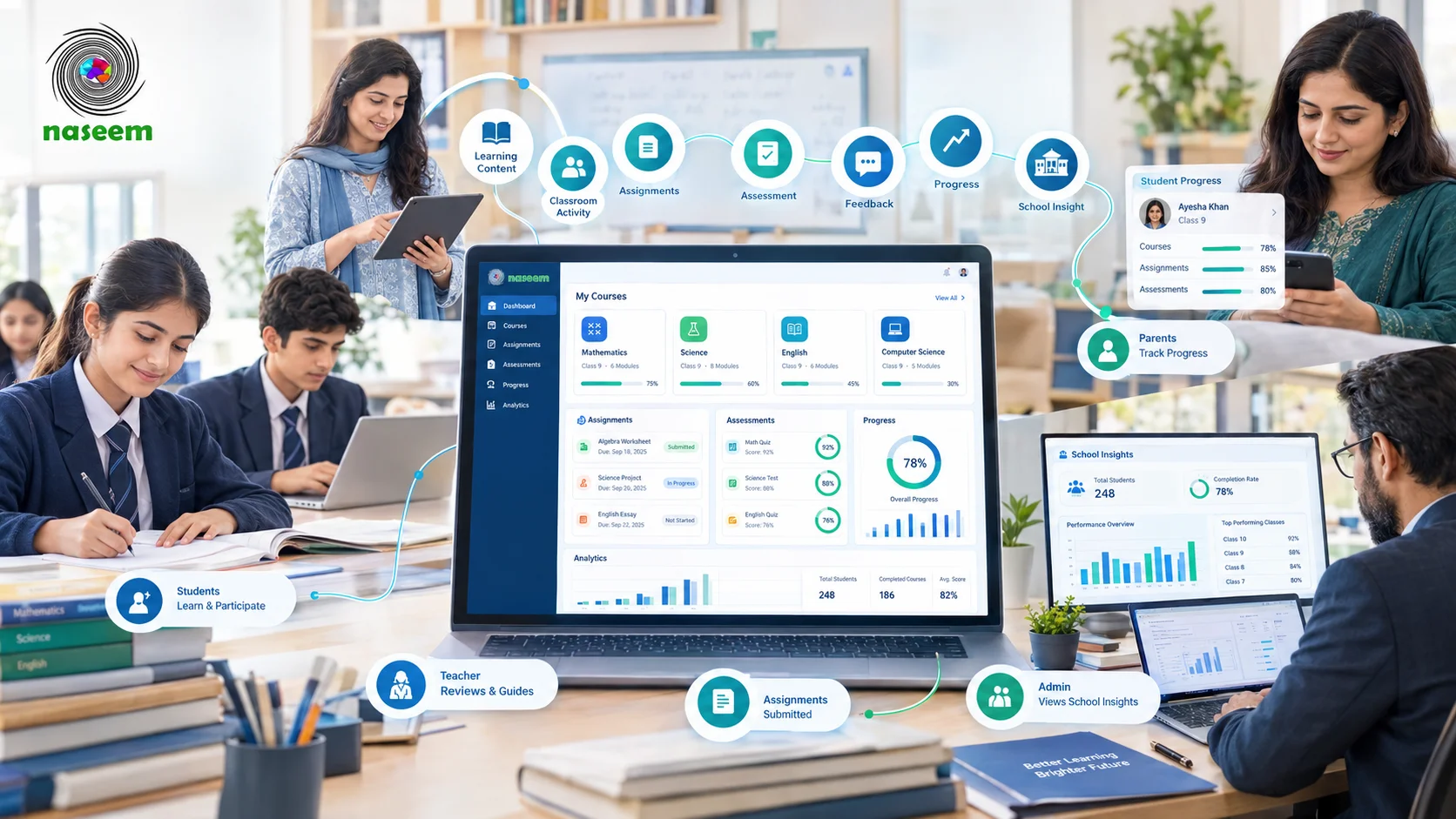
If you want to see how these capabilities can be brought together specifically for schools, explore Naseem Education's Learning Management System, which combines course management, learning delivery, assessments, progress tracking, analytics, communication, and personalized learning within one educational environment.
What Is LMS Software?
LMS software is the technology that powers a Learning Management System.
The terms LMS software, learning management system, and LMS platform are often used interchangeably when referring to technology for managing and delivering learning. Moodle, for example, describes LMS and learning management software as systems used to create, manage, organize, and deliver online learning materials.
A learning management system LMS software solution may provide tools for:
- Course creation and organization
- Learning content delivery
- Assignments
- Quizzes and assessments
- Grading
- Student progress tracking
- Reporting
- Communication
- Learning analytics
- User management
However, an LMS is more than a digital storage location for educational files.
A useful LMS connects content, teaching, assessment, learner activity, and progress so that the learning process can be managed as a complete journey.
What Is a Learning Management System Used For?
An LMS can support many different parts of education. The exact use cases depend on the institution and platform, but most learning management systems focus on several core activities.
Course and Content Management
Teachers and administrators can organize learning materials into structured courses, subjects, modules, or lessons.
Instead of students searching through separate files or communication channels, an LMS can provide a central location for relevant learning resources.
Online Learning Delivery
An LMS can provide students with access to lessons and learning resources through the internet.
This can include:
- Text-based lessons
- Videos
- Documents
- Presentations
- Interactive activities
- Learning exercises
- Assessments
UNESCO describes online education platforms as digital systems that facilitate teaching and learning through the internet and may include educational content, assessments, and interactive tools.
Assignments and Learning Activities
Teachers can use an LMS to organize student activities and assignments.
Students may be able to access instructions, complete their work, submit it through the platform, and receive feedback.
Assessments
An LMS can support different forms of assessment, including:
- Quizzes
- Tests
- Assignments
- Knowledge checks
- Graded activities
These tools can help educators understand how learners are progressing and where additional support may be needed.
Student Progress Tracking
One of the important functions of an LMS is tracking learning activity and progress.
Depending on the system, educators may be able to monitor:
- Course completion
- Assessment results
- Assignment activity
- Learning participation
- Progress over time
Communication and Feedback
Some LMS platforms also provide communication features that help connect teachers and learners.
This can include announcements, messages, feedback, discussions, and other forms of academic communication.
Reporting and Learning Analytics
Learning data can provide educators and school leaders with a broader view of academic activity.
An LMS may help turn learning activity and performance information into reports and insights that can support educational decisions.
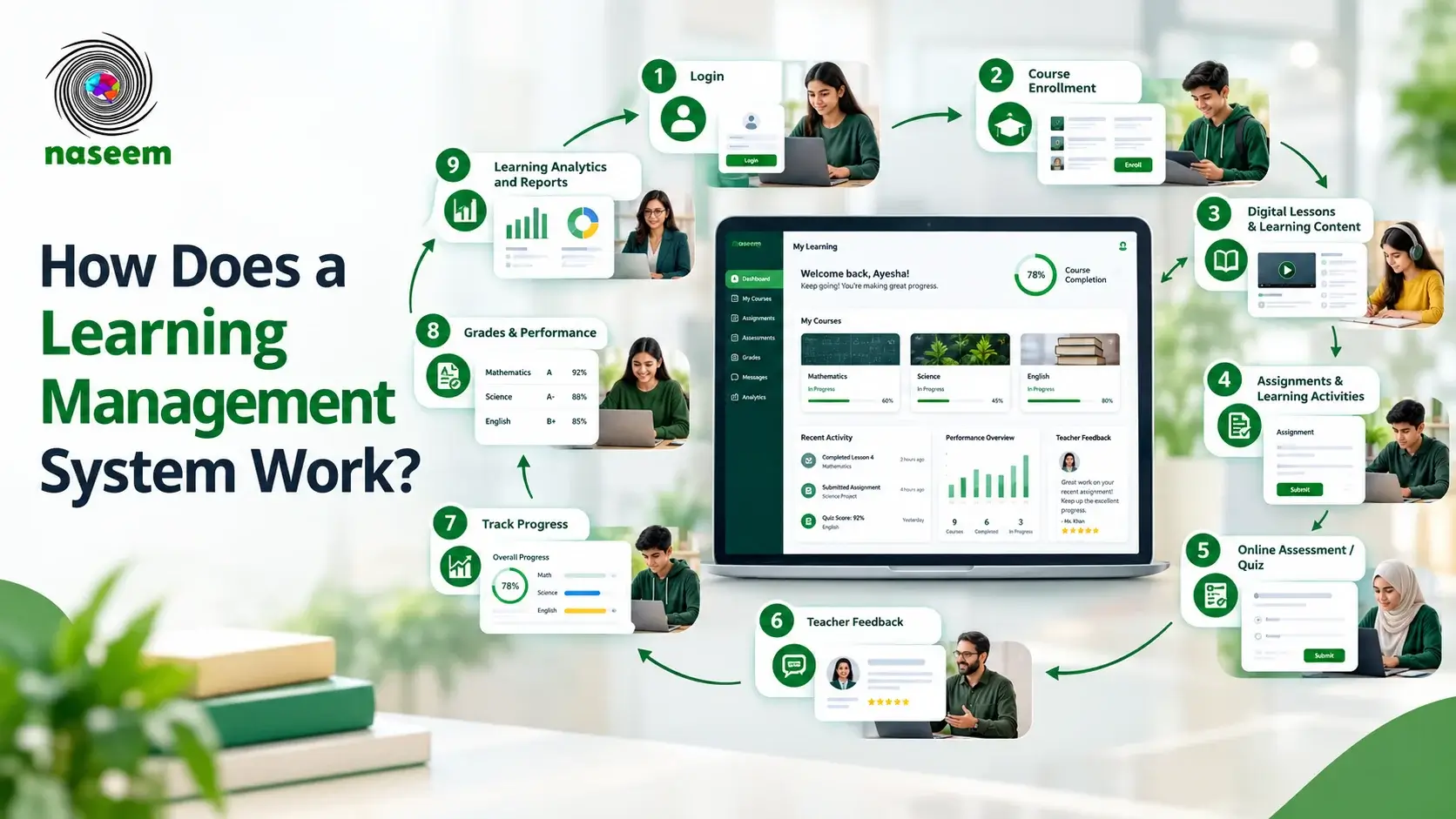
How Does an LMS Work?
A learning management system generally works by connecting the major stages of the learning process within one digital environment.
A simple LMS workflow can be represented as:
Let's look at each stage.
1. Create and Organize Learning Content
The process usually begins when teachers, instructional teams, or administrators create and organize learning content.
Depending on the platform, they may structure:
- Courses
- Subjects
- Lessons
- Modules
- Learning resources
- Activities
- Assessments
This creates a structured environment that learners can navigate.
2. Assign or Enroll Learners
Once learning content is organized, learners need access to the appropriate courses or learning activities.
An LMS can help institutions manage learner access and connect students with the courses relevant to them.
3. Deliver Learning
Students then access their learning environment.
They may:
- Read lessons
- Watch educational videos
- Complete activities
- Access resources
- Participate in discussions
- Complete assignments
- Take assessments
The learning experience can be online, blended, or used alongside traditional classroom teaching.
UNESCO's guidance on digital learning emphasizes that digital platforms should complement wider education systems rather than simply replace teachers or schools.
4. Assess Student Learning
The next stage involves evaluating learning.
Teachers can use quizzes, assignments, tests, and other assessment methods to understand whether students have achieved the intended learning outcomes.
5. Provide Feedback
Feedback helps students understand what they have learned successfully and where they need improvement.
Depending on the LMS, feedback can be provided through assessment results, comments, grades, or other learning interactions.
6. Track Progress
Finally, learning activity and assessment information can be used to understand student progress.
Teachers and school leaders can use this information to identify:
- Students making strong progress
- Areas where learners are struggling
- Learning gaps
- Changes in performance
- Areas requiring additional support
This makes the LMS more than a content-delivery tool. It can become part of the school's broader approach to understanding and improving learning.
Who Uses a Learning Management System?
Although LMS platforms are used across many industries, education is one of their most important applications.
Students
Students can use an LMS to:
- Access courses
- View lessons
- Complete assignments
- Take assessments
- Receive feedback
- Track their learning progress
Teachers
Teachers can use an LMS to:
- Organize courses
- Deliver learning content
- Create assignments
- Conduct assessments
- Review student performance
- Provide feedback
- Monitor progress
School Administrators
Administrators can use an LMS to manage learning activities across an institution and gain visibility into academic processes and outcomes.
Parents
In school-focused learning environments, parents can also benefit from greater visibility into their child's learning progress, achievements, and areas requiring additional support.
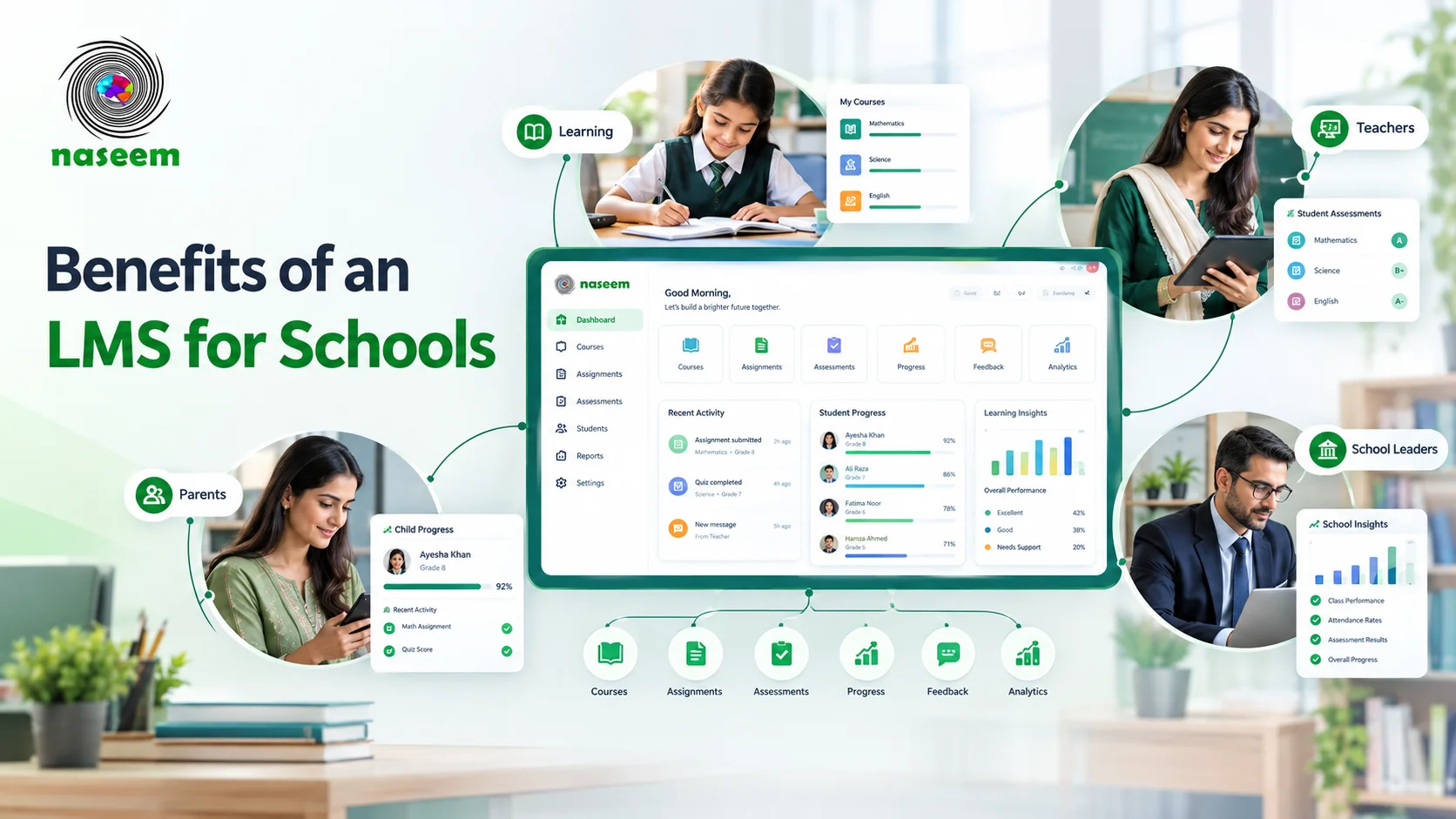
For example, Naseem Education's school LMS is designed around four connected roles: students, teachers, parents, and school leaders.
Colleges and Universities
Higher education institutions can use LMS platforms to manage courses, assignments, assessments, learning resources, and student progress.
Organizations and Training Teams
LMS platforms are also widely used outside traditional education for employee training, onboarding, professional development, compliance training, and other structured learning programs.
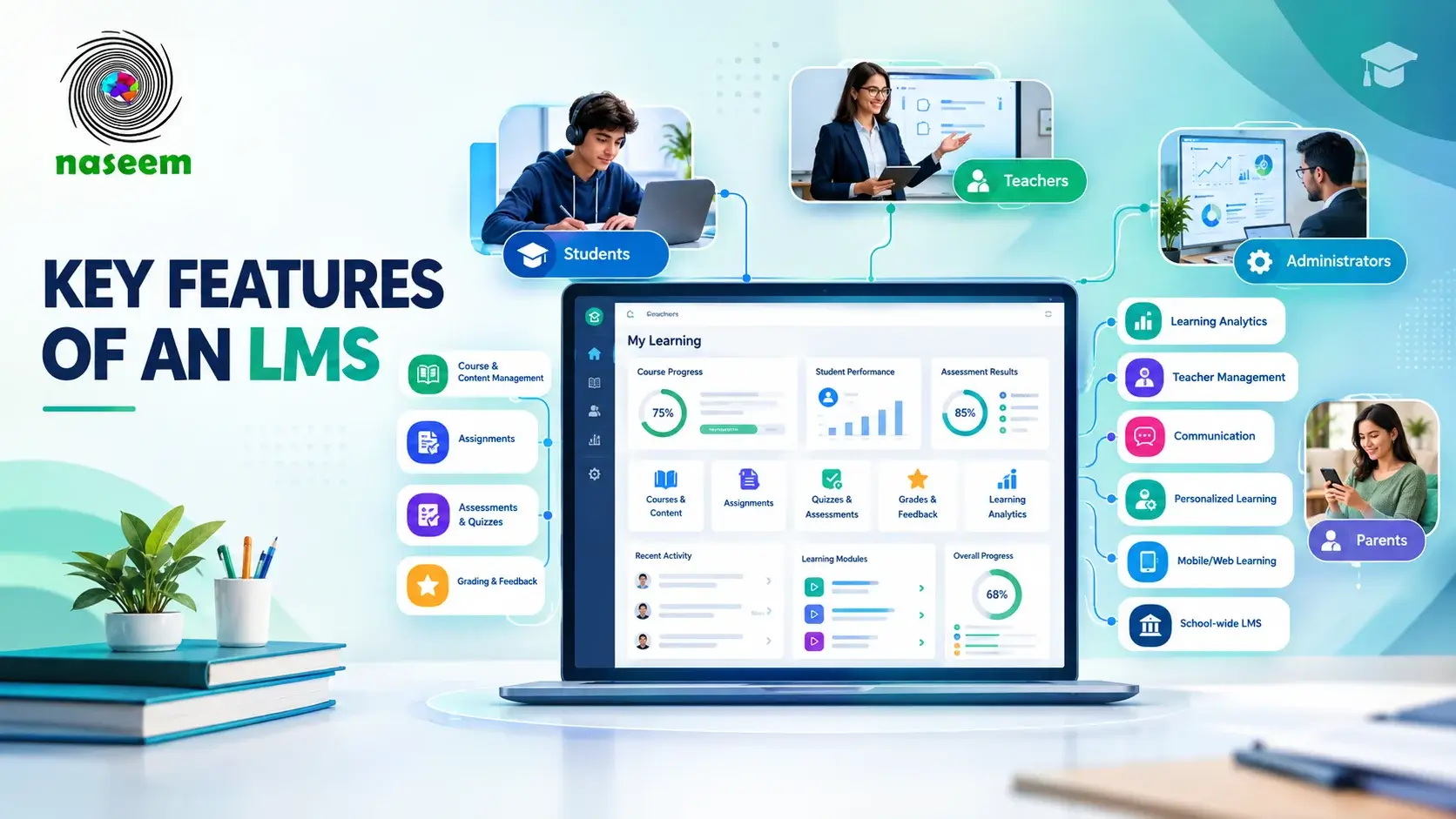
What Are the Key Features of an LMS?
The features available depend on the LMS, but a modern learning management system commonly includes capabilities such as:
| LMS Feature | What It Does |
|---|---|
| Course Management | Organizes courses, subjects, lessons, and learning materials |
| Content Delivery | Provides access to digital learning resources |
| Assignments | Allows educators to create and manage student work |
| Assessments | Supports quizzes, tests, and other evaluations |
| Progress Tracking | Helps monitor learner activity and completion |
| Feedback | Allows educators to provide information about learner performance |
| Reporting | Provides structured learning and performance information |
| Learning Analytics | Helps identify patterns and trends in learning activity |
| Communication | Supports interaction between educators and learners |
| User Management | Helps manage learners, teachers, administrators, and other roles |
| Mobile/Web Access | Allows users to access learning through supported devices |
Modern LMS platforms can extend beyond these basic capabilities. For example, current platforms may include integrations, mobile experiences, personalized learning paths, analytics, and other tools depending on their intended audience.
What Are the Benefits of an LMS?
The value of an LMS is not simply that it moves learning materials online. Its larger benefit comes from connecting different parts of the learning process.
Centralized Learning
An LMS can bring courses, learning materials, assessments, activities, and progress information into one environment.
This can make learning easier to organize for both educators and students.
More Accessible Learning
Online learning environments can allow learners to access educational resources from supported locations and devices.
This is particularly useful when learning needs to extend beyond the traditional classroom.
Better Progress Visibility
Teachers can gain a clearer view of student activity and performance when learning information is organized within one system.
More Organized Assessment
Assignments, quizzes, tests, grades, and feedback can be managed through structured workflows.
Improved Communication
A connected learning environment can make it easier for educators and learners to share information and feedback.
Data-Informed Educational Decisions
Learning activity and assessment information can provide useful insights for educators and school leaders.
Support for Personalized Learning
Progress information can help educators better understand individual learner needs and provide more targeted support.
For schools, this broader approach is important because effective digital learning should complement teaching and support learners rather than simply replace traditional educational processes. UNESCO's current principles for digital learning platforms emphasize pedagogical value, inclusion, accessibility, interoperability, and trustworthy handling of learner data.
What Is an LMS for Schools?
A school LMS is a learning management system designed around the specific needs of schools, teachers, students, parents, and school leadership.
While a general LMS may focus primarily on course delivery and learner management, a school-oriented LMS can connect learning with the wider school ecosystem.
A school LMS may support:
- Course and lesson management
- Digital learning
- Assignments
- Online assessments
- Student progress tracking
- Teacher workflows
- Feedback
- Parent visibility
- Learning analytics
- School-level insights
This distinction matters because a learning management system is not necessarily the same as a complete school management system.
A school management system may handle broader administrative operations such as admissions, fees, attendance, transport, HR, or other institutional functions. An LMS is primarily centered around learning and the management of the learning process.
For schools looking specifically to organize teaching and learning, an LMS can therefore become an important part of their digital education infrastructure.
How Is an LMS Different From Other Education Platforms?
Several digital education terms are sometimes used interchangeably even though they serve different purposes.
| Platform | Main Purpose |
|---|---|
| Learning Management System (LMS) | Manage, deliver, assess, and track structured learning |
| School Management System | Manage broader school administration and operations |
| Student Information System (SIS) | Manage student and institutional records |
| Virtual Classroom | Support live online teaching and interaction |
| Learning Experience Platform (LXP) | Focus more heavily on learner-driven discovery and experiences |
These platforms can overlap and may sometimes integrate with one another.
For example, an LMS may integrate with video conferencing, authentication, content tools, or other educational technologies.
The important distinction is the primary purpose of each system.
An LMS is fundamentally concerned with managing the learning process.
What Are the Different Types of LMS?
There is no single way to classify every LMS because platforms can differ according to their audience, deployment model, and purpose.
Some common categories include:
School and Education LMS
Designed primarily for schools, colleges, universities, and other educational institutions.
Corporate LMS
Designed for employee training, onboarding, compliance, professional development, and organizational learning.
Cloud-Based LMS
Hosted online so users can access the platform through supported internet-connected devices without maintaining traditional on-premise infrastructure.
Open-Source LMS
Platforms whose source code is available under an open-source license and can potentially be customized according to the organization's requirements.
Commercial LMS
Proprietary platforms provided by vendors under specific subscription, licensing, or institutional arrangements.
Online LMS
A web-based learning environment that enables users to access learning activities and resources online.
The right type depends on the organization's requirements, learners, educational model, technical environment, budget, and long-term goals.
LMS and Online Learning: How Are They Connected?
An online learning management system provides the structure needed to organize online learning.
Online learning itself refers to educational experiences delivered through digital technologies and the internet. UNESCO describes online education platforms as digital environments that enable teaching and learning through internet-based access to educational content and tools.
An LMS can provide the organizational layer around that learning experience.
For example:
This is why an LMS can be particularly useful for schools that want to provide structured digital learning rather than simply upload educational materials to a website.
An LMS can also support blended learning, where digital learning activities complement face-to-face classroom teaching.
UNESCO's current digital learning principles similarly emphasize that digital platforms should strengthen and complement existing education systems rather than replace schools and teachers.
What Should You Look for in an LMS?
Choosing an LMS should begin with educational requirements rather than a list of impressive-sounding features.
For schools, consider the following areas:
Ease of Use
Teachers and students should be able to navigate the learning environment without unnecessary complexity.
Course Management
The platform should make it practical to organize subjects, lessons, activities, and resources.
Assessment Capabilities
Look for assessment tools that match the school's teaching and evaluation requirements.
Student Progress Tracking
The LMS should provide useful information about learner activity and progress.
Reporting and Analytics
Teachers and school leaders should be able to understand relevant learning data.
Communication
Consider how teachers, students, parents, and administrators will communicate through the platform.
Accessibility and Device Support
Learning should be accessible across the devices and environments used by your learners.
Security and Data Protection
Schools handle sensitive student and educational information, so security, access controls, responsible data handling, and privacy should be important considerations.
Scalability
The platform should be capable of supporting the school's current needs while allowing the learning environment to evolve.
Integration
Consider whether the LMS can work effectively with the other tools and systems your school already uses.
A good LMS is therefore not necessarily the one with the longest feature list. It is the one that best supports the actual learning, teaching, assessment, communication, and reporting requirements of the institution.
How Naseem Education Uses an LMS for Modern Schools
Understanding an LMS becomes easier when you see how its capabilities can work together within an actual school environment.
Naseem Education provides a learning management system designed specifically around modern school learning. Its platform connects students, teachers, parents, and school leaders through a centralized learning environment.
The platform brings together capabilities such as:
- Course management
- Online learning and content delivery
- Assignments and learning activities
- Assessments
- Student progress tracking
- Feedback
- Learning analytics
- Teacher management
- Parent engagement
- Personalized learning
- Gamified learning
- Multilingual learning
According to Naseem Education, its LMS is designed to connect these capabilities rather than treating course delivery as the entire learning experience.
One Learning Environment for the School Community
A school LMS needs to support more than students alone.
Naseem Education provides different experiences for:
- Students — access courses, activities, assessments, feedback, personalized learning experiences, and progress information.
- Teachers — manage learning activities, assess students, monitor performance, and use learning insights to provide support.
- Parents — gain greater visibility into their child's learning progress and performance.
- School Leaders — access broader information about academic performance, learning trends, and student progress.
Schools interested in understanding how this approach works can explore the Naseem Education LMS or request a personalized demonstration.
Why LMS Platforms Matter for the Future of Digital Education
The role of digital learning platforms is expanding as schools and education systems look for ways to make learning more accessible, connected, measurable, and personalized.
UNESCO's current work on digital education emphasizes that technology can complement and enrich education while also highlighting the importance of inclusion, accessibility, safety, responsible data practices, and educational purpose.
This means the future of LMS technology is not simply about putting textbooks or lessons online.
A modern learning environment needs to consider the complete learning journey:
That broader perspective is what makes an LMS valuable to schools.
Final Takeaway
LMS stands for Learning Management System, and its purpose goes far beyond simply storing educational materials online.
A modern LMS can provide a structured digital environment for managing courses, delivering learning, organizing assignments, conducting assessments, providing feedback, tracking student progress, and generating useful learning insights.
For schools, the value of an LMS comes from connecting these activities into a more organized learning journey for students, teachers, parents, and school leaders.
As digital education continues to evolve, the strongest learning platforms are likely to be those that combine technology with sound educational practices, accessibility, meaningful data, security, and a clear focus on learner needs.
If your school is exploring how a modern LMS can bring learning, assessment, progress tracking, and the wider school community together, you can explore Naseem Education's Learning Management System.
Frequently Asked Questions About LMS
Ready to Bring Your School’s Learning Together?
Give your school a connected learning management system designed to support students, teachers, parents, and school leaders.