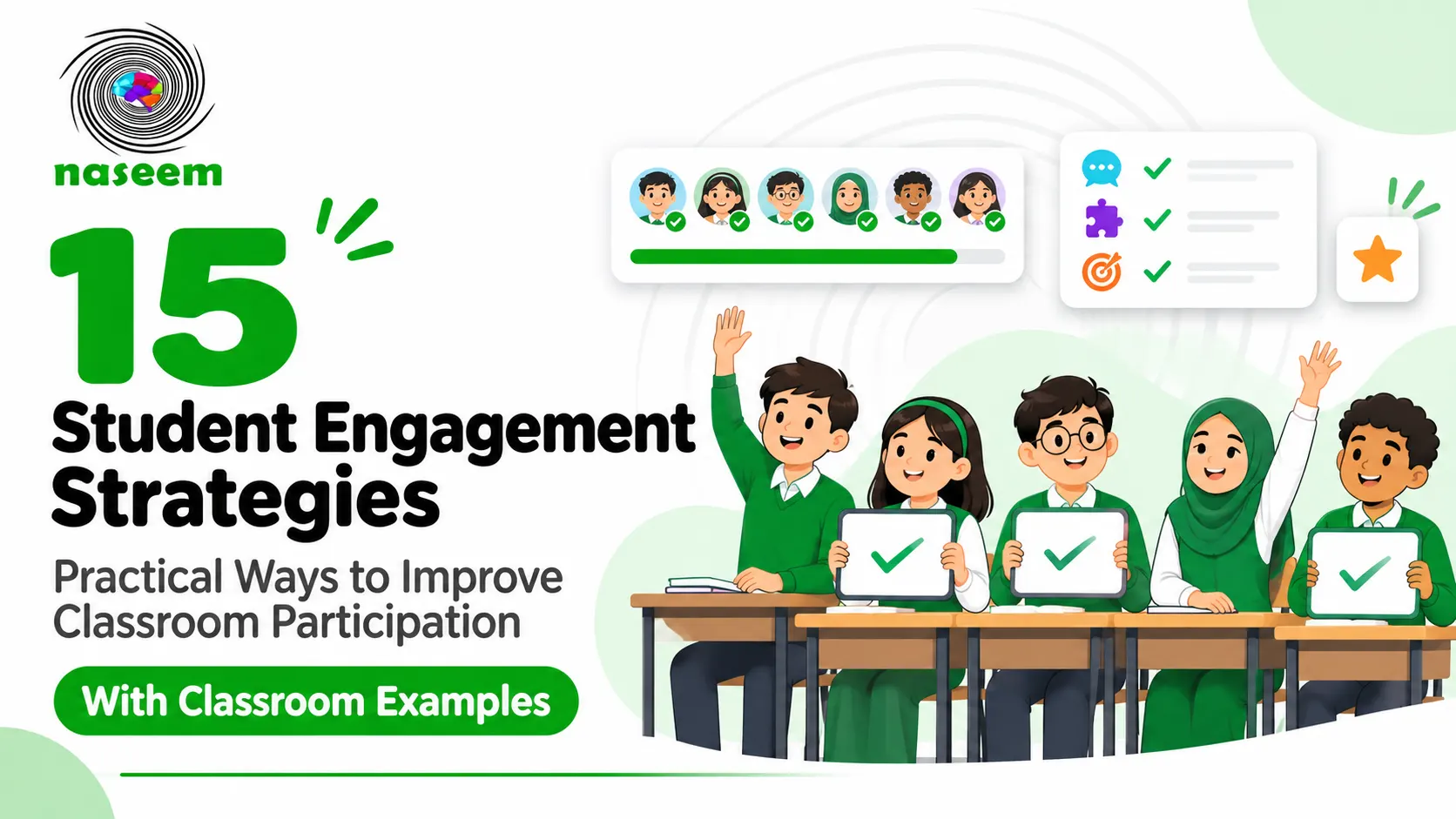
15 Student Engagement Strategies: Practical Ways to Improve Classroom Participation
Student engagement is the attention, effort, and interest students bring to learning: what they do in a lesson, how they feel about it, and how hard they think. Participation matters because it makes that thinking visible, and teachers can only correct a misunderstanding they can see or hear. Attention fades, the same five hands go up, and a silent room could mean concentration or confusion.
This guide sets out 15 student engagement strategies that work with ordinary resources, each with a classroom example. It also covers activities by grade level, the role of technology, and ways to measure engagement.
What Is Student Engagement?
In a widely cited review, Fredricks, Blumenfeld, and Paris describe school engagement as a combination of behavior, emotion, and thinking that responds to the learning environment. That last point matters most to teachers: engagement is not a fixed trait of a student.
Participation is the visible part of engagement, and the two are easy to confuse. Picture a Grade 6 lesson on ratios. Bilal answers three recall questions quickly, then waits for the bell. Sara says nothing for ten minutes, but her notebook shows two attempts at the recipe problem and a crossed-out method. Bilal participated more. Sara was more engaged.
Engaged students tend to start a task before asking for the answer, explain how they reached a result, ask questions that go beyond the instructions, and keep working after a mistake.
Motivation and engagement are related but not identical. Motivation is the reason a student is willing to try: interest, a goal, or the belief that effort will pay off. Engagement is what that willingness becomes during the lesson. Teachers cannot observe motivation directly, but they can design tasks that turn it into effort, and success with those tasks feeds motivation in return.
What Are the Different Types of Student Engagement?
Researchers usually describe three dimensions. They overlap, and one can be strong while another is weak: a student can follow every instruction without caring about the subject, or enjoy a class without thinking hard about it.
| Engagement Type | Meaning | Classroom Indicators | Practical Example |
|---|---|---|---|
| Behavioral | Taking part in the work and routines of learning | Starts tasks promptly, follows instructions, contributes, persists | A Grade 4 student follows the text, answers when asked, and finishes the comprehension task. |
| Emotional | How students feel about the subject, the teacher, and classmates | Shows interest, feels safe to answer, handles mistakes calmly | A Grade 8 student who dislikes math still shares a wrong answer because errors are treated as useful. |
| Cognitive | The mental effort students invest in understanding | Asks why, connects ideas, checks own work, chooses harder problems | A Grade 10 student redraws a biology diagram from memory, then corrects the gaps against the textbook. |
Raising a hand or finishing a worksheet shows only the first row. Some researchers, notably Reeve and Tseng, add a fourth dimension called agentic engagement, in which students shape the lesson by asking for another example or saying what they need.
Why Is Student Engagement Important?
Engagement matters first because of what it lets teachers see. When students answer, write, and discuss, gaps in understanding surface during the lesson instead of in the exam, while there is still time to reteach.
It is also linked to learning. A meta-analysis of 69 studies covering 196,473 participants found a moderately strong positive correlation between engagement and academic achievement. That is an association, not a guarantee. A lively lesson built on a weak task will not raise results.
Other benefits are harder to measure:
- Students who must explain an idea, not just hear it, understand it more deeply.
- Effort that leads to success builds confidence, which sustains motivation.
- Group work improves when every member has something to contribute.
- Students who set goals and judge their own work take more ownership of it.
- A class where everyone is expected to think is more inclusive than one that relies on volunteers.
AERO's practice guide on belonging and connectedness reports that positive relationships with teachers and peers shape students' emotional, behavioral, and cognitive engagement.
15 Student Engagement Strategies for Teachers
No classroom engagement strategy works for every student or every class. Choose two or three that address the problem you see most often. The table after the list shows the engagement dimension each one mainly supports, a common obstacle, and a sign that it is working.
1. Make Lessons Interactive
An interactive lesson asks every student to respond every few minutes, not only the volunteers. Attention holds when students expect to use what they have just heard. End each ten-minute segment of explanation with an all-class response: mini whiteboards, hand signals, or a one-line written answer.
In a Grade 5 fractions lesson, the teacher writes 3/4 = ?/12. Every student writes an answer and holds it up. Eleven are wrong, so the idea is retaught before the lesson moves on.
2. Use Gamification in the Classroom
Gamification adds points, levels, timed challenges, or visible progress to practice that students need anyway. A meta-analysis of gamification research found small positive effects on learning, with less stable effects on motivation and behavior in the most rigorous studies. Reward accuracy and improvement over speed, and prefer team targets to individual rankings.
A Grade 7 class takes a weekly vocabulary challenge. Students try to beat their own score, and the class total counts toward a shared target.
3. Encourage Collaborative Learning
Collaboration means working together on a task that needs more than one mind. The EEF's review of 212 studies links collaborative learning approaches with about five months of additional progress on average, with the best results from groups of three to five sharing a goal, though results vary widely. Assign roles and ask for one joint product.
In Grade 8 science, groups of four design a fair test of which material insulates best. The teacher picks any member to explain the method.
4. Connect Lessons to Real-Life Experiences
Students work harder when they can see where an idea is used. Start from a situation they recognize, such as prices, cricket scores, or electricity bills, then return to the concept so the context does not replace the content. Choose examples that fit all your students' lives.
In Grade 7 math, students compare two mobile data packages and work out which costs less per gigabyte before the teacher introduces unit rates.
5. Introduce Personalized Learning Activities
Personalized learning adjusts the task, support, or pace to what each student can do now while keeping the same goal. Work that is far too easy or too hard quickly loses students. The EEF links individualized instruction with about four months of additional progress on average and suggests using it to supplement whole-class teaching.
After a five-question check in Grade 9 algebra, students receive a practice set with a worked example, a core set, or word problems. In a large class, two versions are enough.
6. Give Students More Choice and Ownership
Choice gives students a stake in the work. A meta-analysis of 41 studies found that choice enhanced intrinsic motivation, effort, and task performance, with stronger effects for children than adults. Offer two to four options that meet the same objective, and let students set a personal goal for the unit.
In Grade 6 history, students present the Indus Valley Civilization as a labeled map, a one-page report, or a two-minute talk. One rubric covers all three.
7. Incorporate Project-Based Learning
In a project, students spend several lessons on a question that ends in a product for a real audience. It gives purpose but needs structure. An EEF trial of one project-based program in 24 English secondary schools found slightly less progress than in comparison schools, although the result has no security rating. Teach the required knowledge first, set weekly checkpoints, and assess each student as well as the group.
Grade 8 students measure how much water their school wastes in a week and present recommendations to the principal.
8. Encourage Classroom Discussions
Discussion makes students organize what they know in order to explain it. A U.S. Department of Education practice guide rates asking deep explanatory questions as having strong evidence. Ask why, how, and what-if questions, then wait. Mary Budd Rowe's wait-time research found that pausing about three seconds produced longer, better-reasoned answers.
In Grade 10 English, pairs spend one minute on whether the narrator was right to leave. Three students state a position, and others agree, build, or challenge.
9. Use Educational Technology Effectively
Use a digital tool where it does something paper cannot: collecting every answer at once, running a simulation, or adapting practice. The first recommendation in the EEF's guidance on using digital technology to improve learning is to consider how it will improve teaching before introducing it. State the purpose, set a time limit, and keep an offline fallback.
In Grade 9 physics, one projector shows a projectile simulation. Students predict the landing point on paper, then test it as a class.
10. Provide Timely and Constructive Feedback
Students disengage when effort disappears into a grade. Feedback keeps them working when it says what is right, what to fix, and how, soon enough to act on. The EEF links feedback with about six months of additional progress on average, especially when it gives specific information on how to improve.
A Grade 5 teacher reads 35 paragraphs, notes the three most common problems, and shows an anonymous example. Students then revise their own work.
11. Set Clear Learning Goals
Students who know the target can judge their own progress. AERO's guide to explaining learning objectives pairs each objective with success criteria in student-friendly language. Write what students will learn, not what they will do, and return to it during the lesson.
In Grade 4 science: "We are learning how shadows change during the day. I can explain why a shadow is shortest at noon." Students rate themselves against the criterion before leaving.
12. Introduce Quizzes and Knowledge Checks
Short, low-stakes quizzes make students recall what they learned instead of rereading it. The U.S. practice guide cited in strategy 8 also gives a strong evidence rating to using quizzes to re-expose students to key content. Keep them brief and ungraded, and use the results to decide what to reteach.
A Grade 8 geography lesson opens with five questions: two from the last lesson, two from last week, and one from last month. Our guide to formative assessment examples has more formats.
13. Encourage Peer Teaching
Explaining an idea to a classmate tests whether a student understands it. The EEF links peer tutoring with about six months of additional progress on average, for tutors as well as tutees, and advises using it to consolidate learning. Give pairs prompts and teach them to offer hints before answers.
After a Grade 6 unit on area, partners take turns teaching one worked example while the other checks each step against an answer key.
14. Recognize Student Achievements and Progress
Recognition tells students their effort was noticed. It works best when it is specific ("you checked your answer by estimating") and rewards improvement as well as high marks. Public rankings can discourage the students who most need encouragement, so track personal bests.
In Grade 3 reading, each child records words read correctly per minute against an earlier score. The teacher names the most improved readers each week and sends a note home.
15. Create an Inclusive and Supportive Learning Environment
Students will not risk an answer where mistakes are mocked or the task is out of reach. CAST's Universal Design for Learning guidelines on engagement include offering choice, making learning relevant, and reducing threats and distractions. Use students' names, agree how the class responds to wrong answers, and accept spoken, written, or drawn responses.
In a Grade 7 science class where many students are more fluent in Urdu than English, pairs discuss the question in Urdu first, then write the answer in English.
| Strategy | Main Dimension | Common Obstacle | Sign It Is Working |
|---|---|---|---|
| 1. Interactive lessons | Behavioral | Students copy a neighbor | Almost every student responds |
| 2. Gamification | Behavioral, emotional | Winning crowds out accuracy | Accuracy rises and weaker students still join in |
| 3. Collaborative learning | Behavioral, cognitive | One student does the work | Any member can explain the answer |
| 4. Real-life connections | Emotional | Context distracts from the concept | Students apply the idea to a new situation |
| 5. Personalized activities | Cognitive | Preparation time | Fewer students finish early or give up |
| 6. Choice and ownership | Emotional | Students pick the easiest option | Students can justify their choice |
| 7. Project-based learning | Cognitive | Group product hides content gaps | Individual checks match project quality |
| 8. Classroom discussions | Cognitive | The same voices dominate | More students speak and build on others |
| 9. Educational technology | Depends on the task | Distraction and shared devices | Students can say what they learned |
| 10. Feedback | Cognitive, emotional | Marking load | The same error appears less often |
| 11. Clear learning goals | Cognitive | Objectives copied as a ritual | Students can state the goal |
| 12. Quizzes | Cognitive | Students treat them as tests | Recall of earlier content improves |
| 13. Peer teaching | Cognitive, emotional | Tutors give answers, not hints | Tutees can redo the problem alone |
| 14. Recognition | Emotional | Praise goes to the same students | More students are recognized each month |
| 15. Inclusive environment | Emotional | Quiet students are overlooked | Students who rarely spoke contribute |
Student Engagement Activities for Different Grade Levels
The same strategy looks different at age 7 and age 17. Younger children need movement, concrete materials, and short tasks. Adolescents respond to autonomy, relevance, and the respect of their peers.
Student Engagement Activities for Elementary School
Keep tasks short and change the mode often. Try number or word bingo, storytelling with a problem to solve, picture sorting, show-me boards, group challenges such as building the tallest tower from 20 straws, and creative projects like a class book.
Student Engagement Activities for Middle School
Peer opinion starts to matter, so offer low-risk ways to contribute: write first, pair first, then share. Use group problem-solving with roles, estimate-then-measure challenges, structured discussions, peer quizzing, two-minute presentations, and small real-life projects such as surveying how classmates travel to school.
Student Engagement Activities for High School
Older students want to know how the work connects to examinations and their plans. Give them responsibility through case studies, research projects on a question they choose, debates, independent study against self-set goals, peer-led revision, and problem-based learning.
| Grade Level | Suggested Activities | Engagement Objective |
|---|---|---|
| Elementary (Grades 1 to 5) | Learning games, story problems, sorting tasks, class book | Build participation habits and enjoyment of learning |
| Middle school (Grades 6 to 8) | Role-based group tasks, measuring challenges, short presentations | Sustain effort and make it safe to share thinking |
| High school (Grades 9 to 12) | Case studies, debates, research projects, peer-led revision | Deepen independent thinking and ownership |
How Technology Can Improve Student Engagement
Used with a clear purpose, technology adds things a board and notebook cannot:
- Quizzes and polls that collect every student's answer at once
- Interactive classroom activities, simulations, and educational games for practice
- Video, audio, and images that explain an idea in more than one way
- Resources matched to a student's level
- Shared documents for group work
- Instant feedback and a visible record of progress
It also has limits. In PISA 2022, about 30% of students across OECD countries said digital devices distracted them in most or every math lesson. Access is uneven as well, and many schools adopting an LMS in Pakistan work around shared devices and unreliable connectivity. A dull worksheet on a screen is still dull.
Decide the learning purpose first and pick the simplest tool that serves it. Signal clearly when screens are open and closed, plan for shared devices, and afterward check what students learned, not how much they clicked.
How an LMS Supports Student Engagement
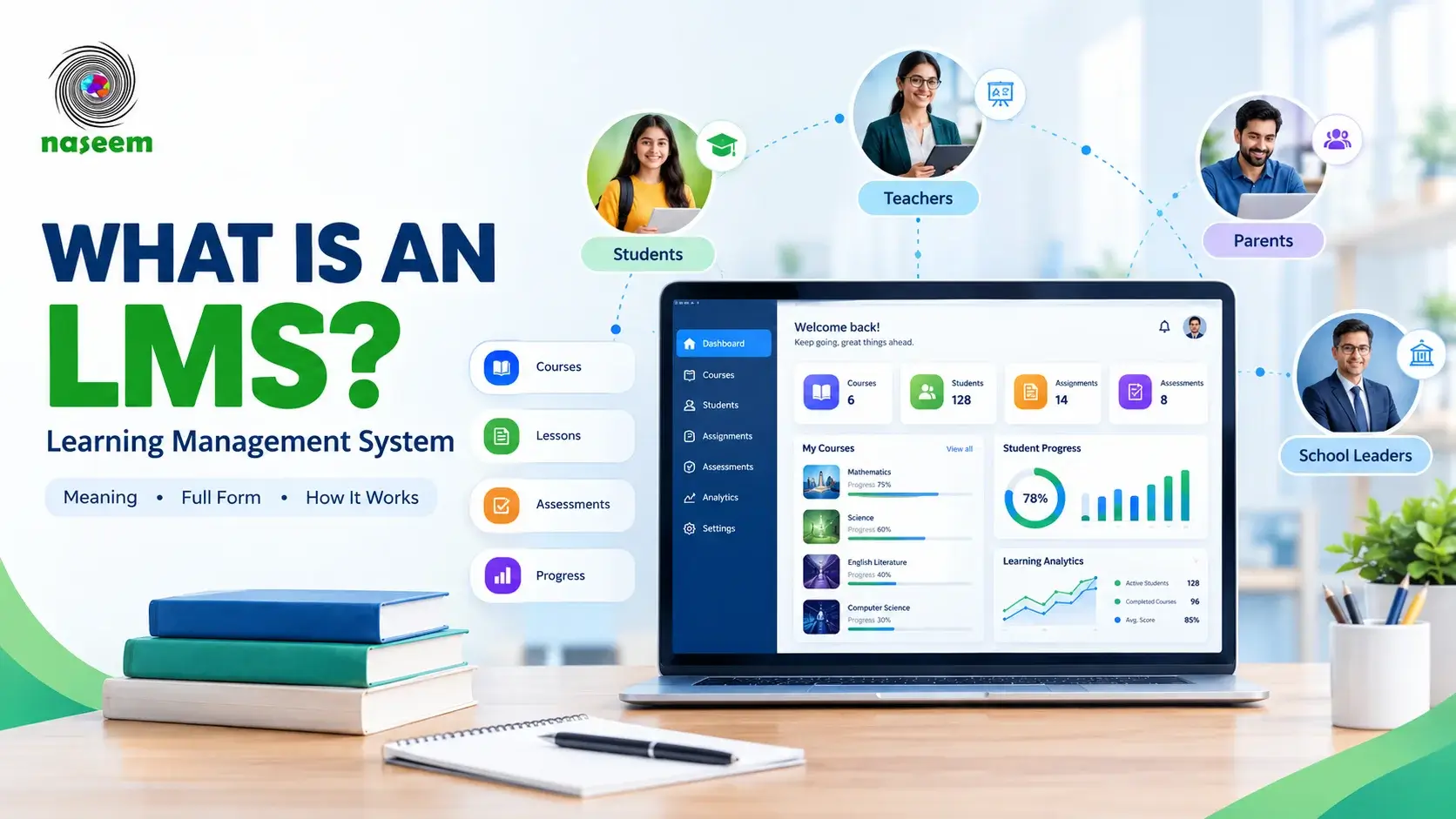
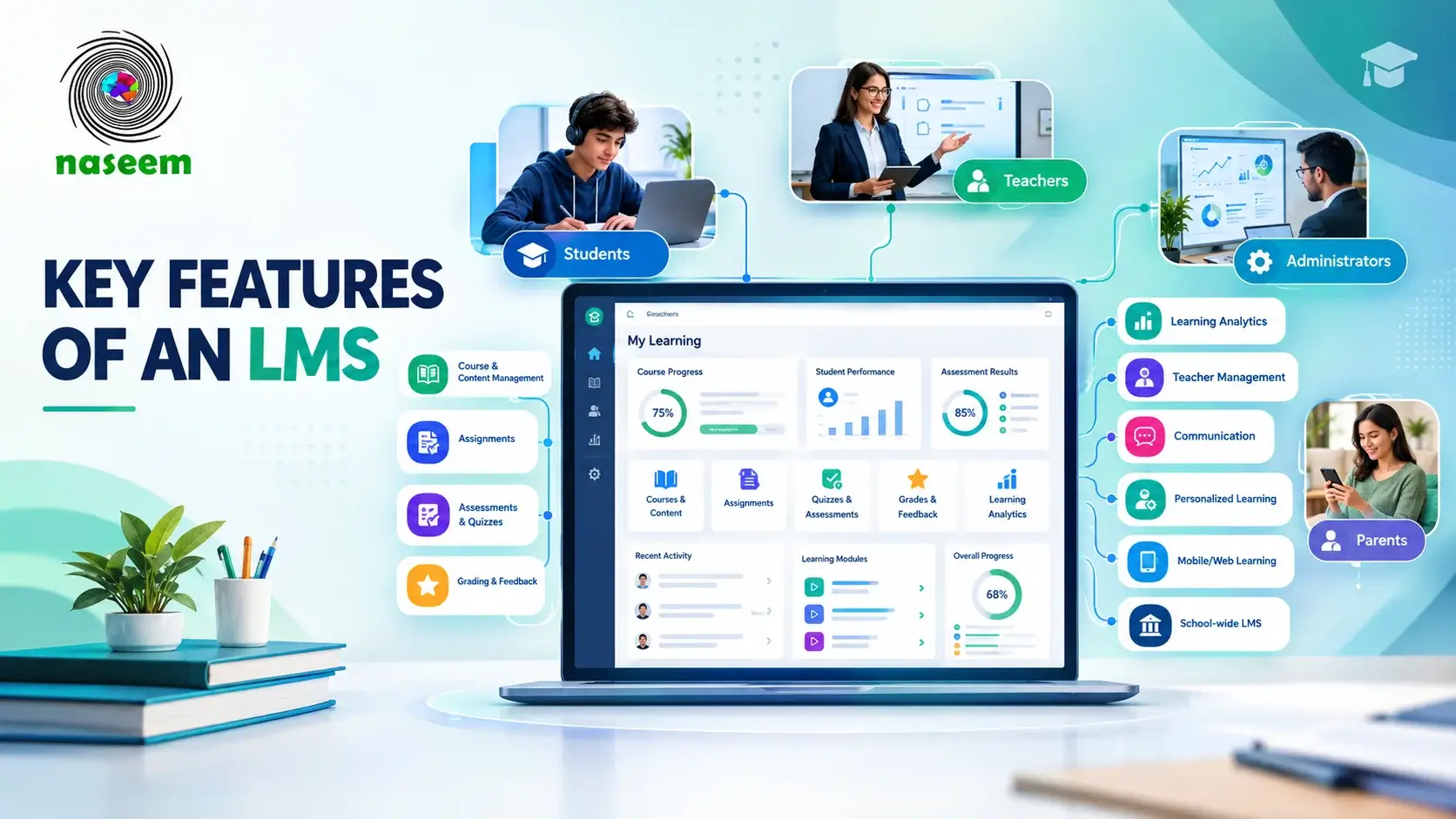
A learning management system (LMS) gives these strategies a home between lessons by keeping resources, tasks, and results in one place:
- Students who missed a lesson can find the material and catch up.
- Activities arrive in a clear sequence with instructions and due dates.
- Practice can be matched to a student's level, and some platforms add gamification and learner engagement features.
- Quizzes can be scored automatically where the question type allows, so feedback is faster.
- Students, teachers, and parents can see progress, and analytics show who has not started.
- Learning can continue beyond classroom hours.
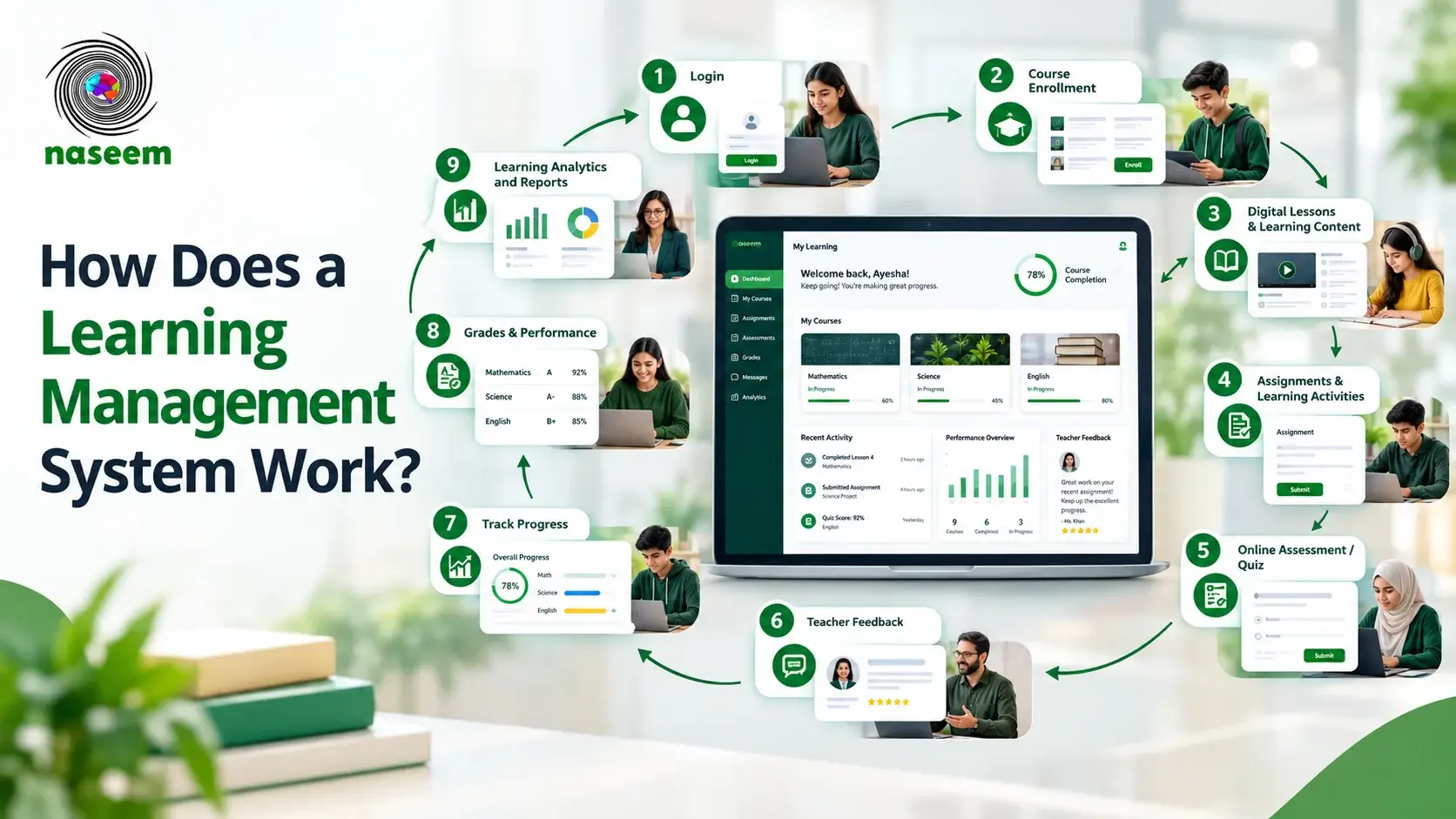
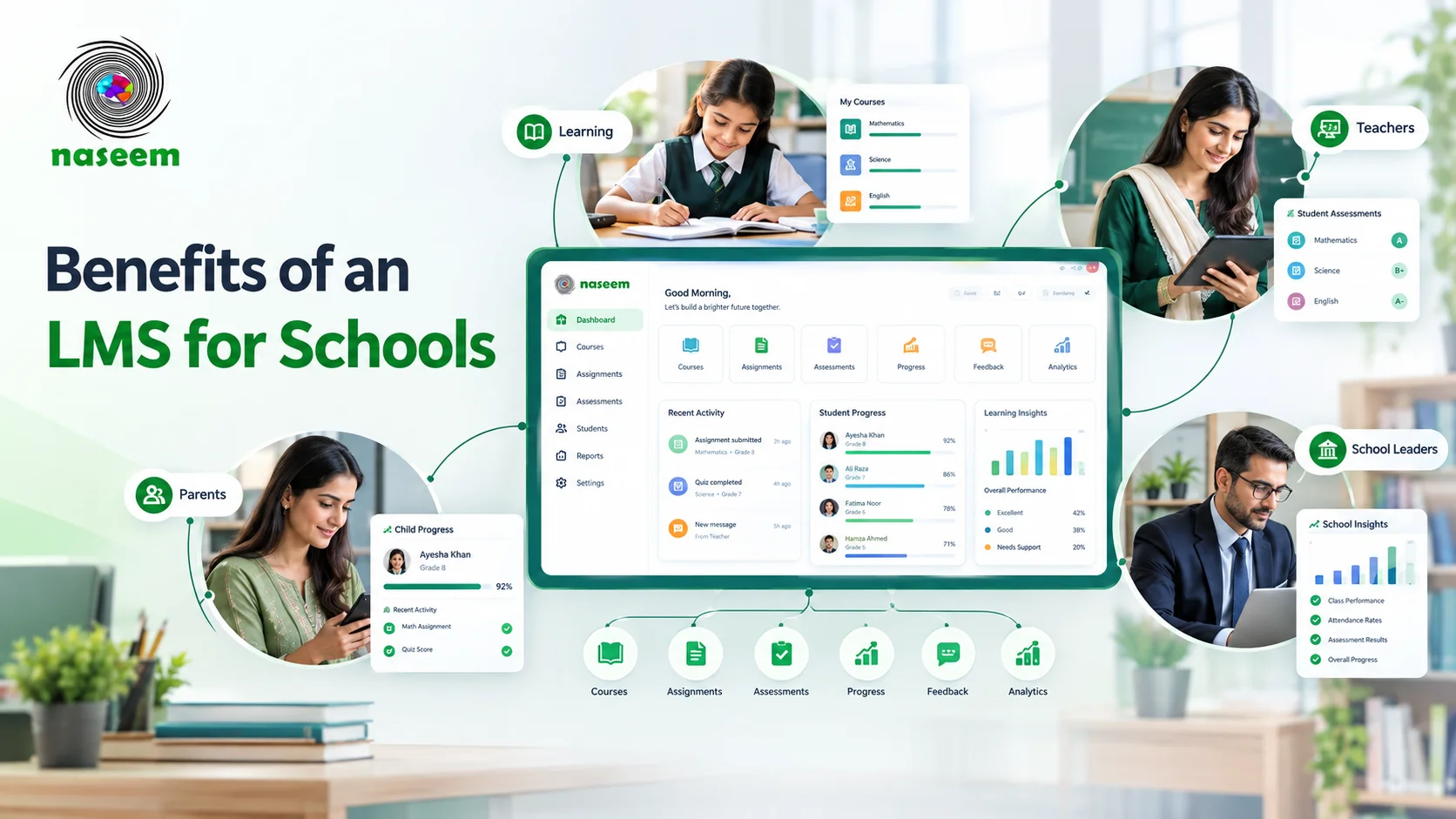
Our guide to how an LMS works walks through the teacher-student workflow, and benefits of a school LMS covers the wider case.
An LMS supports engagement. It does not replace teaching. It can deliver a quiz and record who struggled, but it cannot build the relationship or lead the discussion that brings a student back into the lesson. If your school is still selecting a platform, see our guide to selecting a school LMS.
Common Challenges That Affect Student Engagement
These problems rarely have a single cause, so treat each response as a starting point.
| Challenge | Practical Response |
|---|---|
| Lack of motivation | Find the cause first: work that is too hard, seems pointless, or carries a fear of failing. Set a short task the student can complete, then raise the difficulty. |
| Different learning abilities | Keep one goal and vary the support: worked examples for some, extension questions for others. |
| Classroom distractions | Put a task on the board as students arrive, and keep phones away unless the task needs them. |
| Passive participation | Replace "any volunteers?" with all-class responses and pair talk. |
| Large class sizes | Use pair work, hand signals, and choral responses. Read six notebooks closely each lesson instead of skimming sixty. |
| Limited teaching time | Use two-minute techniques inside existing lessons, such as a starter quiz that doubles as revision. |
| Technology access limitations | Plan one-device and offline versions, and avoid homework that depends on home internet. |
| Difficulty measuring engagement | Pick two indicators, such as who contributed and the quality of exit tickets, and track them weekly. |
| Students feeling disconnected | Hold short one-to-one conversations, use students' interests in examples, and give the student a role. |
Some causes lie outside the classroom, including absence, hunger, home responsibilities, or the language of instruction. Those need parents and school leaders, not only a new technique.
How Teachers Can Measure Student Engagement
No single measure captures engagement. A U.S. Department of Education report described 21 instruments for measuring student engagement: 14 student self-reports, 3 teacher reports, and 4 observation tools. Combine several kinds of evidence:
- Observation: scan the room at set times and note who has started and who persists.
- Participation: tick a seating chart for a week to see who contributes.
- Questions: notice whether students ask about procedure ("which page?") or ideas ("why does that work?").
- Collaboration: check whether every group member can explain the result.
- Completion: track classwork and homework, and ask why work is missing.
- Reflection and feedback: use exit tickets and a short anonymous survey each term.
- Assessment evidence: compare quiz results over several weeks.
- Activity and progress information from your LMS.
Each has limits. Behavior is the easiest dimension to see, so emotional and cognitive engagement are easy to miss. A quiet student may be thinking hard, while a frequent hand-raiser may only be recalling facts. Logins, clicks, time online, and attendance show presence, not learning. Use the data to ask a question, then talk to the student. Our guide to tracking student progress through an LMS explains how to read that information.
Best Practices for Improving Student Engagement
Most ways to increase student engagement are habits, not one-off activities:
- Learn students' interests and check prior knowledge in the first week.
- Share the objective and success criteria in every lesson.
- Change the mode of work every 10 to 15 minutes: listen, write, talk, do.
- Invite participation without pressure. Give thinking time, let pairs rehearse, and allow a student to pass and come back.
- Offer more than one way to respond so every student can take part.
- Give feedback students can use in the next lesson.
- Balance screen time with face-to-face talk.
- Read exit tickets and quiz results before planning the next lesson.
- Drop a strategy that has not changed what students do after a few weeks.
School leaders can help by agreeing on two or three shared routines across classes, giving teachers time to observe each other, and judging engagement by student work, not by how busy a room looks.
How Naseem Education Supports More Engaging Learning Experiences
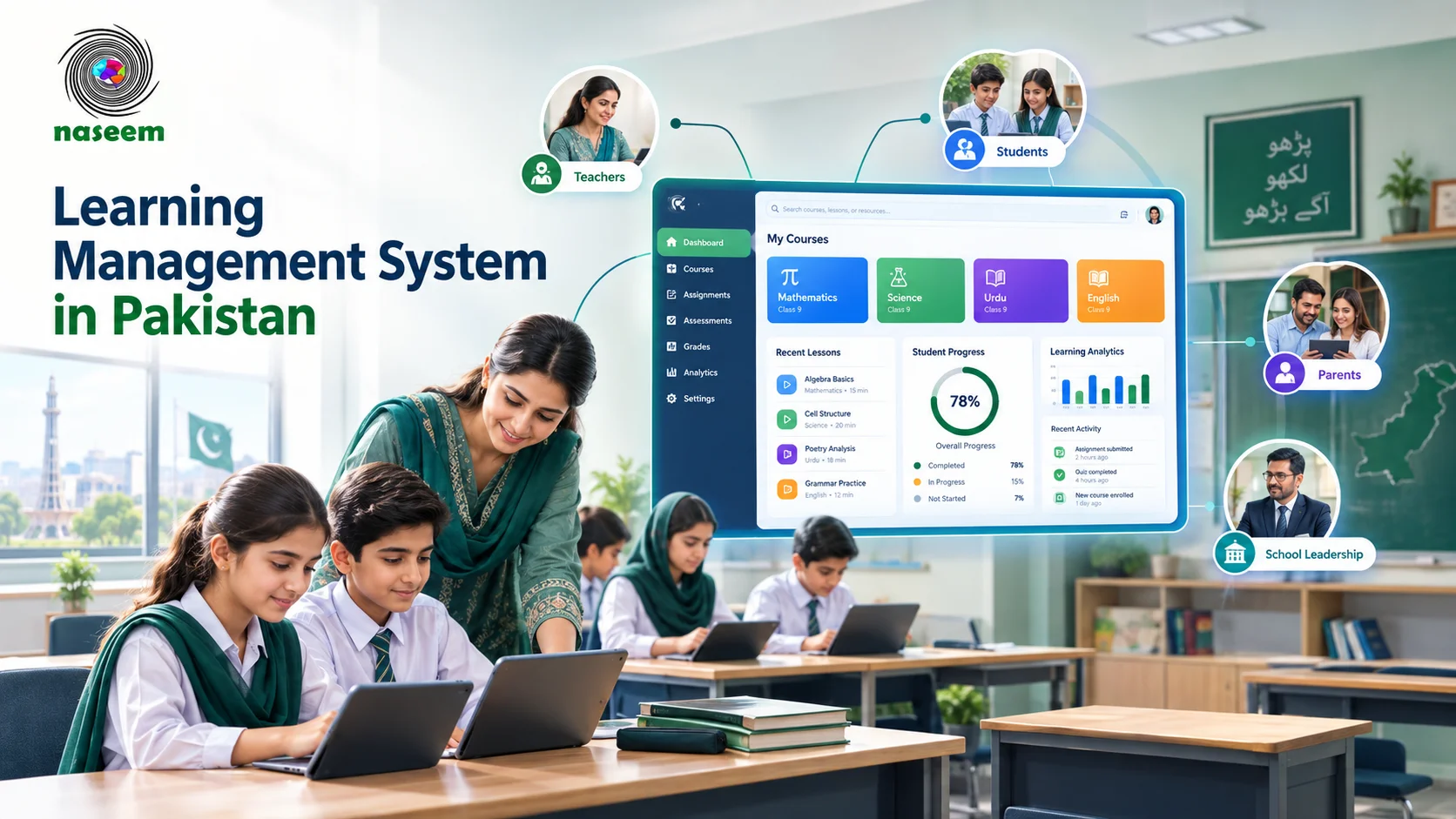
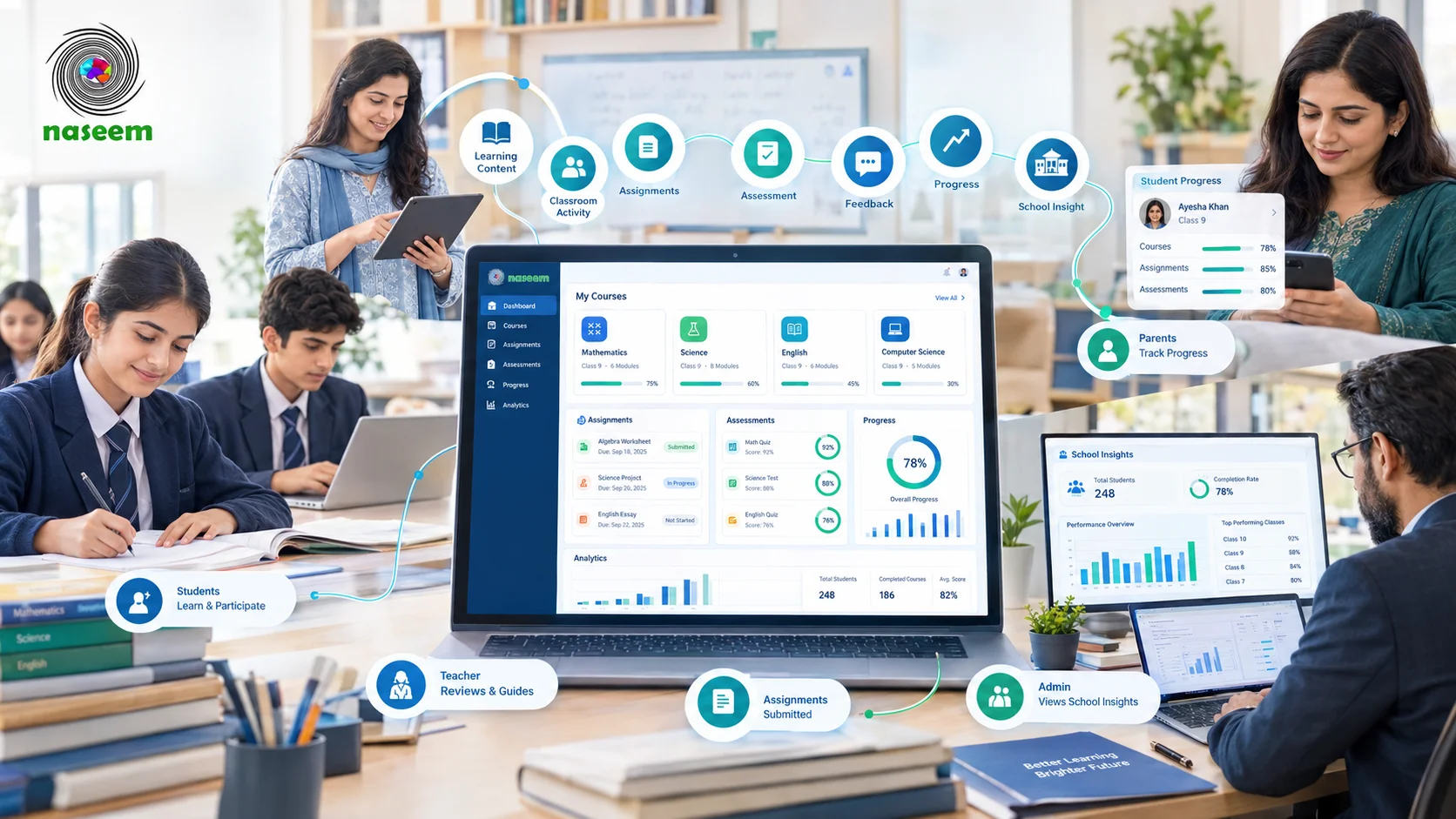
Naseem Education is a learning management system for schools that connects students, teachers, parents, and school leaders in one platform. Several of its capabilities line up with the strategies in this guide:
- Interactive content and personalized learning experiences that can adapt to individual needs
- Gamified, progress-driven experiences such as milestones, achievements, progress indicators, and challenges
- Smart assessments with auto-grading where it applies, and feedback while the learning is still fresh
- Progress tracking and learning analytics for teachers and school leaders
- Teacher tools for lesson planning, assessment, and communication
- Visibility for parents into their child's progress
No platform can guarantee engagement or results. These tools give teachers time and information to act on. The features a school sees depend on what is enabled for its account, so ask to see them in a demonstration. The about page explains the thinking behind the platform.
To see how this would work in your classrooms, explore the Naseem Education LMS or request a demo.
Frequently Asked Questions
Ready to Bring Your School’s Learning Together?
Give your school a connected learning management system designed to support students, teachers, parents, and school leaders.